
Pitching Big Ideas: The Modern Guide to Digital Strategy Proposals
How to Build a Digital Strategy Proposal That Wins Approval
Here is the complete article following the established introduction and structured around all outline sections, constraints, and research insights.
To create a digital strategy proposal that wins approval, start with the client’s business goal, not a list of tools. Show what needs to change, why your approach fits, what you will deliver, what it will cost, and how you will measure success. Make the first step small enough to act on and the full plan clear enough to fund.
That means looking beyond campaigns when the problem calls for it. A strong proposal can connect marketing with customer experience, technology, team readiness, and risk, while giving decision-makers clear choices.
I’m Megan McGuinness, owner and chief marketing officer of McGuinness Media & Marketing. For more than 20 years, I’ve built marketing strategies for brands across industries, experience I draw on when shaping a digital strategy proposal around real business goals.
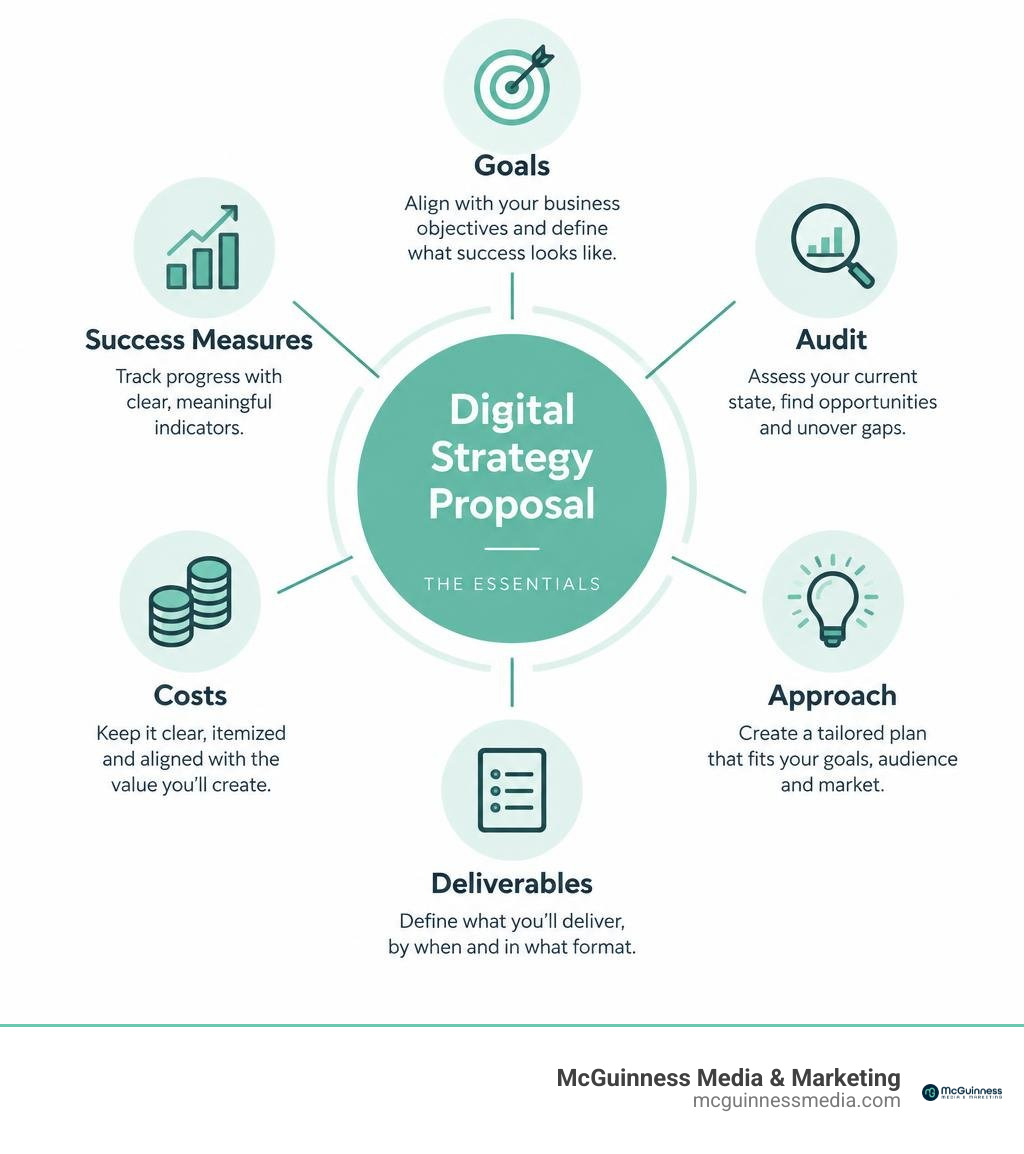
Digital strategy proposal terminology:
Introduction
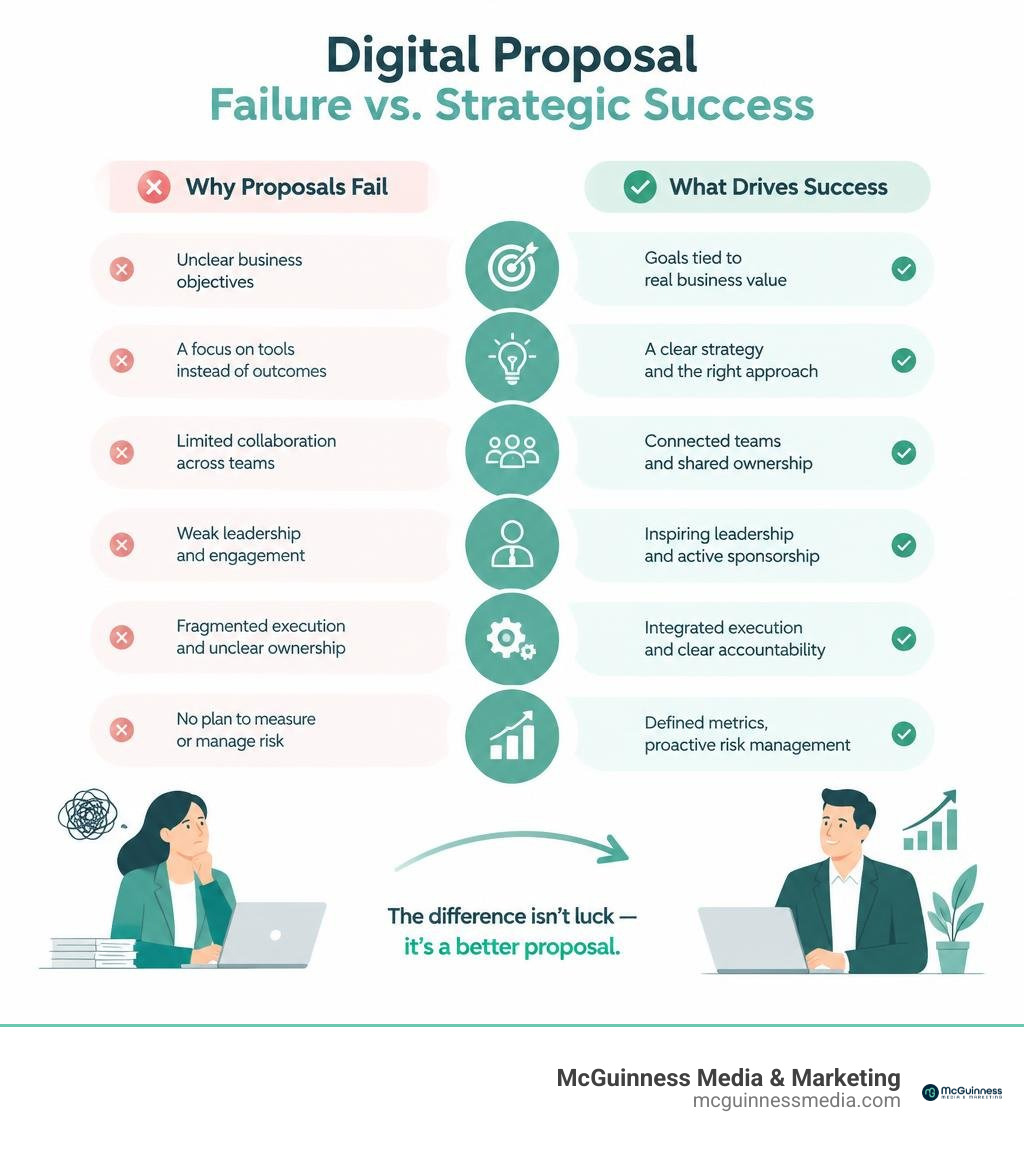
In today’s fast-moving business climate, every organization feels the pressure of technological disruption. Yet, jumping into initiatives without an overarching roadmap is a recipe for disaster. Industry research reveals that a staggering 84% of digital transformation projects fail to deliver their expected benefits. At the same time, nearly half of businesses operate without an active marketing roadmap.

When initiatives fail, it is rarely due to a lack of ambition or poor technology. Projects falter because of miscommunication at the outset, vague objectives, uninspiring leadership, and fragmented execution. Winning executive buy-in requires bridging the gap between high-level ambition and ground-level execution. That is where a structured, compelling proposal becomes the cornerstone of sustainable growth.
Digital Transformation vs. Marketing: Clarifying the Strategic Scope
One of the most frequent mistakes in pitching digital initiatives is conflating a tactical campaign with enterprise transformation. While both drive growth, their scope, risk profiles, and resource demands are fundamentally different.
A tactical marketing proposal focuses on immediate customer acquisition, engagement channels, and ad spend efficiency. In contrast, an enterprise digital transformation proposal reimagines the fundamental operating model of a business—incorporating data architecture, workflow automation, and organizational culture. Understanding this distinction ensures your pitch sets proper expectations and secures the appropriate budget.
| Dimension | Tactical Marketing Proposal | Enterprise Digital Transformation Proposal |
|---|---|---|
| Primary Focus | Lead generation, brand awareness, conversion rates | Business model evolution, operational efficiency, systemic innovation |
| Time Horizon | 3 to 12 months (sprints & campaigns) | 1 to 3+ years (multi-phase roadmaps) |
| Core Stakeholders | CMO, Marketing Directors, Brand Managers | CEO, COO, CIO, Board of Directors, Department Heads |
| Technology Scope | Ad platforms, social media, email tools, CRM | Enterprise ERP, unified CDPs, custom APIs, automated workflows |
| Primary Risk | Fluctuating ad costs, creative fatigue | Cultural resistance, legacy integration failure, workflow disruption |
| Success Metrics | ROAS, CPA, CTR, Marketing Qualified Leads (MQLs) | Operational margin, employee adoption, customer lifetime value (LTV) |
Navigating these differences requires following a comprehensive strategic marketing planning process that clearly defines organizational capabilities before prescribing tools.
Strategic Scope and Business Model Evolution
A systemic digital proposal examines how value is created, delivered, and captured across the entire customer lifecycle. It outlines how legacy systems migrate toward agile platforms, how data silos are broken down, and how omnichannel experiences create seamless interactions.
Whether designing unified mobile experiences or rolling out customer portals, the strategic scope must define how new technologies generate sustainable competitive advantage rather than just digitizing paper processes.
Tactical Campaign Scoping vs. Systemic Modernization
While systemic overhauls address foundational infrastructure, tactical scoping solves immediate channel friction. Tactical components pinpoint channel execution, paid media spend, content production schedules, and conversion rate optimization. Aligning tactical media plans with broader digital capabilities ensures that every marketing dollar invested actively supports long-term operational assets.
Anatomy of a High-Impact Digital Strategy Proposal
Winning proposals follow a logical narrative: they diagnose a problem, demonstrate a clear vision, provide a realistic execution plan, and quantify the return on investment.

How to Structure a Winning Digital Strategy Proposal
A winning pitch balances brevity with rigorous detail. Decision-makers should grasp the core value within the first two minutes of reading, with supporting data immediately accessible in subsequent sections.
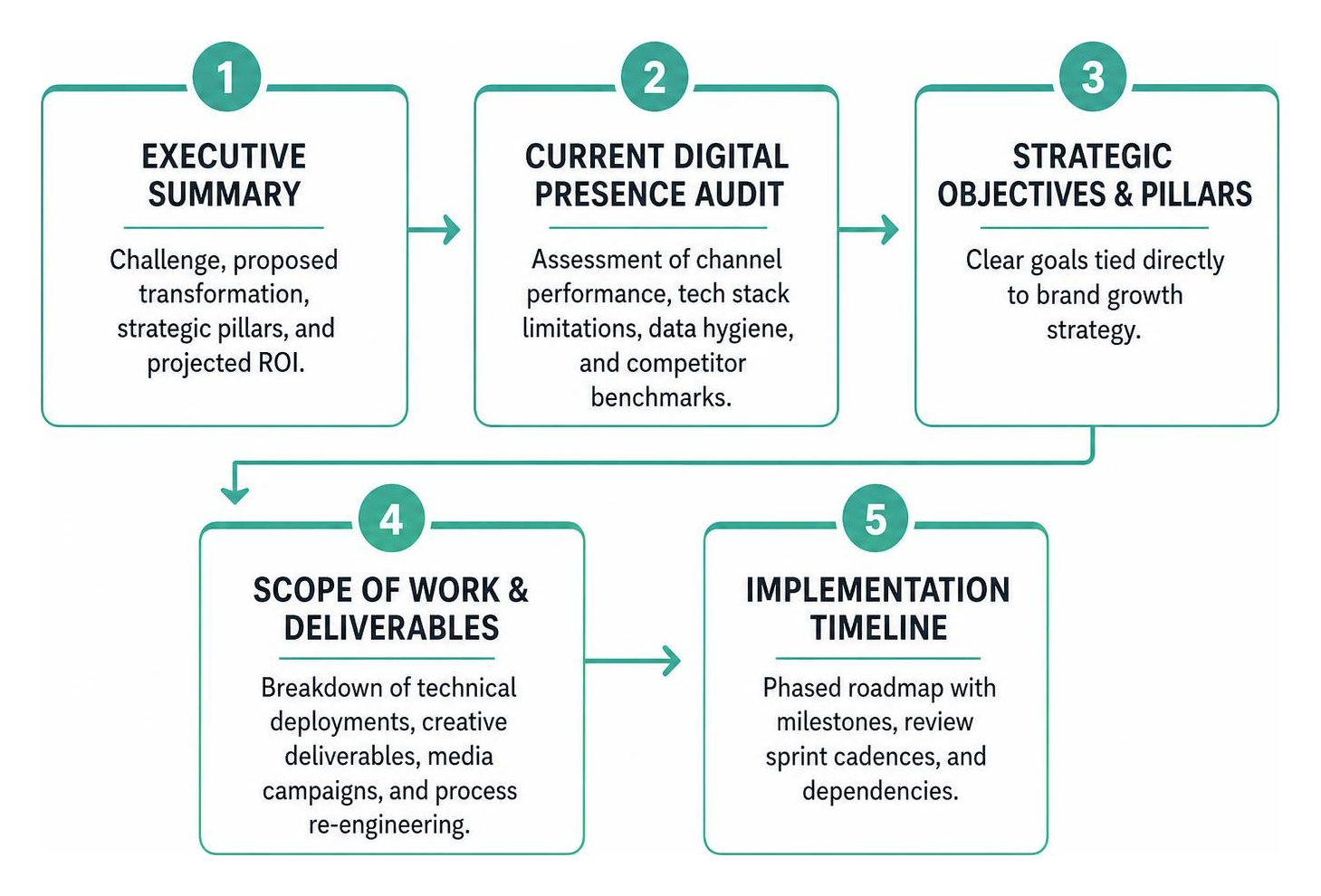
- Executive Summary: A one-page briefing highlighting the current challenge, proposed transformation, strategic pillars, and projected return on investment.
- Current Digital Presence Audit: An objective assessment evaluating current channel performance, technology stack limitations, data hygiene, and competitor benchmarks.
- Strategic Objectives & Pillars: Clear definition of overarching goals tied directly to an actionable brand growth strategy.
- Scope of Work & Deliverables: Granular breakdown of technical deployments, creative deliverables, media campaigns, and process re-engineering.
- Implementation Timeline: A phased roadmap featuring clear milestone checkpoints, review sprint cadences, and dependencies.
- Governance & Resource Allocation: Definition of roles, cross-functional responsibilities, and required steering committees.
- Investment & Commercial Terms: Transparent pricing schedules, milestone billing triggers, and clear operational assumptions.
Core Deliverables and Technical Architecture
Ambiguity breeds hesitation. Your proposal must clearly outline tangible deliverables so stakeholders know exactly what will be built, configured, and delivered:
- Ecosystem Audits & Gap Analyses: Technical performance audits, user experience journeys, and digital maturity scorecards.
- Data & Technology Frameworks: Architecture blueprints connecting CRM systems, analytics engines, and data driven content workflows.
- Operating Playbooks: Standard operating procedures, creative brand guidelines, and governance documentation.
- Performance Dashboards: Custom business intelligence views displaying real-time leading and lagging performance indicators.
Pricing Models and Payment Terms for a Digital Strategy Proposal
Structuring fees correctly protects your margins while demonstrating financial transparency to prospective clients. Common commercial frameworks include:
- Phased Milestone Pricing: Tying invoices directly to tangible phase completions (e.g., Discovery and Audit, Technical Architecture, Implementation, Optimization).
- Sprint-Based Value Pricing: Fixed-fee, recurring sprint cycles (bi-weekly or monthly) that provide agility and predictable cash flow.
- Hybrid Retainers: A fixed base retainer for strategic advisory and platform maintenance combined with variable performance incentives tied to predefined OKR milestones.
Always outline clear payment terms (e.g., net-15 or net-30), resource change-order clauses, and ownership rights over creative and technical intellectual property upon payment completion.
Balancing Offensive Growth, Defensive Resilience, and Just Transition
Modern strategy cannot solely focus on customer acquisition. Organizations operate in an era marked by rapid AI disruption, regulatory shifts, and cybersecurity vulnerabilities. A comprehensive pitch balances aggressive market expansion with defensive safeguards and workforce adaptability, echoing principles established in public frameworks like the PDA national digital economy strategy.
Building the Three-Front Strategic Playbook
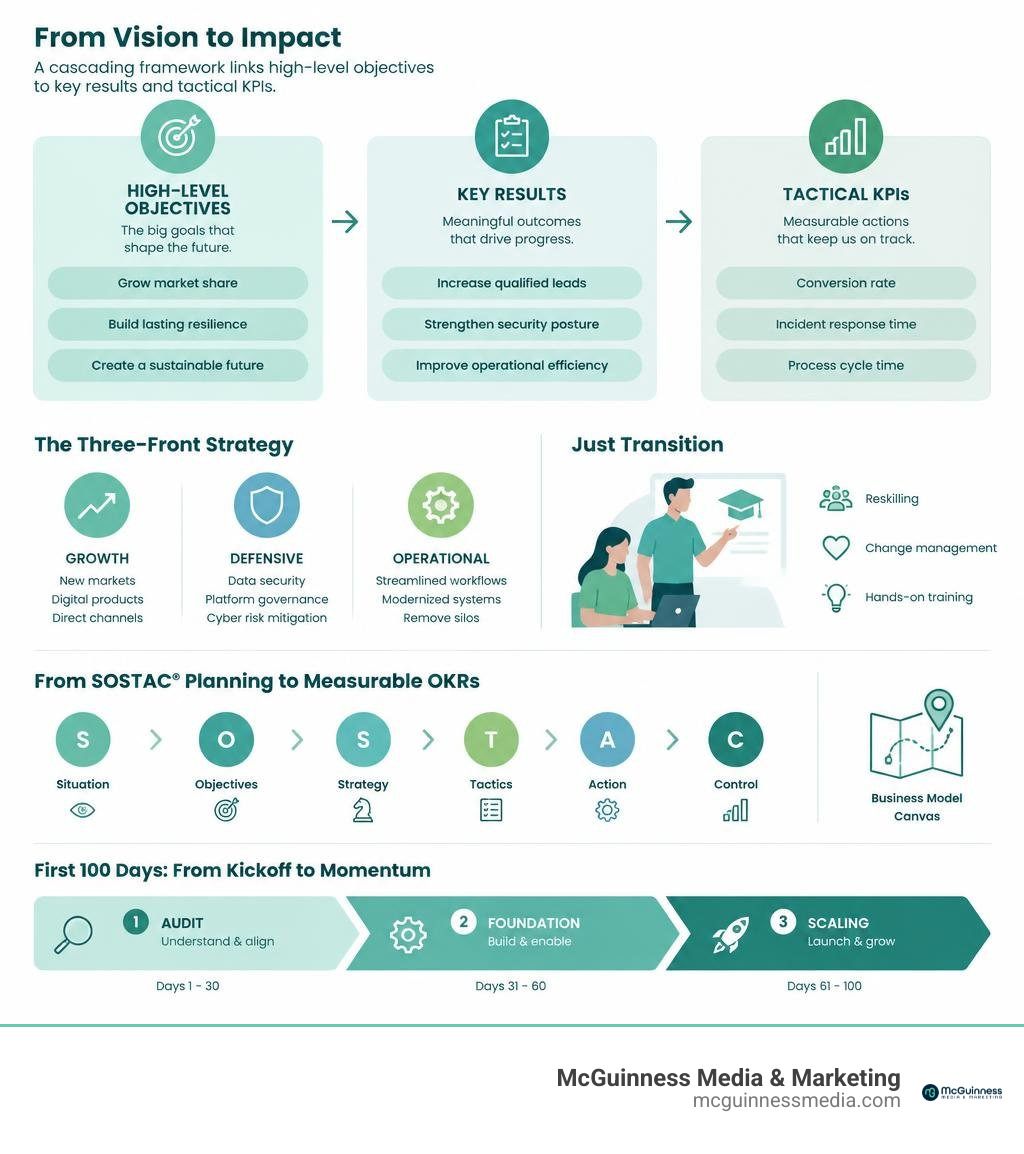
An exhaustive proposal addresses three distinct operational fronts:
- The Global Offensive Front: Capturing new market share, deploying innovative digital products, expanding direct-to-consumer channels, and launching targeted campaigns.
- The Defensive Front: Securing proprietary data, establishing platform governance, mitigating cyber risks, and building technical redundancies to protect core brand reputation.
- The Internal Operational Front: Streamlining internal workflows, modernizing legacy systems, and eliminating functional silos across departments.
Addressing Workforce Disruption and Just Transition
Introducing advanced automation or AI tools inevitably raises concerns among staff regarding workflow disruption or job security. Proposals that ignore cultural adoption frequently fail during rollout.
A “Just Transition” framework outlines structured workforce reskilling, empathetic change-management programs, and hands-on training workshops. By illustrating how digital tools eliminate administrative tedium and empower team members to focus on high-value creative and strategic tasks, your proposal turns internal skeptics into proactive advocates.
Actionable Roadmaps: From SOSTAC® Planning to Measurable OKRs
To give stakeholders confidence in execution, use established strategic planning models like the SOSTAC® framework (Situation, Objectives, Strategy, Tactics, Action, Control). Combining this structured thinking with a Business Model Canvas creates an airtight blueprint for business growth.
Integrating these planning principles ensures that every tactic directly traces back to measurable business objectives.
The First 100 Days Implementation Plan
A critical feature of winning pitches is the “First 100 Days” action plan. This section demonstrates rapid execution capability, alleviates anxiety over momentum loss, and delivers quick wins early in the engagement.
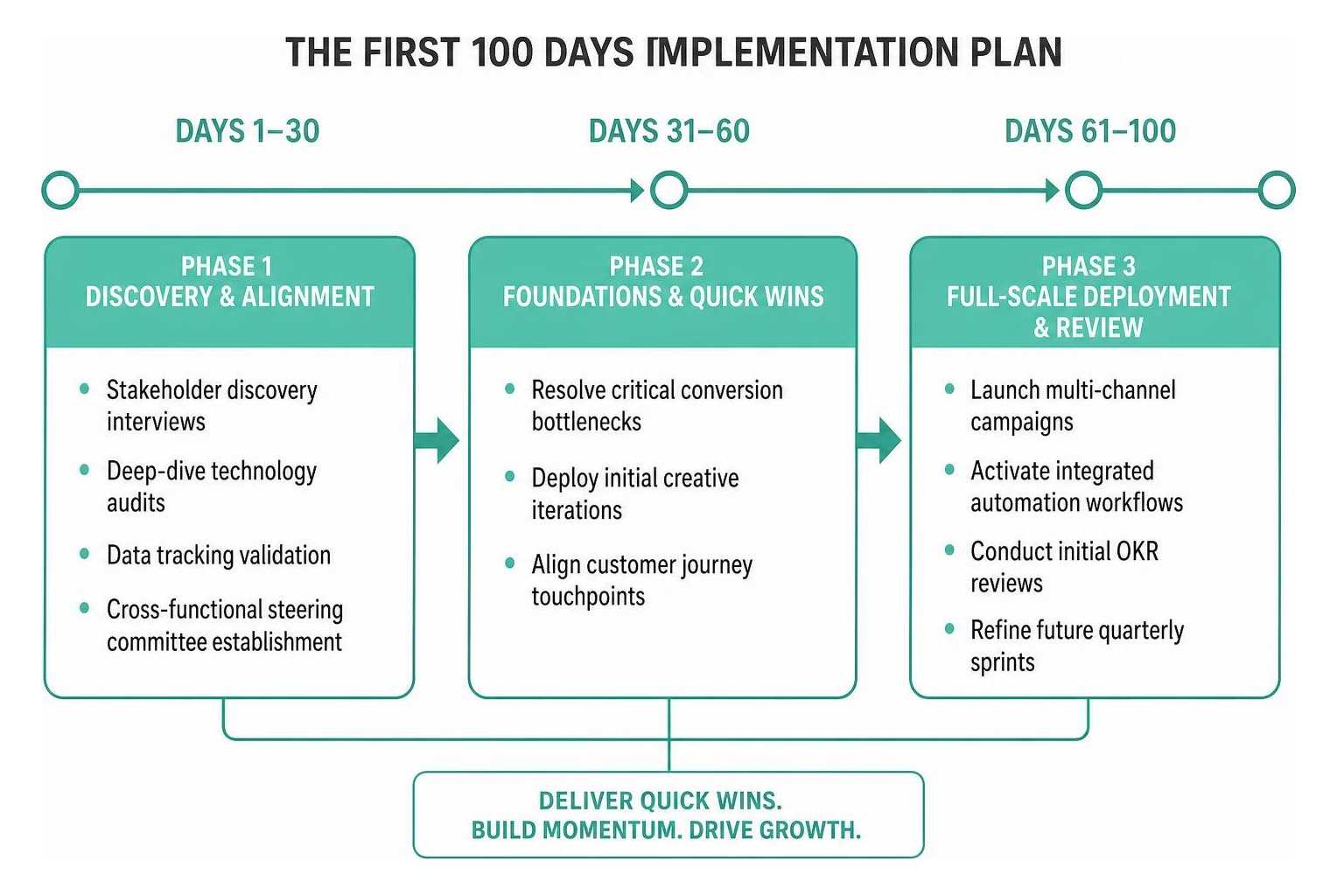
- Days 1–30 (Discovery & Alignment): Stakeholder discovery interviews, deep-dive technology audits, data tracking validation, and cross-functional steering committee establishment.
- Days 31–60 (Foundations & Quick Wins): Resolving critical conversion bottlenecks, deploying initial creative iterations, and aligning customer journey touchpoints.
- Days 61–100 (Full-Scale Deployment & Review): Launching multi-channel campaigns, activating integrated automation workflows, conducting initial OKR reviews, and refining future quarterly sprints.
Setting Measurable OKRs and Governance Metrics
Every digital strategy must establish clear accountability through Objectives and Key Results (OKRs) and Key Performance Indicators (KPIs). Establishing both leading and lagging indicators ensures complete visibility across the customer journey.
Applying a practical framework for marketing plan control and analysis allows you to continuously audit progress and pivot campaigns before budgets are wasted.
Tracking these metrics through automated dashboards ensures that both agency partners and executive stakeholders maintain shared alignment on progress and ROI.
Frequently Asked Questions About Digital Proposals
What is the difference between an RFP response and a proactive digital proposal?
An RFP (Request for Proposal) response is a formal submission created in response to specific procurement guidelines, strict criteria, and pre-set scopes issued by an organization. A proactive digital proposal, by contrast, is initiated when an agency or consultant identifies an unaddressed market opportunity or strategic bottleneck for a client, offering a tailored vision without the constraints of rigid procurement rubrics.
How long should a comprehensive digital strategy proposal be?
For most mid-market to enterprise engagements, a core digital strategy proposal should span 10 to 15 pages. It should be concise enough to read in a single sitting while containing sufficient strategic depth. Detailed technical audits, code reviews, and raw data sets should be placed in structured technical appendices rather than cluttering the primary narrative.
How do you overcome stakeholder resistance to digital transformation costs?
Mitigate cost concerns by shifting the focus from expense to value creation and risk reduction. Frame the investment around the cost of inaction, provide clear ROI projections, and offer phased investment gates (such as funding a 30-day proof-of-concept sprint before committing to a multi-year budget). This structure allows leadership to validate results before expanding their financial commitment.
Conclusion
A winning proposal is much more than a price quote or a list of marketing services. It is a strategic narrative that bridges an organization’s current operational reality with its future growth potential. By clarifying strategic scope, addressing workforce transitions, organizing execution around structured frameworks like SOSTAC®, and tying every deliverable to measurable business OKRs, you turn complex transformations into an undeniable business case.
At McGuinness Media & Marketing, we help brands bring strategic clarity to complex digital landscapes. Whether you are looking to revitalize your brand identity, launch dynamic multi-channel campaigns, or build a scalable growth architecture, our team provides the creative vision and analytical rigor needed to lead your market.
Ready to turn ambitious digital concepts into measurable business growth? Partner with our experts through our integrated branding and strategy services to craft your growth roadmap today.