
Strategic Planning for Marketers: A Practical Guide to Brand Growth
Build a Brand Growth Plan That Creates Lasting Value
Effective branding development strategies start with clear decisions, not a new logo. Define the audience you need to win, learn how they view the category, choose a focused market position, and turn that position into a consistent promise, message, and customer experience.
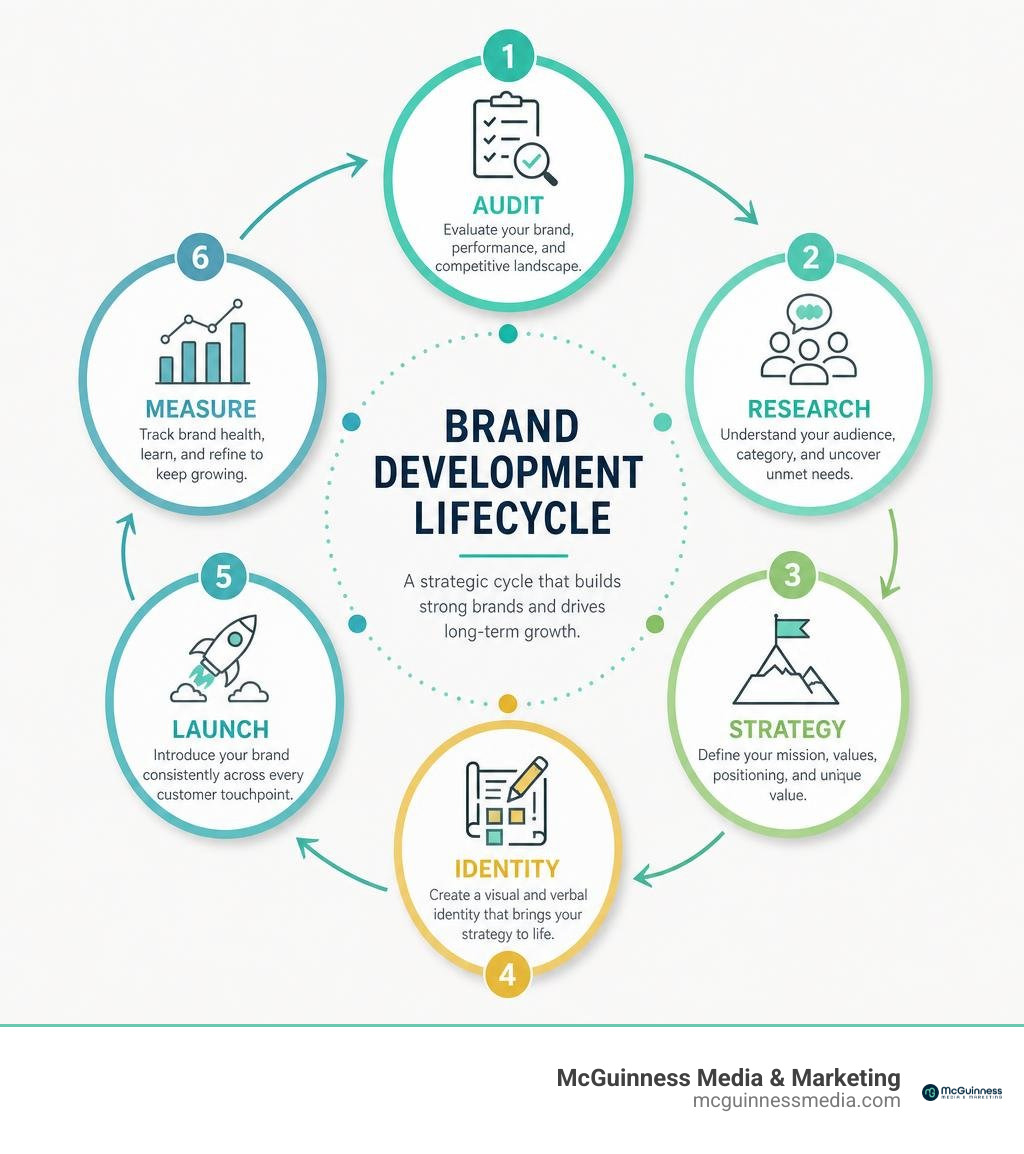
A practical plan follows five steps:
- Audit your current brand and competitive landscape.
- Research priority customers and their unmet needs.
- Define your mission, values, positioning, and unique value.
- Build a visual and verbal identity that supports those choices.
- Launch consistently, track brand health, and improve over time.
Brand development is the long-term work of building trust, recognition, and preference. Branding is one expression of that work: the logo, colors, campaigns, packaging, and voice people encounter. When strategy leads, creative work has a job to do: make the right idea easier to remember and choose.
This matters because customers have more options than ever, and authenticity affects preference. A strong, well-run brand can also support loyalty, pricing power, and resilience when markets change.
I am Megan McGuinness, owner and chief marketing officer of McGuinness Media & Marketing, with more than 20 years of experience building marketing programs for regional, national, and global organizations. My work in branding development strategies connects clear positioning, compelling creative, and effective media planning to measurable business growth.
Know your branding development strategies terms:
Understanding Brand Development vs. Traditional Branding
It is easy to confuse “branding” with “brand development.” Many teams jump directly into redesigning their logo, picking new typography, or launching a splashy ad campaign, believing they have solved their brand challenge. But starting with visual design before establishing strategic clarity is often the most expensive mistake a company can make—much like buying a sports car before figuring out how to drive or where you need to go.
Branding represents the outward expression—the tactical assets, color palettes, visual marks, slogans, and promotional collateral. Brand development, by contrast, is the comprehensive strategic process of managing customer perception, cultivating market differentiation, and building durable brand equity over time. To ensure that creative execution delivers a tangible return on investment, organizations must ground their efforts in A Comprehensive Guide To The Strategic Marketing Planning Process.
| Strategic Dimension | Tactical Branding | Strategic Brand Development |
|---|---|---|
| Primary Focus | Visual identity, design assets, collateral | Reputation, emotional connection, positioning |
| Time Horizon | Short-term sprints (weeks to months) | Long-term asset building (multi-year evolution) |
| Core Objectives | Recognition, aesthetic appeal, awareness | Market differentiation, customer loyalty, pricing power |
| Key Deliverables | Logos, color palettes, ad creative, typography | Value proposition, brand architecture, governance, culture |
| Organizational Role | Creative design & marketing execution | Enterprise-wide strategic alignment & operations |
The Strategic Importance of Brand Growth in 2026
As we navigate the competitive business landscape of September 2026, the strategic importance of brand equity cannot be overstated. Today’s buyers are inundated with endless choices, algorithmic recommendations, and instant alternatives. Research shows that 86% of people name authenticity as a key factor in deciding what brands they like and support. When your market positioning is anchored in authentic value rather than empty slogans, you establish resilience that protects your business during economic shifts.
Furthermore, a well-developed brand generates significant pricing power. When customers perceive your offerings as uniquely valuable and reliable, price elasticity decreases. Strong brands frequently capture double-digit pricing premiums over generic alternatives because they reduce the perceived risk of purchase.
Core Differences in Long-Term Value and Equity
Building enterprise value requires moving beyond superficial promotional campaigns to achieve deep operational ownership. Legal ownership protects your trademarks, but operational ownership means every team member actively reinforces the brand promise across every touchpoint—from customer support to product delivery. When internal company culture mirrors external brand positioning, customer trust compounds, creating an enduring competitive moat.
Foundational Steps in the Brand Development Process
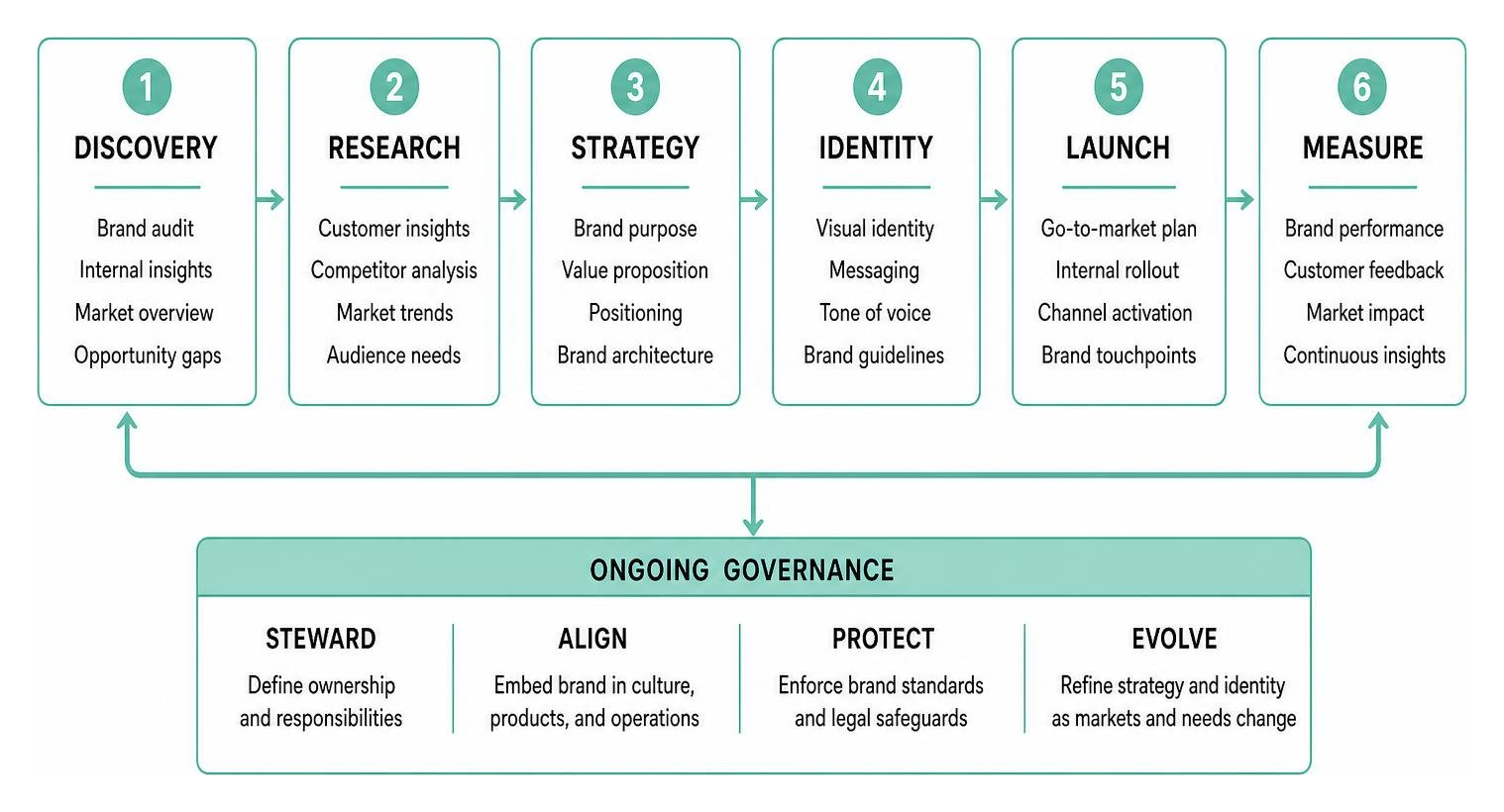
Developing a resilient brand is a structured, methodical journey rather than an exercise in creative guesswork. It requires extracting the genuine truths of your enterprise and aligning them directly with the market opportunities uncovered during discovery.

Market Research, Category Entry Points, and Audience Analysis
Effective brand planning begins with qualitative surveys, stakeholder interviews, and competitive mapping. To establish lasting mental availability, you must understand the specific Category Entry Points (CEPs)—the distinct cues, contexts, and situations that trigger a buyer to search for a solution in your space. For a deeper exploration of strategic frameworks, review the Brand Strategy: Complete Guide and Frameworks for 2026.
During research, map out direct and indirect competitors across critical market tensions (such as cost vs. speed, or simplicity vs. feature depth). Uncovering hidden assumptions early ensures your positioning directly answers your buyers’ unmet needs.
Defining Mission, Vision, Core Values, and USP
Once market dynamics are clear, articulate the strategic pillars that govern your organization:
- Brand Purpose & Vision: Why your business exists beyond generating revenue, and the future state you intend to create.
- Mission Statement: The operational commitment outlining what you deliver, for whom, and through what standard of excellence.
- Core Values: Three to five actionable principles that guide daily behaviors, hiring standards, and client interactions.
- Unique Selling Proposition (USP): The defensible advantage that sets your solution apart from category alternatives.
Core Branding Development Strategies for Market Expansion
Selecting the appropriate structural model for your portfolio is essential for long-term growth and market expansion. As outlined in Brand Strategy: Build One That Drives Revenue, deliberate structural alignment ensures your investments build measurable commercial equity across product lines.
Portfolio Architecture: Branded House vs. House of Brands
Your brand architecture dictates how new products, services, and sub-brands relate to your parent entity:
- Branded House (Monolithic): A master brand anchors all offerings (e.g., Apple or Virgin). This model maximizes marketing efficiency because every campaign strengthens the primary brand equity, though a misstep in one product line can impact the entire portfolio.
- House of Brands (Pluralistic): A collection of distinct, independent brands operating under an umbrella holding company (e.g., Procter & Gamble). This shields individual brands from negative cross-contamination and allows hyper-targeted positioning, though it requires substantial resources to support each separate identity.
- Endorsed / Hybrid Architecture: Sub-brands maintain unique identities while explicitly leveraging the credibility of the parent brand (e.g., Courtyard by Marriott).
Evaluating Co-Branding and Brand Extensions as Branding Development Strategies
Line extensions and co-branding partnerships can accelerate customer acquisition by entering adjacent categories quickly. However, strategic discipline is essential. While more than half of all new products introduced each year are line extensions, historical data demonstrates a higher rate of brand extension failures than successes.
When planning new product launches or multi-channel expansion, ensure you follow a comprehensive framework such as How To Create A Solid Digital Marketing Strategy For Your Business to preserve core brand equity while testing new markets.
Tailoring Branding Development Strategies for Startups on a Budget
Early-stage ventures cannot afford multi-million-dollar awareness campaigns. For startups, brand strategy should be lean, focused, and iterative:
- Focus on a Narrow Beachhead Audience: Avoid trying to be everything to everyone; win a clearly defined niche first.
- Emphasize Differentiated Positioning: Contrast your approach clearly against incumbent legacy tools or outdated industry norms.
- Build a Minimum Viable Brand (MVB): Develop a clean, functional identity system that establishes immediate credibility without getting bogged down in endless conceptual revisions.
Translating Strategy into a Cohesive Brand Identity System
Once strategic foundations are established, translate those insights into a cohesive visual and verbal identity system that resonates across every touchpoint.

Visual Language: Color Palette, Typography, and Logo Systems
Visual design is the sensory anchor of your brand strategy. Your logo system, typographic hierarchy, and color palettes must evoke the exact emotional frequency established in your strategic roadmap. When selecting visual elements, evaluate Color Trends And Typography What Brands Should Be Using And Avoiding to ensure your look is timeless rather than dated.
Our creative team provides bespoke execution through our dedicated Services/Graphic Design practice, translating abstract business goals into compelling, high-converting visual assets.
Verbal Identity: Tone, Messaging Hierarchy, and Emotional Frequency
Visuals attract attention, but verbal identity builds relationships. A comprehensive verbal system includes:
- Brand Voice Principles: The consistent personality traits reflected in all copy (e.g., authoritative yet approachable, straightforward, energetic).
- Tone Variations: Guidelines for adjusting messaging across formats—from high-energy social content to empathetic customer service interactions.
- Messaging Hierarchy: Structured value propositions tailored for different stakeholders (economic buyers, operational leads, end-users).
To master the transition from workshop notes to creative execution, explore From Kickoff To First Concept: How To Turn Brand Strategy Into Visual Direction.
Measuring Success, Avoiding Dilution, and Managing Brand Health
A brand strategy is not a static document; it is an evolving management asset that requires consistent measurement and governance. Aligning your ongoing communication with strategic roadmaps—such as those detailed in From Chaos To Clarity Building A Strategic Content Plan For Digital Success—ensures your market presence stays synchronized with business objectives.
Leading vs. Lagging KPIs: Tracking NPS, Mental Availability, and ROI
Effective brand governance tracks both leading indicators of perception and lagging indicators of commercial impact:
- Leading Indicators (Brand Health):
- Aided and Unaided Brand Recall within target market categories.
- Mental Availability & Category Association (how quickly your brand comes to mind for core use cases).
- Net Promoter Score (NPS) and customer sentiment across review platforms.
- Branded Search Volume and direct website traffic trends.
- Lagging Indicators (Financial & Commercial Impact):
- Customer Acquisition Cost (CAC) trends (strong brands see 20–40% lower CAC over time).
- Sales Velocity and deal win-rates against direct competitors.
- Pricing Power & Margin Resilience during competitive discounting cycles.
- Customer Lifetime Value (LTV) and multi-year retention rates.
Mitigating Brand Dilution and Cannibalization Risks
Brand dilution occurs when an organization stretches its identity across incompatible product categories or adopts contradictory messaging, eroding consumer trust. To protect your brand equity:
- Define Strict Extension Boundaries: Never attach your master brand to an offering that contradicts your established core values.
- Monitor Portfolio Overlap: Audit multi-brand portfolios regularly to avoid internal cannibalization between sister products.
- Enforce Governance Guidelines: Centralize brand asset management and maintain clear brand guidelines to eliminate fragmentation across regional teams.
Frequently Asked Questions About Brand Development
How long does a brand development process typically take?
A thorough, professionally guided brand development process typically takes between 6 to 12 weeks. The discovery and research phase generally spans weeks 1 through 3, core positioning and strategy development occurs during weeks 3 through 5, visual and verbal identity creation requires weeks 5 through 8, and rollout planning with team alignment takes place in weeks 8 through 12. Internal-only builds may take longer depending on stakeholder availability.
What is the difference between brand strategy and marketing strategy?
Brand strategy is your multi-year foundation that defines who you are, why you matter, and how you are positioned in the consumer’s mind. Marketing strategy represents the tactical, channel-specific campaigns (quarterly or annual) designed to drive short-term demand, lead generation, and conversions. Brand strategy guides marketing decisions, ensuring every promotional push reinforces long-term equity.
When should a company choose rebranding over brand development?
Brand development focuses on refining, building, and expanding an existing brand’s strengths. A full rebrand is only warranted when the current brand name, perception, or reputation actively harms business performance—such as following a major corporate scandal, an irrecoverable market pivot, a significant merger, or when legacy positioning prevents the business from entering critical growth markets.
Conclusion: Elevating Your Strategic Planning
Sustainable business growth does not happen by accident. It is the direct outcome of disciplined strategic planning, market-tested positioning, and memorable creative execution. By implementing structured brand development frameworks, you equip your business to capture market share, command premium pricing, and earn long-term customer loyalty.
As the leading creative services partner based in Warwick, Rhode Island, McGuinness Media & Marketing helps organizations translate high-level vision into measurable commercial success. Explore our comprehensive Services/Branding And Strategy to build a resilient brand growth roadmap tailored to your market goals.