
Inspire Customers While They Shop: The Magic of In-Store Radio Ads
Why In-Store Radio Advertising Reaches Shoppers at the Moment of Choice
In store radio advertising delivers music, store announcements, and short product promotions through a retailer’s overhead sound system. Unlike traditional radio or consumer streaming, it reaches people while they are already in the store, close to the shelf and ready to buy. Retailers can schedule messages by location, time of day, promotion, or product availability.
That timing matters. Research cited by major retail audio networks found that 58% of shoppers who recalled hearing an in-store audio ad said they bought the featured product as a result. The best campaigns do not just add noise. They offer a useful, timely reason to find a product, try something new, or take advantage of a current deal.
In this guide, you’ll learn how retail audio works, what it takes to launch it, and how to measure whether it is driving real sales.
I’m Megan McGuinness, owner and chief marketing officer of McGuinness Media & Marketing, with more than 20 years of experience building media and marketing strategies for regional, national, and global brands. My work in in store radio advertising and integrated media planning focuses on turning clear creative and smart placement into measurable customer action.
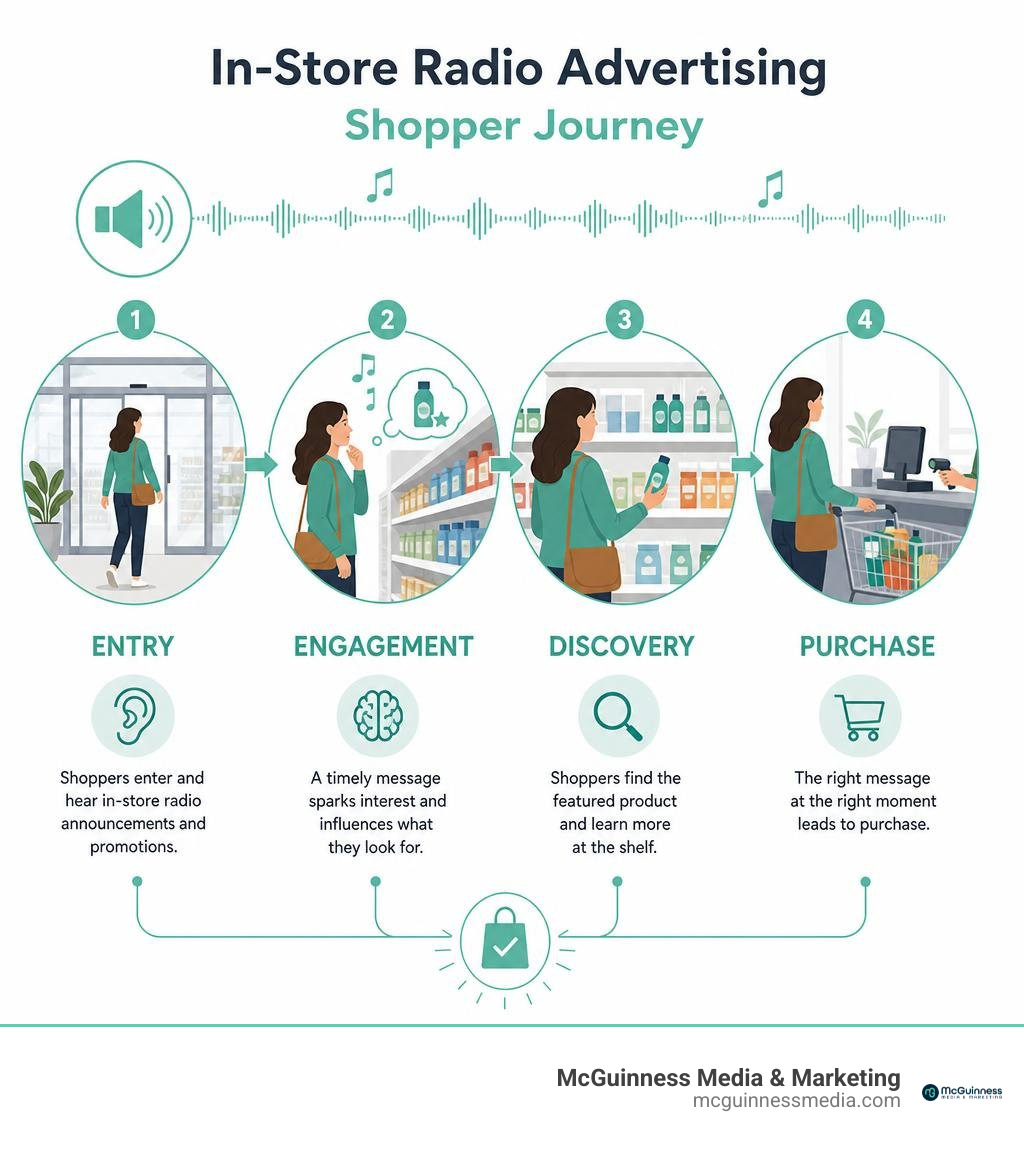
Simple in store radio advertising glossary:
What Is In Store Radio Advertising and How Does It Work?
At its core, in-store radio advertising is the deliberate integration of commercial messages into a physical retail environment’s overhead audio feed. Broadcast radio was historically called “last-minute marketing” because it was the final ad a consumer heard in their car before parking. In-store audio is true point-of-purchase media: it speaks to shoppers while their hands are on the cart.
Retail soundscapes serve two distinct masters. First, curated background music builds an inviting atmosphere that encourages dwell time. Second, short promotional spots nudge shoppers toward specific categories, limited-time promotions, or high-margin items. The evolution of broadcast audio into closed-loop retail environments reflects broader trends in The Power Of Radio In 2025, showing that audio remains one of the most immediate, personal ways to connect with audiences.
Unlike broad consumer broadcasts, retail audio programs give operators full control over everything playing through the speakers. There is no risk of airing a competitor’s commercial, and messages are tailored directly to the inventory on nearby shelves.
The Core Architecture of In Store Radio Advertising Networks
Modern in-store audio networks rely on cloud-connected hardware rather than local disc changers or manual aux cables. The operational backbone follows a streamlined sequence:
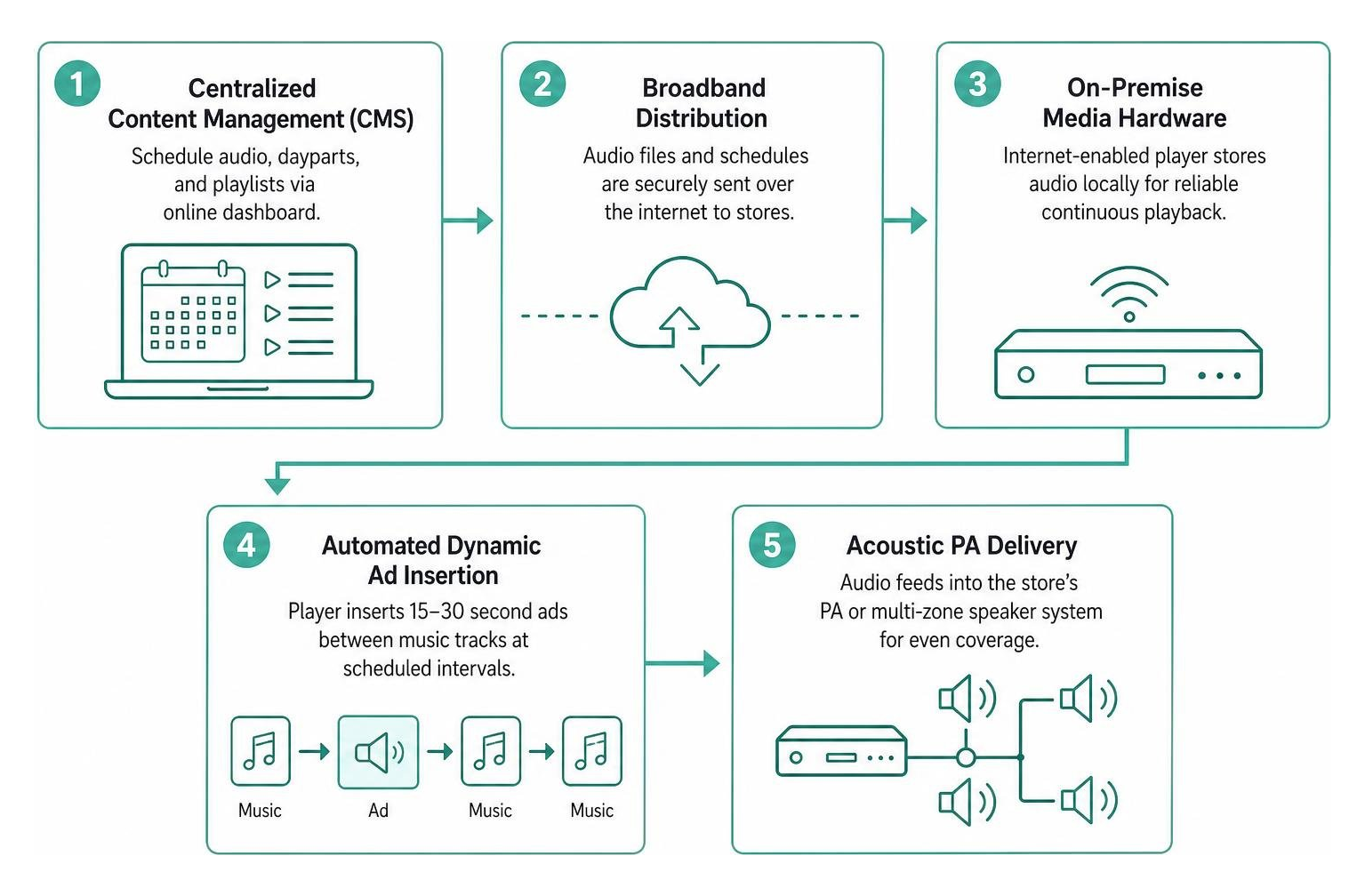
- Centralized Content Management (CMS): Marketing teams and brand managers schedule audio assets, dayparting rules, and track rotations via an online dashboard.
- Broadband Distribution: Audio files, dynamic schedules, and playlist instructions are pushed over secure internet connections to physical retail locations.
- On-Premise Media Hardware: Small, internet-enabled media repeaters or dedicated in-store servers store audio locally. This ensures continuous playback even if an internet outage occurs.
- Automated Dynamic Ad Insertion: The on-site player interleaves 15- to 30-second commercial spots between licensed music tracks at pre-programmed intervals (typically every 8 to 10 minutes).
- Acoustic PA Delivery: Balanced audio feeds directly into the store’s public address (PA) or distributed multi-zone speaker system, maintaining consistent volume across aisles.
This architecture has evolved significantly from the early days of point-of-purchase radio networks documented throughout the history of retail audio networks. Today, digital platforms allow real-time copy updates, store-level ad segmentation, and instant performance logging across nationwide retail footprints.
Commercial Music Licensing vs. Consumer Streaming
A common misconception among business owners is that connecting a smartphone to a store PA and running consumer streaming services like Spotify or Apple Music is perfectly fine. It is not.
Consumer streaming platforms strictly license music for personal, non-commercial use. Playing these services in a commercial retail space without public performance licensing violates copyright laws and exposes businesses to hefty statutory fines.
Operating a compliant in-store audio network requires:
- Public Performance Licensing: Securing direct coverage or performance rights organization (PRO) clearances (including ASCAP, BMI, SESAC, and GMR).
- Commercial Music Rights: Ensuring digital reproduction and distribution rights cover overhead commercial playback.
- Business-Safe Lyric Screening: Filtering every track in rotation for clean, family-friendly lyrics appropriate for public retail environments.
- Brand Protection: Eliminating third-party consumer ads from consumer streaming tiers that could promote competitive products right in your own aisles.
The Psychology and Sales Impact of Retail Audio Messaging
Sound influences consumer psychology in ways visual merchandising cannot replicate. Visual inputs require direct line of sight. Audio, on the other hand, surrounds the shopper, bypassing visual clutter and engaging cognitive pathways tied directly to emotion and memory.

Auditory memory encoding plays a critical role at the retail shelf. When shoppers hear a familiar jingle, a sensory sound effect, or a clear call to action, their brains retrieve brand associations far faster than if they were scanning hundreds of competing packages on a shelf.
Common acoustic triggers that prompt point-of-sale buying decisions include:
- Sensory Audio Cues: The sizzle of a pan, the hiss of a cold carbonated drink opening, or the pour of steaming coffee to trigger immediate physical cravings.
- Nostalgic and Seasonal Melodies: Familiar musical motifs that evoke comfort, festive celebrations, or fond memories.
- Conversational Voiceovers: A friendly, approachable tone that sounds like an on-site product recommendation rather than a stiff corporate pitch.
- Urgency Hooks: Real-time reminders of daily specials, flash promotions, or limited seasonal availability.
Converting High-Intent Shoppers at the Point of Sale
Every shopper inside a brick-and-mortar store has already demonstrated high purchase intent by simply walking through the doors. In-store radio acts as the catalyst that turns general browsing into specific basket additions.
The numbers demonstrate this point-of-purchase leverage:
- 58% Direct Conversion: Over half of shoppers who recall hearing an in-store audio ad report purchasing the product as a direct result of hearing the message.
- 90% Consideration Lift: Shoppers exposed to overhead retail audio are 90% more likely to consider purchasing the advertised product compared to unexposed shoppers.
- Persuasive Impact: 40% of consumers find in-store audio ads genuinely persuasive, while 41% state that audio frequently encourages them to locate and evaluate products on the shelves.
- Impulse Buying Opportunities: One out of every five convenience store shoppers makes an impulse purchase during their visit, creating a primed audience for immediate-consumption audio cues.
Audio Versus Digital Signage: Cost, Coverage, and Cognitive Clutter
As retailers look to monetize store traffic, many weigh digital signage against audio networks. While screens offer visual appeal, in-store audio holds substantial structural and cognitive advantages in high-volume retail environments.
| Feature / Metric | In-Store Audio Advertising | Digital Video Signage Screens |
|---|---|---|
| Capital Setup Cost | Low (uses existing PA or low-cost repeaters) | High (screens, mounts, heavy electrical wiring) |
| Store Footprint Impact | Zero floor or wall space required | Consumes valuable wall space; can block aisles |
| Audience Coverage | 100% storewide broadcast to all shoppers | Restricted strictly to direct line of sight |
| Creative Production Cost | Fast, flexible, and cost-effective | Expensive, slow video rendering pipelines |
| Cognitive Fatigue | Low; blends with ambient music | High visual clutter competing with packaging |
| Maintenance Demands | Minimal; cloud software updates | High (broken screens, burnt-out backlights) |
Retailers with tight store layouts often find screens impractical. As seen when Dollar General prioritizes in-store audio over digital screens, overhead audio provides immediate, storewide reach across rural and compact store footprints without obstructing aisles, compromising sightlines, or requiring expensive structural refits.
The Integration of In-Store Audio in Modern Retail Media Networks
Retail Media Networks (RMNs) have grown from digital banner ads into full-funnel omnichannel engines. Physical retail spaces account for roughly 90% of total packaged goods sales, making in-store media the natural next frontier for brand investment.
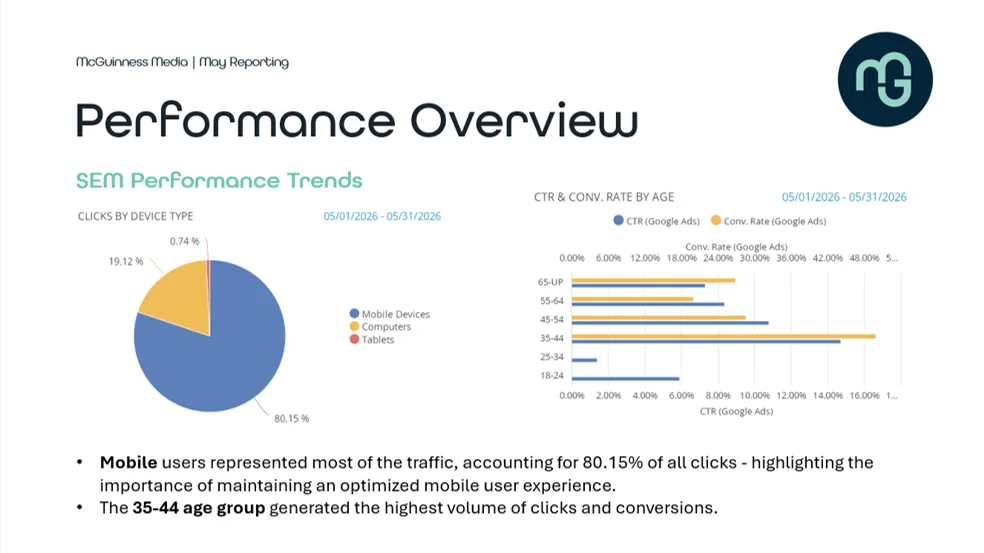
In-store audio bridges the gap between digital impressions and physical conversions. A shopper who saw a digital display ad on their phone earlier in the week receives a gentle overhead audio reminder while walking past the display. This drives closed-loop conversion at the register.
Integrating physical audio into broader marketing strategies expands the reach of traditional radio advertising into the retail aisle itself.
Modern retail audio platforms welcome two distinct revenue streams:
- Endemic Brand Partners: Packaged goods and merchandise brands currently stocked on store shelves running targeted campaigns to drive category share and basket size.
- Non-Endemic Advertisers: Service providers such as insurance carriers, automotive brands, or local entertainment venues reaching captive local audiences without competing with inventory on the shelves.
AI-Driven Localization, Dynamic Scripting, and Real-Time Measurement
Artificial intelligence has transformed retail audio from static pre-recorded tapes into a responsive, real-time media channel. Modern adtech platforms integrate directly with store-level point-of-sale (POS) systems and inventory databases to run context-aware campaigns.
Key technological advances include:
- AI Synthetic Voice Generation: Producing polished, natural-sounding audio commercials in minutes, allowing brands to launch location-specific or weather-triggered copy without studio booking delays.
- Inventory-Synced Ad Triggers: Automatically pausing audio promotions for SKUs that fall below inventory thresholds at specific store locations, preventing ad spend on out-of-stock items.
- Ambient Noise Normalization: Hardware that listens to background store noise and dynamically adjusts overhead volume so ads remain clear during peak hours without startling shoppers during quiet mornings.
- Closed-Loop Daily Attribution: Matching audio log timestamps against store-level POS transaction data to track incremental unit sales lift within 24 hours of broadcast.
These capabilities are expanding across enterprise retail footprints, as highlighted in Dollar General’s rollout of AI store audio, reaching 12,000 locations by Q2 2026 to deliver hyper-localized audio advertising across thousands of communities.
Case Studies: Proven ROI Across C-Stores and National Footprints
The sales impact of modern retail audio is backed by consistent point-of-sale data across diverse retail verticals:
- Energy Drink Brands: A leading energy drink manufacturer saw a 4% increase in unit sales by running targeted 30-second audio spots timed specifically to afternoon commuter traffic.
- Isotonic & Hydration Beverages: An isotonic sports beverage brand achieved a 7% unit sales lift alongside a $1.56 incremental return on ad spend (ROAS) by aligning audio cues with warmer store weather patterns.
- Proprietary Convenience Products: Convenience store audio programs, such as 7-Eleven’s Gulp Radio, consistently document 5% to 9% incremental sales lifts for proprietary food service and private-label beverage offerings.
- Mass Merchandise Footprints: Large discount networks reaching tens of millions of weekly shoppers demonstrate sustained category lift across grocery, household essentials, and seasonal merchandise.
Best Practices for Designing High-Impact Audio Promotions
Producing effective in-store audio requires a balanced creative approach. The goal is to inform and inspire the shopper without sounding abrasive or disrupting the overall shopping experience.
Scriptwriting and Creative Execution for In Store Radio Advertising
When crafting audio copy for overhead delivery, brevity and clarity are essential:
- Stick to the 30-Second Standard: A standard :30 spot allows for approximately 65 to 75 words spoken at a comfortable, natural cadence. Avoid cramming too many details into a single announcement.
- Focus on One Clear Call to Action (CTA): Tell the shopper exactly what to look for and where to find it (e.g., “Look for the red display in the beverage aisle”).
- Use Conversational Voice Talent: Select warm, authentic vocal tones that match your customer demographic. Avoid hard-sell infomercial deliveries that alienate shoppers.
- Integrate Sonic Branding: Consistent sonic logos, opening chimes, or melodic beds build long-term brand equity across multiple store visits.
Scheduling Frequency and Shopper Dwell Time Alignment
Audio programming must align with how long customers spend inside specific store formats:
- Grocery Stores: Shoppers spend an average of 54 minutes per visit and visit roughly 2.96 times per week. A single commercial spot airing once per hour ensures nearly every shopper hears the message without irritating employees.
- Mass Merchandise Stores: Visits average 35 minutes. Pacing messages every 8 to 10 minutes between music tracks provides balanced exposure without clutter.
- Drug & Convenience Stores: Trips are shorter and highly transactional (often 5 to 15 minutes). Running targeted spots twice per hour captures quick foot traffic effectively.
- Employee Fatigue Prevention: Avoid repeating the same promotional audio copy on tight loops. Rotate multiple creative variations and maintain dynamic music playlists that update daily to keep in-store staff engaged.
Execution and Media Planning: From Script to Overhead Broadcast
Executing a successful in-store audio campaign requires aligning audience data, store geography, and inventory distribution. At McGuinness Media & Marketing, we help businesses build cohesive media plans that integrate audio messaging seamlessly into their broader omnichannel marketing efforts.
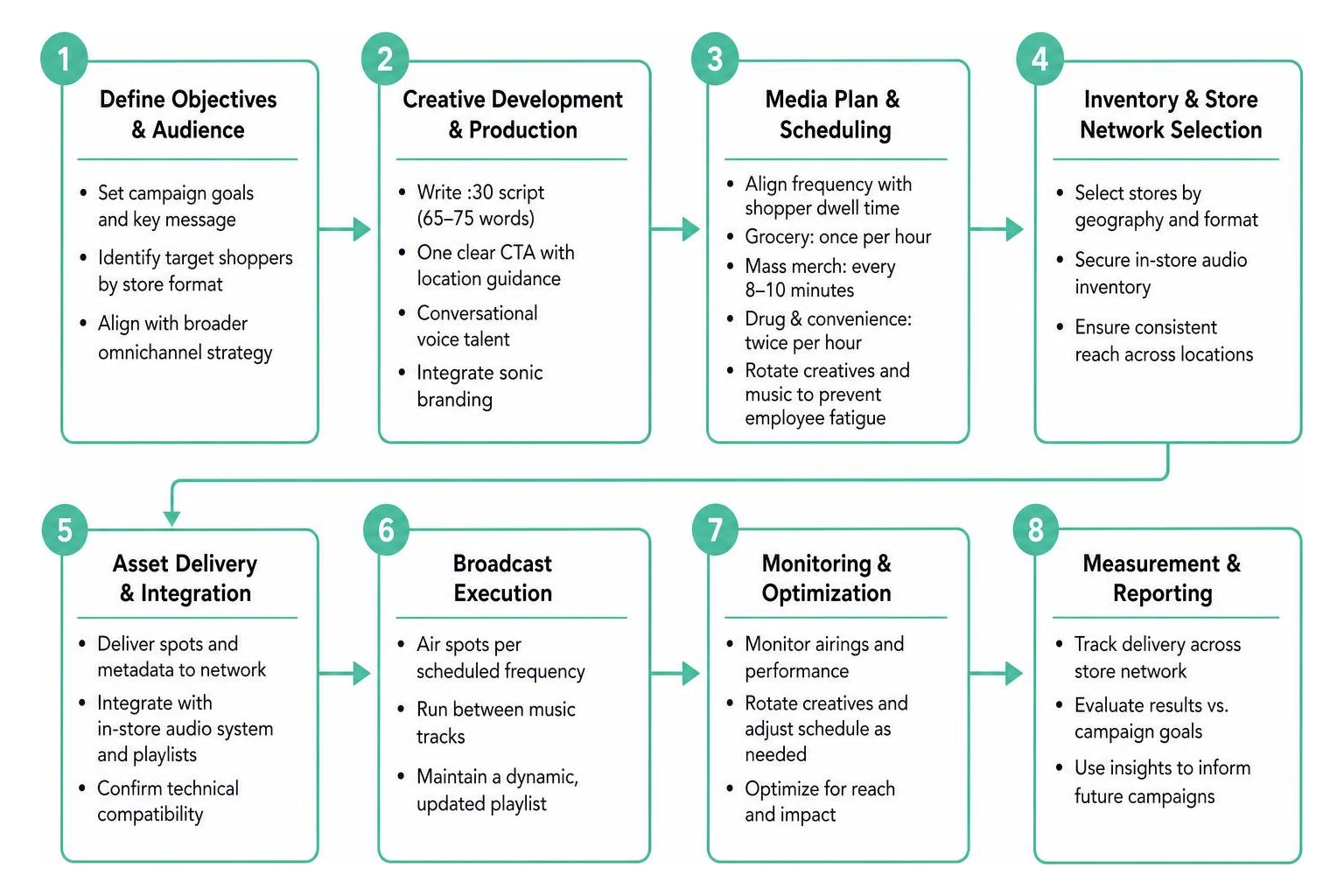
Whether you are launching private-label promotions across regional stores or securing placement within national retail media networks, strategic planning makes every dollar accountable.
To explore structured placement strategies, see our Step By Step Guide To Media Buying Services. Brands looking to balance over-the-air broadcasting with closed-loop retail media can also learn more about how to advertise radio across diverse channels.
Frequently Asked Questions About Retail Audio Marketing
How often should promotional audio messages play during store hours?
In grocery and mass merchandise retail environments, the standard cadence is one 30-second promotional message per advertiser per hour. Overall promotional audio is spaced so that announcements air every 8 to 10 minutes, separated by 2 to 3 curated songs. In smaller footprint stores with shorter dwell times (like convenience or drugstores), message rotations often run twice per hour.
Can businesses use standard Spotify or Apple Music playlists for background sound?
No. Standard consumer streaming accounts are strictly licensed for private, personal listening. Broadcasting consumer streams in a public retail business violates copyright law and can lead to substantial licensing penalties. Retailers must use dedicated commercial music services that carry public performance licenses (covering ASCAP, BMI, SESAC, and GMR) alongside filtered, lyric-screened playlists.
How do retailers measure sales attribution from overhead audio ads?
Modern retail audio attribution matches exact ad broadcast logs against real-time point-of-sale (POS) checkout data. By comparing unit sales lift in stores running the audio campaign against matched control stores with identical demographics that did not air the spots, retailers isolate the exact incremental sales lift and return on ad spend (ROAS) generated by the audio campaign.
Conclusion: Turn Retail Aisle Dwell Time into Measurable Revenue
Physical stores remain the heart of retail commerce. While digital ads build top-of-funnel awareness, in-store radio advertising meets shoppers at the exact moment of decision. By combining licensed, atmosphere-enhancing music with timely, targeted overhead announcements, retailers and brands can turn everyday aisle dwell time into measurable basket growth.
Orchestrating an effective in-store audio strategy requires the right mix of creative storytelling, technical compliance, and closed-loop data measurement. McGuinness Media & Marketing brings comprehensive strategic planning and creative production to help your brand cut through the noise and drive tangible sales results.
Ready to elevate your retail marketing strategy and drive measurable growth at the shelf? Connect with our team today through our Services/Media Planning hub to build your customized media campaign.