
Amplify Your Message: A Comprehensive Guide to Advertising on Radio
Why Radio Remains a Dominant Force in Advertising
Advertise radio remains one of the most effective ways to reach a broad, engaged audience in 2025. Whether through traditional AM/FM stations, digital streaming platforms like iHeartRadio, or satellite services like SiriusXM, radio advertising offers unparalleled reach and proven ROI. Here’s what you need to know:
Quick Answer: How to Advertise on Radio
- Choose Your Platform: Traditional terrestrial radio, digital streaming (Spotify, Pandora, iHeartRadio), satellite (SiriusXM), or podcasts
- Define Your Audience: Select stations and formats that match your target demographics (age, location, interests)
- Create Compelling Content: Develop 15, 30, or 60-second spots with clear messaging and a strong call-to-action
- Set Your Budget: Costs vary based on market size, daypart, frequency, and ad length (typically calculated via CPM)
- Measure Results: Track performance through unique promo codes, dedicated phone numbers, and website traffic analysis
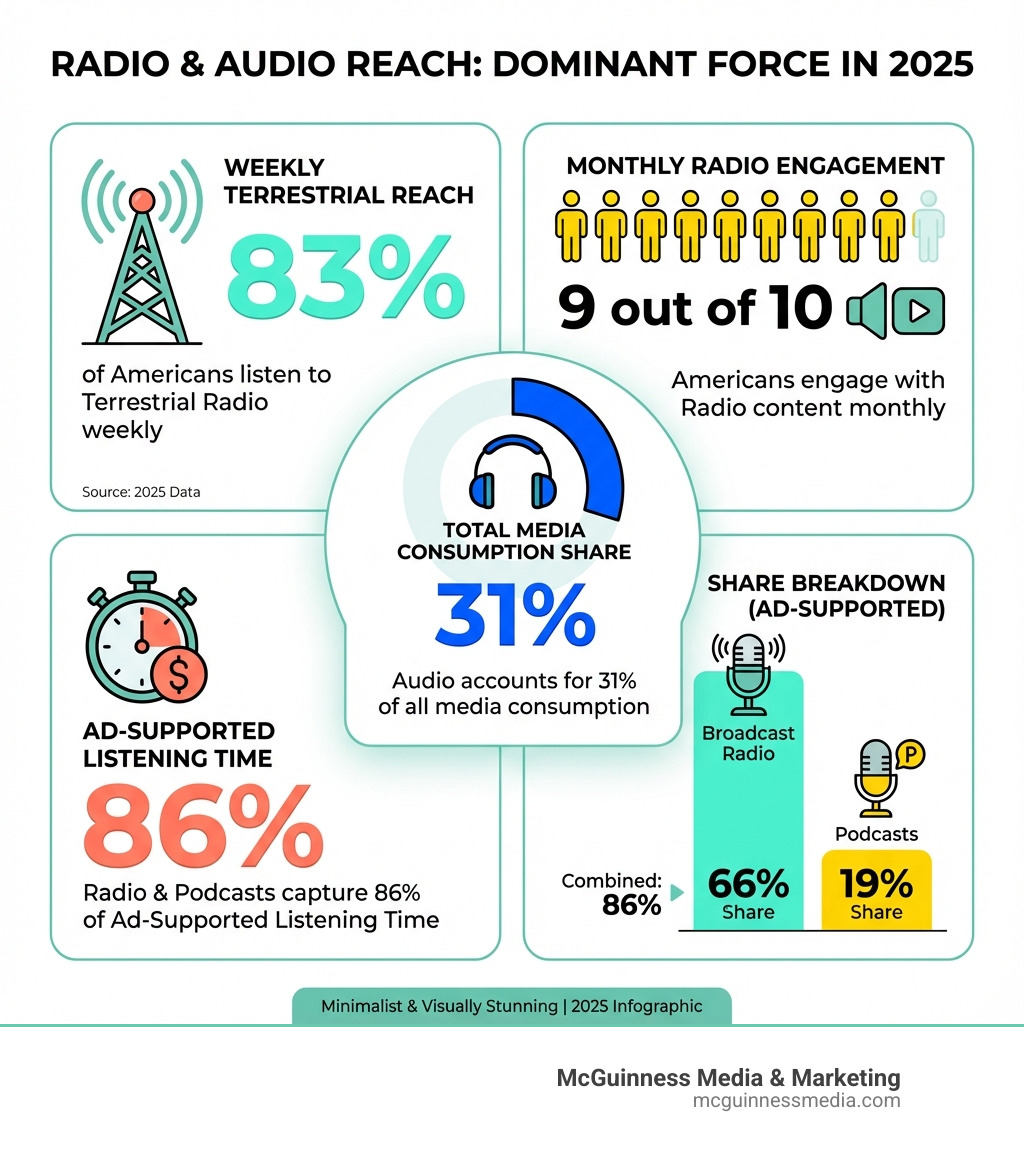
Radio isn’t what it used to be—it’s actually bigger. 9 out of 10 Americans listen to audio content from radio providers every month, and audio now accounts for 31% of all media consumption. From morning commutes with terrestrial radio to afternoon podcast listening and evening streaming sessions, radio has evolved into a multi-platform powerhouse that reaches listeners wherever they are.
The landscape has transformed dramatically. What once meant simply buying a 30-second spot on your local AM/FM station now encompasses streaming platforms reaching 188 million registered users, podcasts downloaded 165 million times monthly, and satellite services in 1 out of every 2 cars on the road. 83% of Americans ages 12 or older still listen to terrestrial radio in a given week, while digital audio consumption has grown to capture 73% of listeners.
This evolution hasn’t diminished radio’s effectiveness—it has amplified it. Radio and podcasts now capture 86% of all ad-supported audio listening time, with broadcast radio alone commanding a 66% share. The trust factor remains best: 79% of podcast listeners value their hosts’ opinions, and 66% consider or purchase recommended products. Meanwhile, radio advertising achieves a 77% correlation between hearing an ad and making a purchase—10% higher than traditional AM/FM alone.
I’m Megan McGuinness, and over my 20+ years developing marketing strategies for regional, national, and global brands, I’ve seen how strategic radio campaigns can advertise radio effectively and deliver measurable results across diverse industries from retail to hospitality. At McGuinness Media & Marketing, we’ve helped businesses steer this evolving audio landscape to reach the right audiences at the right time with the right message.
The Modern Audio Landscape: From Terrestrial to Streaming
The world of audio has exploded, offering more ways than ever for listeners to consume content and, by extension, for businesses like yours to advertise radio messages. Gone are the days when “radio” meant exclusively tuning into an AM/FM frequency. Today, it’s a dynamic ecosystem that blends traditional broadcasts with cutting-edge digital platforms.
Traditional AM/FM radio, broadcasting from land-based towers, remains a powerful medium, especially for local engagement. After all, 83% of Americans ages 12 or older listened to terrestrial radio in a given week in 2020. It’s free, widely accessible, and deeply ingrained in our daily routines, from morning commutes to workplace background noise.
However, the digital revolution has reshaped how we listen. Digital audio, encompassing everything from streaming music services to podcasts, has seen a remarkable surge. In 2022, 73% of people consumed digital audio, compared to 38% for traditional radio. People are spending more time with digital audio too, averaging 1 hour and 40 minutes daily, slightly more than the 1 hour and 23 minutes spent listening to terrestrial radio. This shift highlights the importance of an integrated audio strategy.
Streaming platforms like iHeartRadio have become behemoths in this space, with 188 million registered users and availability on over 500 platforms and thousands of connected devices. Podcasts, once a niche, are now mainstream, with iHeartMedia alone recording 180 million monthly downloads. And then there’s satellite radio, like SiriusXM, which offers a unique, ad-supported experience to 33 million listeners across a vast array of channels, often found in 1 in 2 cars on the road.
According to Pew Research, radio media remains powerful thanks to its loyal listeners. This loyalty, combined with the expansive reach of digital and satellite options, means that audio advertising is anything but outdated.
Traditional vs. Digital vs. Satellite Radio
To truly understand how to advertise radio effectively, it’s crucial to differentiate between the major players. Each offers unique advantages depending on your marketing goals, audience, and budget.
| Feature | Traditional Terrestrial Radio | Digital/Streaming Audio (e.g., iHeartRadio, AudioGO) | Satellite Radio (e.g., SiriusXM) |
|---|---|---|---|
| Reach | Broad local/regional reach; 83% weekly listenership (2020) | Global reach; 73% digital audio consumption (2022); 188M+ iHeart users | National reach; 33M listeners; 1 in 2 cars on the road; often incremental to AM/FM |
| Targeting | Demographic targeting by station format/genre; limited geo-targeting | Highly precise demographic, behavioral, interest, device, and geo-targeting (500+ options on AudioGO) | Demographic targeting by channel; content-specific targeting; geo-targeting capabilities (by request) |
| Cost | Varies widely by market, daypart, frequency; typically CPM-based; generally cheaper than TV/print | Flexible budgets (AudioGO minimum $250); CPM-based ($18-$20); real-time optimization | Varies by campaign placement; works with various budgets; 50% fewer ads than terrestrial |
| Ad Format | Produced spots, live reads, sponsorships, promotions, PSAs; 15/30/60 sec spots | Produced spots, interactive ads, pre-roll, host-read (podcasts); non-skippable on many platforms | 30/60 sec spots, live reads, channel sponsorships, custom segments; often less ad clutter |
| Reporting | Limited direct attribution; relies on promo codes, traffic spikes | Real-time analytics, listen-through rates, optimization capabilities | Partnered attribution (Veritonic, ArtsAI, LeadsRX) for brand lift and purchase correlation |
The Rise of Digital Audio and Podcasts
The statistics paint a clear picture: audio is a dominant force in media consumption. It now accounts for 31% of all media consumption, a significant chunk of our daily lives. And when it comes to ad-supported audio, radio and podcasts are leading the charge, capturing a combined 86% of listening time. Broadcast radio still leads with a 66% share of ad-supported audio listening, while podcasts hold a rapidly growing 19% share.
This growth isn’t just about listenership; it’s about engagement. Podcast listeners, in particular, are highly attentive and trusting. 79% of podcast listeners value their hosts’ opinions, and a remarkable 66% consider or purchase recommended products after hearing them mentioned. This “trust factor” is a goldmine for advertisers looking for authentic connections. iHeartMedia, as the #1 podcast publisher, boasts more than 165 million podcast downloads each month, showcasing the immense opportunity in this space.
This means that whether your audience is commuting in Warwick, RI, streaming their favorite music across the state, or delving into a captivating podcast, audio advertising allows you to meet them exactly where they are.
How to Effectively Advertise on Radio
Ready to dive in and advertise radio for your business? A successful campaign isn’t just about buying airtime; it’s about strategic planning, creative execution, and precise targeting.

At McGuinness Media & Marketing, we understand that every business has unique goals. Whether you’re aiming for brand awareness, driving traffic to your Rhode Island location, or boosting online sales, a clear strategy is paramount. This includes defining your audience, crafting a compelling message, and choosing the right platforms. Our Services are designed to guide you through this entire process.
Finding Your Audience: Targeting and Demographics
One of radio’s enduring strengths is its ability to segment audiences. Different stations and formats attract distinct listener demographics. For instance, while a Top 40 radio station might primarily target men and women aged 18-34, a talk radio format often appeals to an older male demographic, typically between 45-54. By understanding these nuances, we can help you select the stations that resonate most with your ideal customers in Warwick, RI, and beyond.
- Station Formats: Music genres (pop, rock, country, urban), talk radio (news, sports, politics), and public radio all cater to specific tastes and age groups.
- Listener Demographics: Radio stations collect data on their listeners’ age, gender, income, and interests. This allows us to pinpoint where your target audience spends their listening time.
- Geo-targeting Capabilities: For traditional radio, targeting is inherently geographic—you’re reaching listeners within a station’s broadcast range in Rhode Island. However, digital audio platforms take this a step further, offering highly precise geo-targeting options, allowing us to reach consumers based on their exact location, right down to their neighborhood.
- Dayparts: The time of day an ad airs significantly impacts who hears it. Morning drive (6-10 AM) and afternoon drive (3-7 PM) are often prime times, capturing commuters. Midday (10 AM-3 PM) reaches at-home listeners or those in workplaces, while evenings and weekends have their own unique audiences.
It’s not about what you listen to, but what your customers listen to. As the research suggests, choosing stations you personally enjoy probably won’t get the results you want. Instead, we focus on data-driven decisions to find where your audience truly tunes in.
Essential Elements of a Successful Ad to advertise radio
Once you know who you’re talking to, it’s time to craft what you’ll say. A successful radio ad is more than just words; it’s an auditory experience designed to capture attention and prompt action.
- Compelling Script: Keep it concise, clear, and focused on one key message. What problem do you solve? What benefit do you offer?
- Strong Hook: Grab listeners’ attention in the first few seconds. A question, a surprising fact, or an intriguing sound effect can do wonders.
- Clear Call-to-Action (CTA): Don’t leave listeners guessing. Tell them exactly what you want them to do: “Visit our website at…”, “Call us today at…”, “Stop by our Warwick location…”. Repetition helps!
- Jingles and Sound Effects: These can make your ad memorable and evoke emotions. A catchy jingle sticks in the mind, and relevant sound effects can paint a vivid picture.
- Ad Length: Radio ads are typically sold in 15, 30, or 60-second increments. While longer ads allow for more detail, shorter ads can be more cost-effective for high-frequency campaigns. We’ll help you determine the optimal length to get your message across effectively without breaking the bank.
- Storytelling: Even in a short spot, a mini-narrative can connect with listeners on an emotional level, making your brand more relatable and memorable.
Radio lacks visual cues, so your ad must create an impact using only sound. We specialize in crafting audio that stands out.
The Power of Personalities: Live Reads and Endorsements
In an age of skepticism, trust is golden. This is where the power of radio personalities truly shines. Live reads, where a station’s host delivers your message in their own voice, are incredibly effective because they leverage the established relationship and credibility the host has with their audience.
- Host-read Ads: When a beloved local Rhode Island personality endorses your business, it feels less like an advertisement and more like a trusted recommendation. This native integration can lead to significantly higher engagement.
- Endorsements and Trust: As we’ve seen, 79% of podcast listeners value hosts’ opinions. This holds true for radio personalities as well. Their personal touch and perceived authenticity can sway listeners more effectively than a pre-recorded commercial.
- Building Authenticity: Live reads allow for a conversational tone, making your brand feel more human and approachable.
- Connecting with Local Communities: Local radio personalities are often pillars of their community. Their endorsement can build immense goodwill and trust for your business within that community, whether it’s in Warwick or elsewhere in Rhode Island.
- Increased Listener Engagement: Listeners are more likely to pay attention to a message delivered by someone they know and trust, leading to better recall and action.
This form of advertising taps into the innate human tendency to be swayed by others’ opinions, a principle that impacts 82% of consumers. It’s about making a personal connection, not just a broadcast.
Budgeting and Measuring Your Campaign’s Success
Investing in radio advertising is an exciting step, but like any marketing effort, it requires a clear understanding of costs and a robust plan for measuring success. After all, what’s the point of amplifying your message if you don’t know if it’s resonating?
We believe in transparency and helping our clients get the most bang for their buck. Understanding the factors that influence costs allows us to craft a campaign that fits your budget while maximizing its impact. And once your campaign is live, measuring its effectiveness is crucial for optimizing future efforts and proving your return on investment (ROI). For more in-depth strategies, explore our Maximizing ROI: Media Planning Tips for Small Businesses guide.
Key Factors That Influence the Cost to advertise radio
There’s no one-size-fits-all answer to “how much does radio advertising cost?” The price tag is influenced by several key variables:
- Cost Per Mille (CPM): Radio rates are often calculated using a CPM model, which stands for “Cost Per Thousand.” It’s the cost to reach 1,000 listeners. The formula is typically: Number of People Listening x Cost to Reach 1,000 listeners (CPM) = Cost of Advertising Per Spot.
- Ad Frequency and Repetition: To be effective, radio ads need to be heard multiple times. The more frequently your ad airs, the higher the cost, but also the greater the chance of recall and action. We’ll work with you to find that sweet spot for frequency.
- Market Size and Competition: Advertising in a larger market like Providence, RI, will naturally be more expensive than in a smaller, less competitive area. High demand for popular stations also drives up prices.
- Daypart Selection: As mentioned earlier, prime dayparts like morning and afternoon drive times are more expensive due to higher listenership.
- Ad Length: Longer ads (60 seconds) cost more than shorter ones (15 or 30 seconds).
- Production Costs: Creating a professional radio ad involves scripting, voice talent, music, and sound effects. While these costs are generally lower than TV production, they are still a factor. Some platforms like AudioGO even offer free voice-over services or make it easy to hire talent for a low cost, which can be a game-changer for smaller budgets.
While there’s no fixed price, platforms like AudioGO allow you to start with a minimum budget as low as $250, making digital audio advertising accessible for many small businesses. Their base CPM for streaming campaigns is $18 USD/CAD, and for podcast campaigns, it’s $20 USD/CAD, offering a transparent pricing structure.
Measuring Radio Advertising ROI
Unlike some digital channels, measuring the direct ROI of radio can sometimes feel a bit like tracking a whisper in the wind. However, we have several effective strategies to help you gauge your campaign’s success:
- Unique Promo Codes: Offer a specific discount code or mention a unique phrase that listeners must use when purchasing or inquiring. This directly links sales back to your radio ad.
- Dedicated Landing Pages: Create a unique URL or landing page specifically for your radio campaign. Track visits to this page to see how many listeners are taking action.
- Custom Phone Numbers: Use a distinct phone number for your radio ads. This allows you to track calls generated directly from the campaign.
- Website Traffic Spikes: Monitor your website analytics for unusual spikes in traffic immediately following your ad airings. Correlate these with your radio schedule.
- Brand Lift Studies: For larger campaigns, brand lift studies can measure changes in brand awareness, perception, and recall among listeners exposed to your ads. iHeart’s audio advertising, for instance, has been shown to drive a 38% increase in message awareness and motivate 69% more consumers to take action.
- Attribution Partners: Platforms like SiriusXM partner with third-party services (Veritonic, ArtsAI, LeadsRX) to measure creative impact, brand lift, and even mid-funnel attribution, providing deeper insights into purchase correlation. In fact, SiriusXM notes a 77% correlation between listeners hearing an ad and making a purchase—10% more than AM/FM radio.
By combining these methods, we can provide a comprehensive picture of your radio advertising campaign’s performance and continuously optimize for better results.
Frequently Asked Questions about Radio Advertising
We get a lot of great questions about how to advertise radio effectively. Here are some of the most common ones, answered with our expert insights.
What are the different types of radio ads?
The beauty of radio advertising is its versatility. You have a range of options to suit your message and budget:
- Produced Spots: These are your classic pre-recorded commercials, professionally voiced, with music and sound effects. They offer high production quality and consistent messaging.
- Live Reads: As discussed, these are delivered by the radio personality themselves, often in a conversational, informal style. They build authenticity and leverage host credibility.
- Sponsorships: Your brand can sponsor specific segments, like traffic reports, weather updates, news bulletins, or even entire shows. This offers excellent brand association and repeated exposure.
- Promotions and Contests: Partner with a station to run a contest or giveaway. This creates excitement, generates engagement, and associates your brand with positive experiences.
- Endorsements: Similar to live reads, but often more personal, where a host genuinely recommends your product or service based on their own experience.
- Public Service Announcements (PSAs): While not directly commercial, PSAs offer a way for non-profits or community initiatives to gain airtime, sometimes for free or at a reduced rate.
- Digital Audio Ads: These include pre-roll ads on streaming platforms, interactive ads with clickable links, and podcast ads (both host-read and produced).
- Geo-targeted Digital Ads: Combining the power of digital audio with precise location targeting, allowing your message to reach listeners in specific geographic areas, complementing local terrestrial radio efforts.
The right mix depends on your goals, but rest assured, there’s an audio format that fits.
How much does it cost to start advertising on the radio?
The cost to advertise radio is highly variable, but it’s often more accessible than many businesses imagine. There’s no single price tag; instead, it’s a dynamic calculation based on multiple factors:
- Minimum Budgets: For digital audio platforms, entry points can be quite low. For example, AudioGO allows you to launch campaigns with a minimum budget of just $250. This makes it a highly cost-effective option for small businesses looking to dip their toes into audio advertising.
- Cost-Effective Options: Compared to traditional print or broadcast television, radio advertising generally offers a more affordable entry point due to lower production costs and varying spot rates.
- Customizable Packages: Most radio groups and advertising agencies (like us!) offer customizable packages. We can work with your budget, whether it’s modest or extensive, to create a plan that achieves your objectives.
- CPM-based Pricing: As discussed, many platforms use a Cost Per Mille (CPM) model, meaning you pay for every 1,000 impressions or listens. AudioGO’s base CPMs are $18 for streaming and $20 for podcasts, with additional costs for advanced targeting.
- Factors Affecting Entry Cost: Your starting cost will depend on the market (Providence vs. a smaller Rhode Island town), the popularity of the station, the dayparts you choose, the length of your ads, and the desired frequency.
Our goal is always to find the most efficient and effective way to get your message out there, ensuring every dollar works hard for your business.
Can I target a specific geographic area?
Absolutely! Targeting specific geographic areas is one of radio advertising’s core strengths, whether through traditional broadcasts or advanced digital methods.
- Local Station Reach: Traditional AM/FM radio stations inherently cover a specific geographic broadcast area. This makes them ideal for businesses looking to reach customers within a defined region, such as Warwick, RI, or the greater Providence metropolitan area. We can identify the stations whose signals best cover your target zones.
- Geo-targeting on Digital Platforms: Digital audio and streaming platforms offer even more granular geo-targeting capabilities. We can target listeners based on their precise location data, ensuring your ads reach people within a certain radius of your business, specific towns, or even zip codes. This is incredibly powerful for local businesses.
- Reaching Community Listeners: Many local radio stations are deeply embedded in their communities, providing local news, weather, and events. Advertising on these stations allows you to connect with listeners who are actively engaged with their local area.
- At McGuinness Media & Marketing, our roots are firmly in Rhode Island. As a leading Marketing Agency Rhode Island, we have extensive knowledge of the local media landscape and can precisely target your campaigns to reach your desired audience right here in our community.
This blend of broad local reach and precise digital geo-targeting means your message will resonate with the right people in the right place.
Conclusion
The enduring power of audio is undeniable. Radio, in its myriad forms, has not just survived the digital age; it has thrived, adapting and expanding its reach to become a multi-platform powerhouse. From the familiar voices on traditional AM/FM to the personalized playlists and captivating narratives of streaming and podcasts, audio continues to capture the ears and hearts of millions every day.
For businesses looking to advertise radio, this means an unprecedented opportunity to connect with engaged audiences, build brand awareness, and drive measurable results. The key, however, lies in taking a strategic approach: understanding the diverse audio landscape, precisely targeting your audience, crafting compelling messages, and diligently measuring your campaign’s impact.
Radio is more than just background noise; it’s an intimate, trusted medium that fosters strong connections. By integrating radio into your overall media mix, you can leverage its unique ability to reach both broad local audiences and highly specific demographics, ensuring your message is heard loud and clear.
At McGuinness Media & Marketing, we pride ourselves on being the #1 creative services leader in Rhode Island. Our two decades of experience in media planning and buying mean we know how to steer this complex audio world to your advantage. We’re here to help you cut through the noise and deliver your message with precision and impact.
Let us help you create a powerful audio strategy with our expert media planning services.