
Radio Advertising 101
Why Radio Advertising Remains a Powerful Marketing Tool in 2025
Radio advertising is a marketing strategy where businesses pay to broadcast promotional messages on AM/FM radio stations, satellite radio, or digital streaming platforms to reach listeners and drive brand awareness, traffic, or sales.
Key Facts About Radio Advertising:
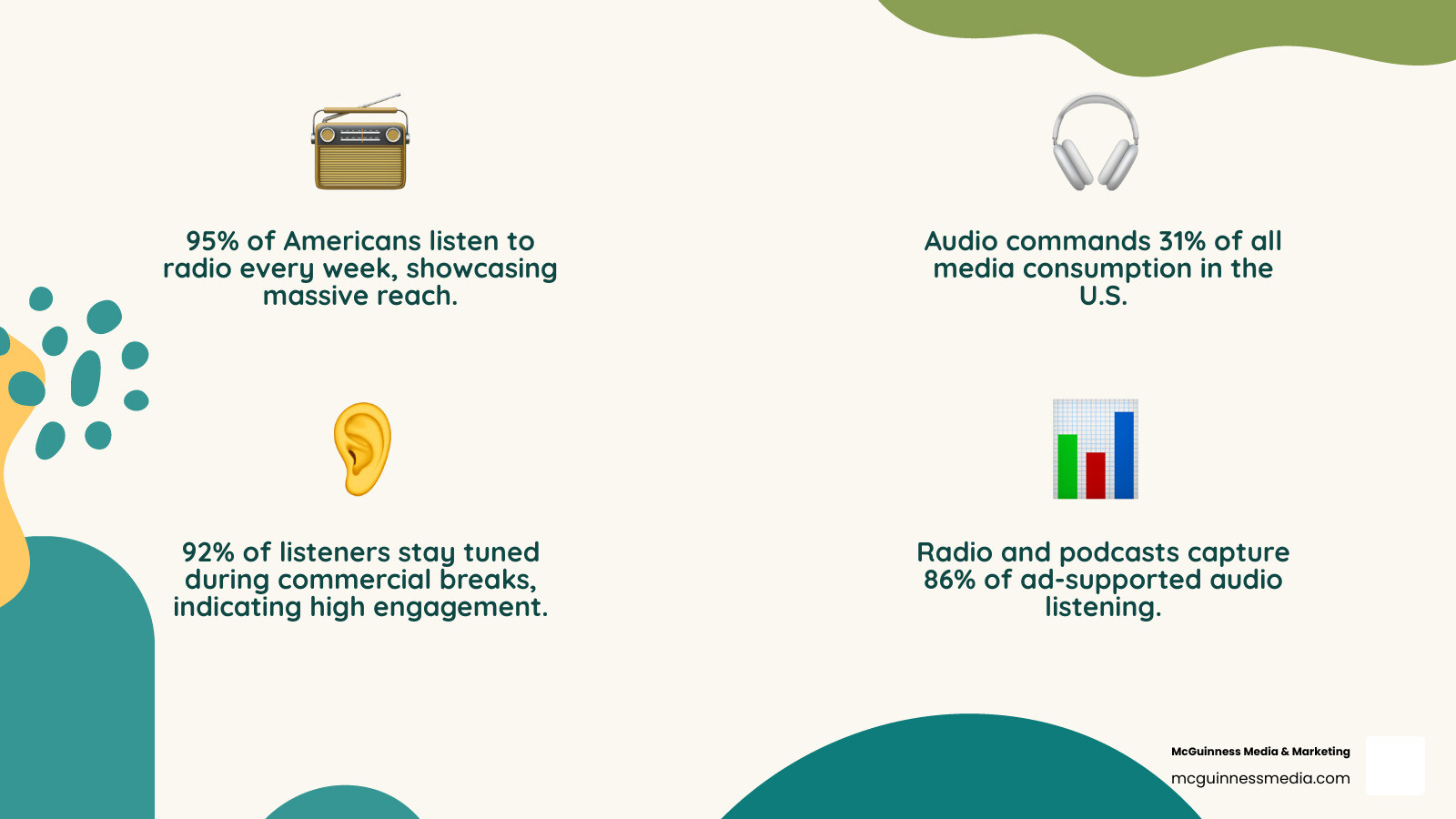
- Massive Reach: 95% of Americans still listen to radio every week
- Cost-Effective: Less expensive than television advertising with comparable reach
- High Engagement: 92% of listeners stay tuned during commercial breaks
- Trusted Medium: 26% of listeners show more interest when a DJ endorses a product
- Quick to Deploy: Ads can be created and aired within days
- Local Targeting: Stations cater to specific demographics, ages, and communities
If you’ve ever wondered whether radio advertising still works in our digital-first world, the answer is a resounding yes. Despite the rise of streaming and social media, audio—including traditional radio, podcasts, and internet radio—commands 31% of all media consumption in America. It reaches people during their daily routines, offering a personal, trusted, and affordable way to connect with a captive audience that actually listens. From the first ad in 1922 to today, audio advertising continues to deliver measurable results for businesses of all sizes.
This guide covers everything you need to know about radio advertising, from its enduring effectiveness and campaign creation to its evolution into digital streaming and ROI measurement. You’ll learn about ad formats, targeting, legal requirements, and emerging trends in the audio advertising landscape.
I’m Megan McGuinness, owner and chief marketing officer of McGuinness Media & Marketing. With over 20 years of experience developing strategic radio advertising campaigns for regional, national, and global brands, I’ve seen how the right audio strategy can transform a business’s reach and drive tangible growth.
The Enduring Power of Radio: Why It Still Works for Businesses
Forget the image of static-filled broadcasts; modern radio advertising is a dynamic and powerful tool for businesses, especially for connecting with local communities in Rhode Island. It offers a unique blend of massive reach, cost-effectiveness, and the ability to foster listener loyalty and trust. Whether in the car in Warwick, RI, or listening to a podcast at home, this consistent engagement with audio makes it an ideal platform for advertisers, reaching even rural or hard-to-reach areas.
Best Reach and Cost-Effectiveness
The numbers are compelling: 95% of people tune into the radio weekly, and platforms like iHeartMedia reach 9 out of 10 Americans monthly. This massive reach extends to local listenership in Rhode Island, making radio advertising a cornerstone of effective marketing.
Better yet, radio is significantly less expensive than television but delivers comparable reach, making it a budget-friendly option. Radio also excels at delivering high-frequency messaging, which is key for ad recall. Listeners are receptive, with 92% staying tuned during commercial breaks. The first or second ad in a break has higher recall, as listeners often see commercials as a fair trade for free content.
To ensure your radio advertising campaigns drive tangible results, strategic media planning is essential. We help businesses in Rhode Island maximize their return on investment by carefully selecting stations, optimizing ad placements, and tailoring messages to resonate with local audiences.
Learn more about optimizing your marketing spend with our insights on Maximizing ROI: Media Planning Tips for Small Businesses.
The Influence of Local Stations and Personalities
Local radio is woven into the fabric of our communities, providing news, weather, and entertainment that impacts daily life in Rhode Island. This fosters an incredible level of trust between listeners and their local stations and on-air personalities.
When a familiar local DJ endorses a product, it carries significant weight. Listeners view these personalities as trusted friends, making their endorsements incredibly powerful. Statistics show that 26% of listeners are more interested in a product when a DJ endorses it. This personal recommendation taps into the 82% of consumers who are swayed by others’ opinions.
By leveraging local personalities, businesses can tap into this inherent trust, making their messages feel less like an ad and more like a helpful recommendation. For businesses targeting specific demographics within Rhode Island, this hyper-local targeting is invaluable. We can help you identify the right stations and personalities in Warwick, RI, and beyond to ensure your message hits home.
A Brief History of Radio Advertising
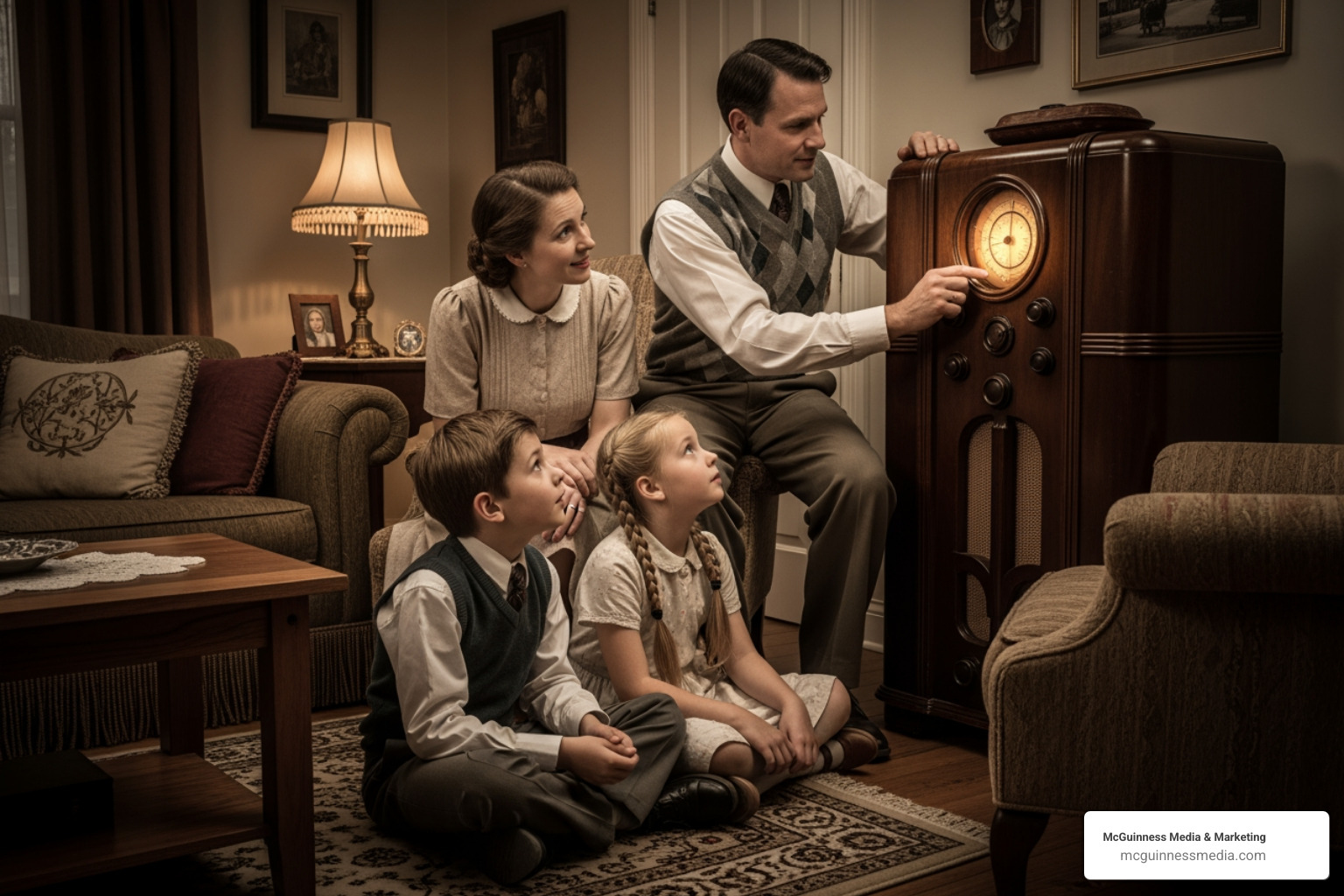
To appreciate the power of radio advertising today, it helps to look at its history, which is intertwined with the evolution of broadcasting itself, from its humble beginnings to its “Golden Age.”
From “Toll Broadcasting” to the First Commercial
Before radio became a commercial powerhouse, early stations experimented with funding, from mentioning record companies to being sponsored by radio manufacturers. The concept of “toll broadcasting” emerged in 1922, allowing stations to sell airtime. On August 22, 1922, the first radio ad aired on New York’s WEAF for the Queensboro Corporation. The 15-minute ad promoted apartments and laid the foundation for what followed.
This led to the “Golden Age of Radio” in the 1930s and 1940s, where entire programs were sponsored by brands like “The Lux Radio Theatre.” The focus shifted from simple announcements to immersive storytelling that built unprecedented brand loyalty.
The Evolution into the Digital Age
The internet profoundly impacted radio advertising, with the rise of streaming services offering listeners more control. U.S. Internet radio listening grew from 12% in 2002 to over 50% by 2015.
Today’s consumers listen to an average of 961 hours and 10 minutes of music annually, so advertising strategies must adapt. Podcasts have emerged as a significant force, becoming the modern equivalent of talk shows by fostering engaged communities around niche topics. Their effectiveness is undeniable: podcasts provide a +19% brand breakthrough compared to all other media, and 72% of longtime listeners have purchased from a sponsored ad.
Understanding and adapting to these changes is paramount. By embracing digital audio platforms alongside traditional radio, we can create comprehensive strategies that capture the attention of today’s diverse audiences in Rhode Island, a topic we explore further in Adapting to the New Media Landscape: Challenges for Brands.
How to Create an Effective Radio Advertising Campaign

Crafting a successful radio advertising campaign is about more than writing a script; it’s about painting a picture with sound to evoke emotion and drive action. At McGuinness Media & Marketing, our creative services ensure your message resonates. Here are the essential steps to creating a campaign that cuts through the noise.
Step 1: Choose Your Ad Format
The first decision in crafting your radio ad is selecting the right format. Each has its unique strengths and can be incredibly effective when used strategically:
- Live Reads: A local radio personality or DJ reads your ad copy on air. Because listeners have a personal connection with DJs, live reads can feel more authentic and lead to higher recall.
- Jingles: These are short, memorable tunes that embed your brand in the listener’s mind. The strong connection between music and memory makes jingles especially effective.
- Sponsorships: Your brand can sponsor specific segments, like the morning traffic report or weather forecast, linking your company name with valuable content and boosting brand awareness.
- Personified Ads: These ads use characters or distinct voices to tell a brand’s story, building brand value through personality rather than direct selling.
- Testimonials: Hearing real people share positive experiences with your product can be incredibly persuasive, improving credibility through social proof.
- Produced Spots: These are pre-recorded ads created by a station or agency. They offer the most creative flexibility, incorporating professional voice talent, sound effects, and music.
Step 2: Define Your Strategy and Key Elements
Once you’ve chosen a format, focus on these strategic elements:
- Target Audience: Know who you’re talking to. Understanding the demographics, interests, and listening habits of your ideal Rhode Island customer is crucial. Station data can help determine if their listeners are a good fit.
- Station Selection: Different stations cater to different tastes (e.g., rock for younger, news-talk for older). We’ll help you select stations in Warwick, RI, and beyond that align with your target audience.
- Dayparts (Drive Time): Listenership fluctuates in “dayparts.” Morning and afternoon “drive times” (6-10 AM and 3-7 PM) are most popular and expensive, but other dayparts can be more cost-effective.
- Ad Frequency: Frequency is vital. It takes at least three exposures for a message to be noticed. Running shorter ads more often is typically more effective for building familiarity and trust.
- Compelling Offer: Your ad needs a strong offer that entices immediate action.
- Clear Call-to-Action (CTA): Tell listeners exactly what to do next (e.g., “Visit our website…”, “Call today…”). Repeat your CTA several times for maximum impact.
Step 3: Understand the Legal Requirements
Navigating the legal landscape of radio advertising is crucial. In the United States, two primary federal agencies oversee broadcast advertising:
- The Federal Communications Commission (FCC): The FCC regulates commercial broadcasting and has strict “sponsorship identification” rules. Stations must disclose when payment has been provided for on-air mentions, a rule established in response to “payola” scandals. The goal is listener transparency. You can learn more about Payola and Sponsorship Identification rules from the FCC.
- The Federal Trade Commission (FTC): The FTC prevents false or misleading advertising. Their guidelines cover substantiating claims and ensuring clear disclosure of material connections between endorsers (like a DJ) and the advertiser. If you make a claim, you must be able to back it up.
At McGuinness Media & Marketing, ensuring your campaigns are both creative and compliant is a top priority. We’ll help you steer these regulations so you can focus on connecting with your audience.
The Future of Audio: Trends, Measurement, and the Rise of Digital
The world of audio is constantly evolving, and so is radio advertising. While traditional broadcast radio remains strong, especially in Rhode Island, the rise of digital audio platforms has created an exciting new ecosystem for advertisers. This new landscape offers unparalleled opportunities for data-driven targeting and precise measurement, allowing us to fine-tune campaigns for optimal results.
The New Audio Ecosystem: Podcasts and Streaming
Modern-day consumers now listen to an average of 961 hours and 10 minutes of music per year, much of it through streaming services. Internet radio listening in the U.S. soared from 12% in 2002 to over 50% by 2015, showing a clear shift in how people consume audio.
Podcasts, in particular, have exploded in popularity, offering deep engagement and a strong sense of community. They provide a significant +19% brand breakthrough compared to all other media, demonstrating their power to capture attention. Major players like iHeartMedia have become the #1 Podcast Publisher, hosting popular shows that garner over 165 million podcast downloads each month. This means massive audiences are listening intently, with 79% of podcast listeners valuing hosts’ opinions and 66% considering or purchasing recommended products.
For businesses, this new audio ecosystem means we can develop multi-platform strategies that combine the broad reach of traditional radio with the targeted precision of digital audio. This comprehensive approach ensures your message is heard across all touchpoints, a topic we explore in The Power of Radio in 2025.
How to Measure the ROI of your radio advertising
One of the most common questions we get is, “How do we know if our radio advertising is working?” Today, we have a suite of tools and strategies to accurately track the effectiveness of your campaigns:
- Tracking Codes: Use unique codes that customers must mention when they call or visit to attribute sales directly to a specific radio ad.
- Vanity URLs: Create a specific, easy-to-remember URL unique to your radio campaign (e.g., “YourBusiness.com/RadioOffer”) to track website traffic from your ads.
- Dedicated Phone Numbers: Using a phone number unique to your campaign allows us to count calls generated solely by that advertising effort.
- Website Traffic Analysis: Monitoring website traffic spikes during or immediately after your ads air can help infer the impact of your campaign on online engagement.
- In-Store Traffic Surveys: For brick-and-mortar businesses in Rhode Island, simply asking customers “How did you hear about us?” can provide invaluable insights.
- Digital Audio Metrics: For ads on podcasts or streaming services, platforms can provide data on impressions, click-through rates, and listener demographics. Some platforms, like Spotify Ad Studio, even offer proprietary ad technology for data-driven measurement.
Radio advertising takes time to build momentum. Experts recommend allowing at least three to six months before expecting a significant impact. After six months to a year, an effective strategy should show measurable increases in sales or inquiries. Patience and consistent tracking are key.
Frequently Asked Questions about Radio Advertising
How much does radio advertising cost?
The cost of radio advertising can vary widely, much like the price of a good coffee in Rhode Island—it depends on where you go! Several factors influence the price:
- Market Size: Advertising on a station in a large metropolitan area will generally be more expensive than on a local station in a smaller market like Warwick, RI.
- Station Ratings: More popular stations with higher listenership command higher rates.
- Time Slot (Daypart): As we discussed, “drive times” (morning and afternoon commutes) are premium slots and therefore more costly due to maximum audience reach. Advertising during off-peak hours can be more budget-friendly.
- Ad Length: Shorter ads are typically less expensive than longer ones.
- Message Complexity: If you need professional voice talent, intricate sound design, or a custom jingle, the production costs will be higher than a simple live read.
However, it’s worth reiterating that radio advertising is less expensive than cable television advertising but often has the same reach. This makes it a highly cost-effective option for many businesses looking to make a significant impact without breaking the bank.
How long should my radio ad be?
The ideal length for your radio advertising spot depends on your message and campaign goals. The most common lengths are:
- 60-second ads: These offer ample time to tell a story, explain a complex offer, or build an emotional connection. They are often used for brand building or detailed product explanations.
- 30-second ads: A popular choice, 30-second spots are effective for delivering a concise message with a clear call to action. They strike a good balance between detail and frequency.
- 15-second ads: These are great for reinforcing a brand message, announcing a quick sale, or serving as a reminder. They’re typically more affordable and can be used for higher frequency.
- 10-second “billboards”: Often used adjacent to station features like traffic or weather reports, these are quick mentions to keep your brand top-of-mind.
While 60-second spots are often the most common, shorter ads (15 or 30 seconds) can be incredibly effective when run with higher frequency, ensuring your message is heard repeatedly. We help you determine the optimal length to achieve your objectives.
Is radio still effective for reaching younger audiences?
Absolutely! While traditional AM/FM radio still boasts a impressive 95% weekly listenership across all age groups, the way younger audiences consume audio has diversified. This means our approach to reaching them has to be multi-faceted:
- Traditional Radio: Yes, many younger listeners still tune into specific music formats or personalities on local stations in Rhode Island, especially during commutes.
- Digital Audio: This is where younger demographics truly shine. U.S. Internet radio listening has grown significantly, and platforms like Spotify, Apple Music, and Pandora are staples for modern-day consumers. These services offer extensive opportunities for targeted digital audio advertising.
- Podcasts: As we’ve discussed, podcasts are hugely popular with younger audiences. They seek out content that aligns with their interests, and this creates a highly engaged environment for advertising.
So, to effectively reach younger audiences with radio advertising, we recommend a multi-platform approach. Combining spots on traditional local stations with targeted ads on streaming services and popular podcasts ensures your message reaches them wherever they are listening, be it in the car, at the gym, or studying at home.
Conclusion: Tune In to Growth
As we’ve explored, radio advertising is far from a relic of the past. It’s a vibrant, evolving, and incredibly powerful marketing tool that continues to deliver exceptional results for businesses, particularly for local businesses right here in Rhode Island. From its pioneering days of “toll broadcasting” to its current multi-platform dominance across traditional airwaves, podcasts, and streaming services, audio advertising has proven its resilience and adaptability.
We’ve seen how its massive reach, cost-effectiveness, and the trusted connection listeners have with local stations and personalities make it an invaluable asset for building brand awareness and driving consumer action. Crafting an effective campaign requires thoughtful consideration of ad formats, strategic placement, and adherence to legal guidelines—all areas where expert guidance can make a world of difference. And with modern measurement techniques, tracking your return on investment is more precise than ever before.
The future of audio is bright, characterized by continued innovation in digital platforms and increasingly sophisticated targeting capabilities. For businesses in Warwick, RI, and throughout the state, this means an unprecedented opportunity to connect with your audience in a deeply personal and impactful way.
At McGuinness Media & Marketing, we understand the nuances of this dynamic landscape. As Rhode Island’s #1 creative services leader, our expertise in strategic planning, creative development, and media buying ensures your radio advertising campaigns are not just heard, but remembered, acted upon, and ultimately, drive tangible growth for your business.
Ready to harness the enduring power of audio and tune in to growth? Let’s plan your next media campaign together.