Engage to Win: Simple Ways to Boost Customer Loyalty
Simple Ways to Boost Customer Engagement and Loyalty
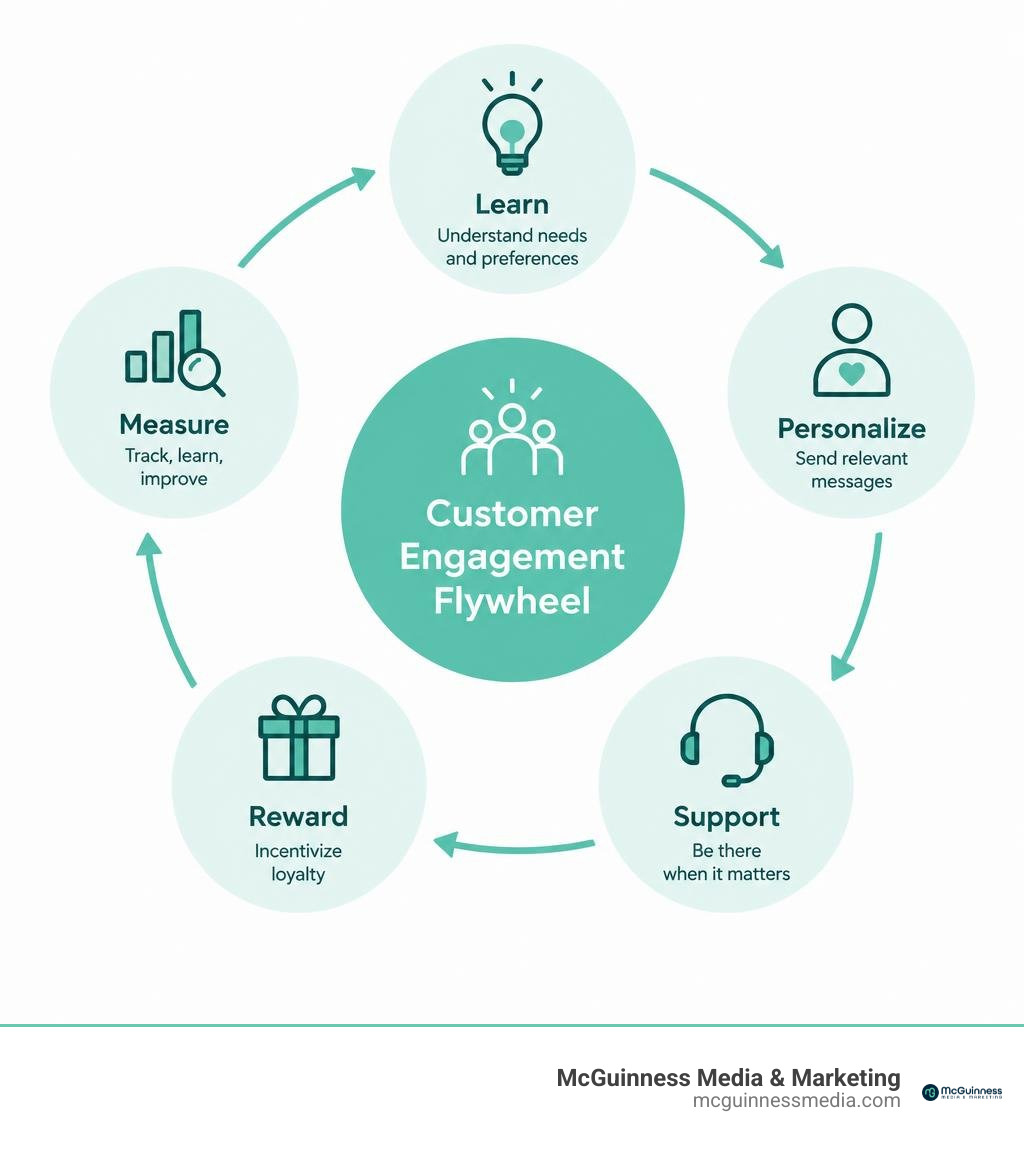
To boost customer engagement, make every interaction more useful, personal, and timely. Start with these four moves:
- Learn what customers need from their behavior, purchases, questions, and feedback.
- Send relevant messages on the channels they prefer, not the same campaign to everyone.
- Reward repeat actions with helpful offers, loyalty benefits, and strong post-purchase support.
- Measure retention, repeat purchase rate, customer lifetime value, and feedback – then improve what is not working.
Customer engagement is not just getting clicks, likes, or email opens. It is the ongoing relationship between a customer and your brand. When people feel understood and supported, they are more likely to return, spend more, and recommend you to others. That matters in 2026, when 73% of consumers say the overall experience plays a major role in what they buy.
The goal is simple: replace generic outreach with a connected experience across your website, email, social media, support, and in-person interactions. Done well, engagement turns a first purchase into lasting loyalty.
I am Megan McGuinness, owner and chief marketing officer of McGuinness Media & Marketing. For more than 20 years, I have helped brands in retail, finance, hospitality, and other industries use smart strategy, creative, and media to boost customer engagement and drive measurable growth.
Boost customer engagement basics:
Why Customer Engagement Drives Sustainable Business Growth
Customer acquisition gets your business noticed, but continuous customer engagement keeps your doors open. Relying solely on paid ads to win one-time buyers creates an expensive, exhausting cycle. The real engine of long-term profitability lives in the customers you already have.
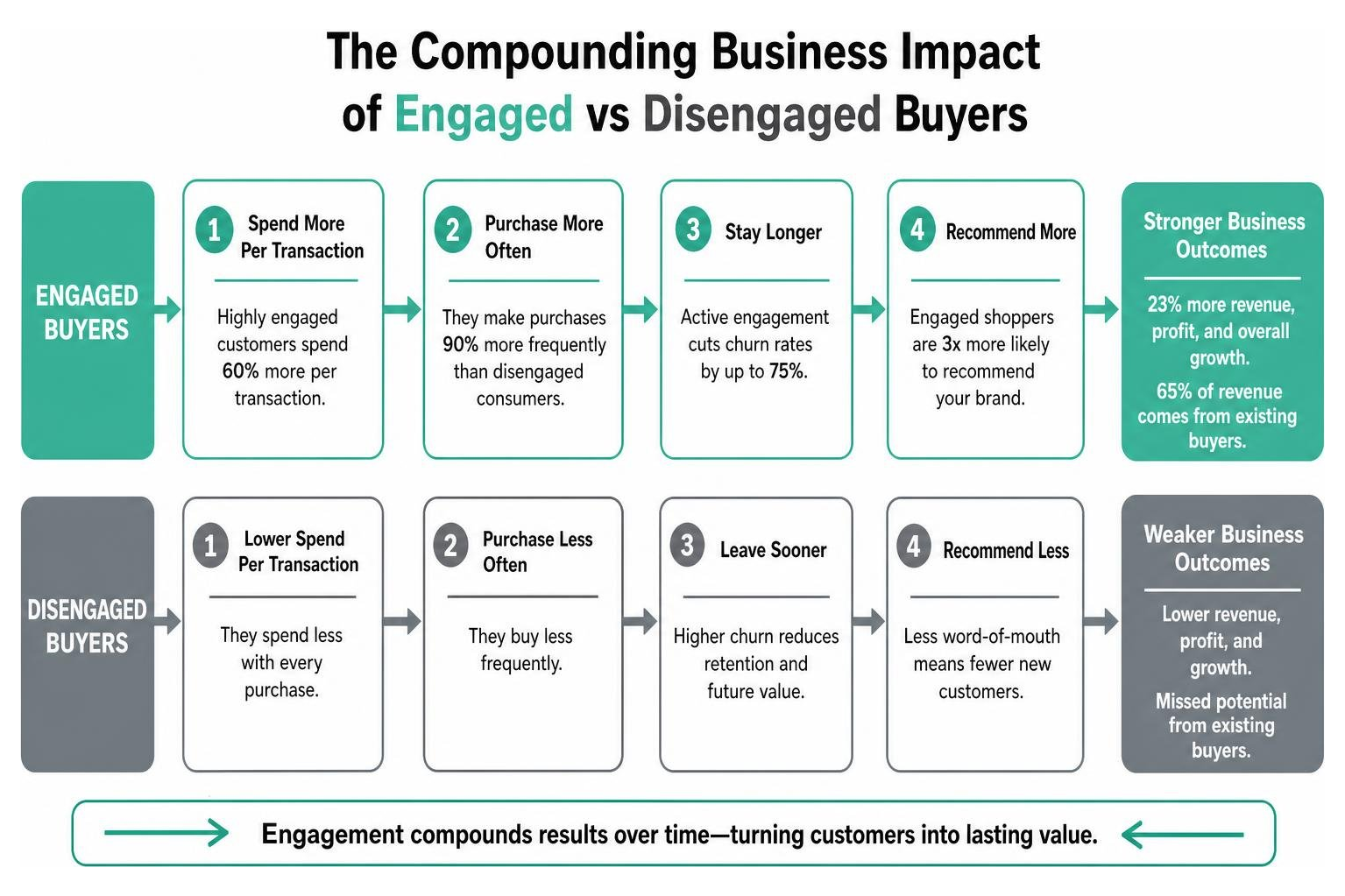
Consider what the numbers tell us: brands with fully engaged customers unlock approximately 23% more revenue, profit, and overall growth compared to competitors operating at baseline engagement levels. In fact, 65% of an established company’s revenue originates directly from existing buyers. When someone builds an emotional connection with your brand, their spending habits shift dramatically. Highly engaged customers spend 60% more per transaction and make purchases 90% more frequently than disengaged consumers.
Beyond direct transactions, active customer engagement builds powerful operational moats:
- Revenue Acceleration: Engaged buyers do not wait for seasonal sales; 70% of loyal consumers spend twice as much (or more) on businesses they trust.
- Drastic Churn Reduction: Maintaining active, meaningful touchpoints cuts churn rates by up to 75%. Keeping existing customers satisfied costs a fraction of acquiring new ones, as outlined in this guide on how customer retention strategies help small businesses grow.
- Organic Brand Discovery: Word-of-mouth represents 36% of all brand discovery for internet users. Because engaged shoppers are 3x more likely to recommend your brand, every delighted buyer turns into a credible marketing channel.
- Maximized Customer Lifetime Value (CLV): Increasing retention by just a few percentage points compounds over time, lifting margins and giving your business more capital to reinvest in innovative creative strategies.
Building a Data-Driven Customer Engagement Strategy
Engaging customers effectively is never an accident. It requires a deliberate operational blueprint that captures customer intent, unifies fragmented data points, and orchestrates timely communication across every channel.
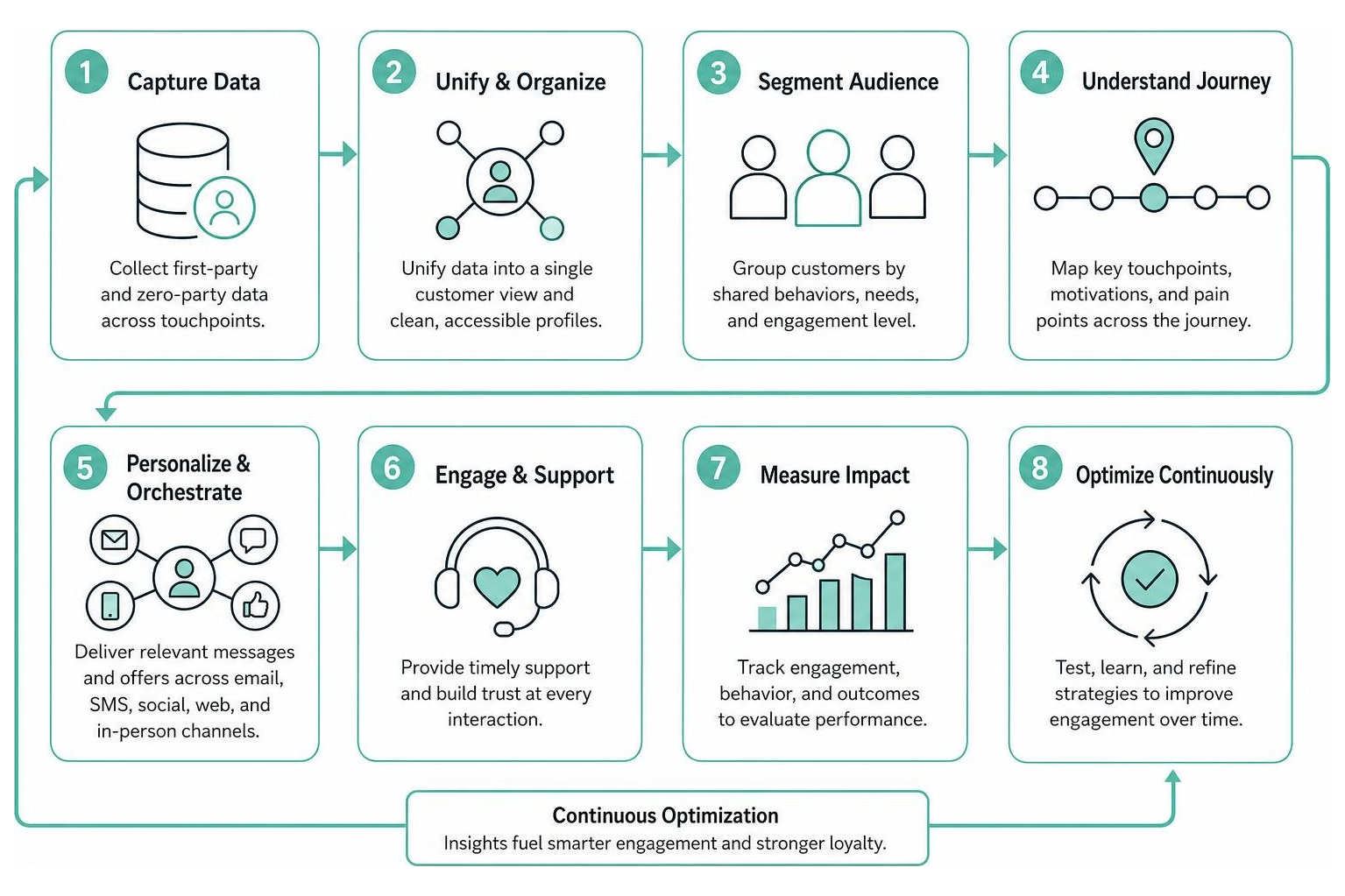
A winning engagement framework rests on four core pillars:
- Data Foundation: Clean, accessible first-party and zero-party customer data.
- Personalization Engine: Logic rules or machine learning systems that tailor offers and content.
- Multi-Channel Orchestration: Coordinating messaging across email, SMS, social, web, and physical touchpoints.
- Continuous Optimization: Relentless testing, feedback gathering, and measurement.
Mapping the Multi-Channel Customer Journey
To design meaningful interactions, map out the specific phases of your customer lifecycle: Awareness, Consideration, Decision, Retention, and Advocacy. At each stage, shoppers have distinct questions and emotional needs.
During the decision stage, friction often peaks. If an online shopper views a specific service three times without booking, an automated, tailored FAQ email or live chat prompt can resolve their uncertainty. For complex sales cycles, having a solid digital marketing strategy ensures that your paid media, onboarding sequences, and post-purchase communications align without gaps.
Eliminating Content Fatigue and Message Clutter
More communication does not equal better engagement. Flooding your audience’s inbox with batch-and-blast announcements creates inbox fatigue and drives unsubscribes. In fact, 23% of consumers report that irrelevant, generic messaging actively damages their loyalty to a brand.
Practice active listening by setting strict message frequency caps. Track behavioral cues: if a user stops opening daily promotional emails, automatically reduce frequency and switch to educational or high-value digest updates. By taking proactive steps toward avoiding social media fatigue, you preserve brand goodwill and ensure your messages remain a welcome sight rather than digital background noise.
Proven Tactics to Boost Customer Engagement Across Channels
Once your data foundation and journeys are established, use targeted tactics to deepen relationships across every digital and physical touchpoint.
1. Personalize Touchpoints to Boost Customer Engagement
Personalization has evolved far beyond adding a first-name tag to an email subject line. Modern buyers demand dynamic experiences tailored to their actual browsing patterns, past purchases, and expressed interests. Research shows that 71% of consumers expect personalized interactions, and 76% experience genuine frustration when companies deliver generic experiences.
Companies that lead in fast growth generate 40% more revenue from personalization than their competitors. Deploying dynamic content modules on your website, serving category-specific product recommendations, and creating data-driven content ensures your audience receives recommendations aligned with their exact lifestyle. For example, personalized email communications produce an immediate 26% lift in open rates compared to static newsletters.
2. Leverage AI and Automation to Boost Customer Engagement
Artificial intelligence allows businesses to execute 1:1 engagement at scale without increasing manual workloads. Predictive analytics analyze past purchasing rhythms to forecast exactly when a customer will need a replenishment or product upgrade.
Advanced marketing teams are adopting autonomous systems, such as an Audience Activation Agent, which connects disparate databases, deduplicates customer records, and dynamically updates audience segments across ad and email networks in real time. Rather than sending cold lead campaigns to recent high-ticket purchasers, AI ensures every user receives context-aware messaging. Understanding the broader rise of AI in marketing enables small and mid-sized enterprises to automate proactive outreach, deliver instant chatbot support, and boost conversion rates by double digits.
3. Gamify Loyalty Programs and Post-Purchase Experiences
A points-for-pennies discount program is rarely enough to build brand affinity. Modern loyalty programs succeed when they incorporate tiered rewards, status milestones, and gamified mechanics. Gamified marketing initiatives increase customer engagement metrics by up to 48%, while members of tiered loyalty programs spend an average of 18% more than single-tier program participants.
The post-checkout moment represents one of your most underutilized assets. Instead of a bland receipt screen, introduce interactive experiences:
- Streak Tracking and Badges: Reward customers for taking daily actions, writing verified reviews, or logging healthy habits.
- Dynamic Post-Purchase Upsells: Offer exclusive, one-click add-ons directly on the order confirmation screen before shipping.
- Contextual Onboarding: Send automated SMS and email guides showing customers how to unbox, set up, or maximize the value of their purchase.
4. Foster Community and User-Generated Advocacy
Consumers trust other consumers far more than direct advertising. Fostering an active brand community turns passive buyers into vocal advocates. Create private customer groups, host interactive webinars, or spotlight user-generated content (UGC) across your social feeds.
Active social listening allows you to jump into conversations where customers discuss your industry, answer questions in real time, and celebrate customer milestones. Partnering with a dedicated agency for expert social media marketing helps your brand maintain an authentic, responsive voice that sparks organic conversations and reinforces community pride.
Integrating Digital Engagement with In-Person Experiences
If your business operates brick-and-mortar storefronts, offices, or pop-up activations, bridging the gap between digital and physical channels is critical. Customers who interact with brands across multiple channels deliver a 30% higher lifetime value than single-channel buyers.
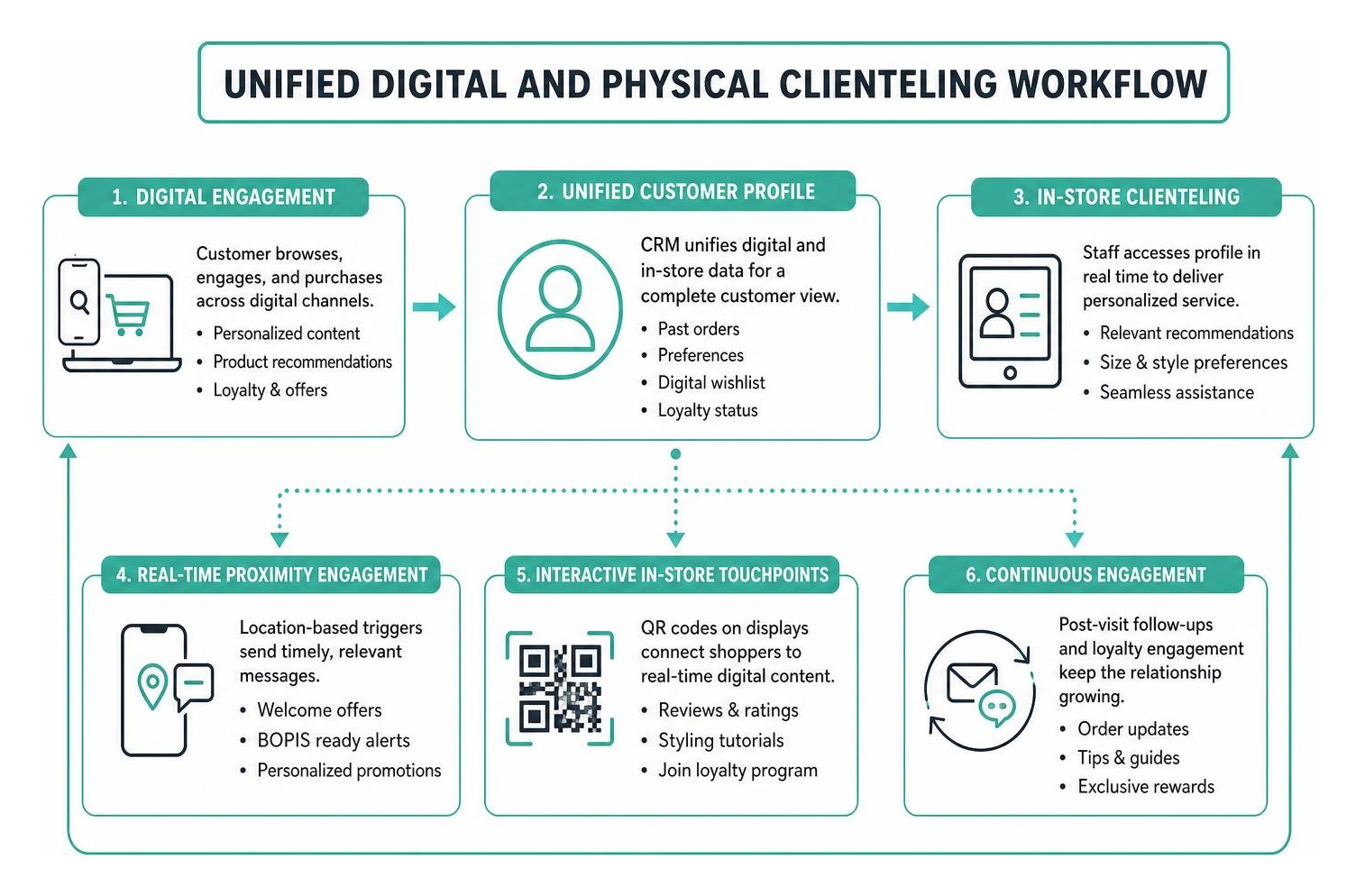
Unify your touchpoints with these practical strategies:
- Empowered In-Store Clienteling: Equip physical team members with tablets connected to your CRM. When a customer walks in, staff can view past orders, sizing preferences, and digital wishlists to deliver tailored recommendations.
- Real-Time Proximity Notifications: Use SMS or mobile app triggers to send personalized welcome offers or order-ready alerts when a customer approaches your location for Buy Online, Pick Up In-Store (BOPIS) fulfillment.
- Interactive In-Store QR Points: Place dynamic QR codes on physical displays, allowing shoppers to read real-time customer reviews, watch styling tutorials, or join your VIP loyalty program on the spot.
- Seamless Support Continuity: Ensure your call center and in-store staff share interaction logs. If a customer chats with support online about an issue and later visits your Warwick, RI location, your team should acknowledge the history immediately without forcing the customer to repeat themselves.
How to Measure Success and Close the Feedback Loop
To ensure your customer engagement strategies deliver tangible ROI, track a balanced scorecard of qualitative sentiment and quantitative performance metrics.
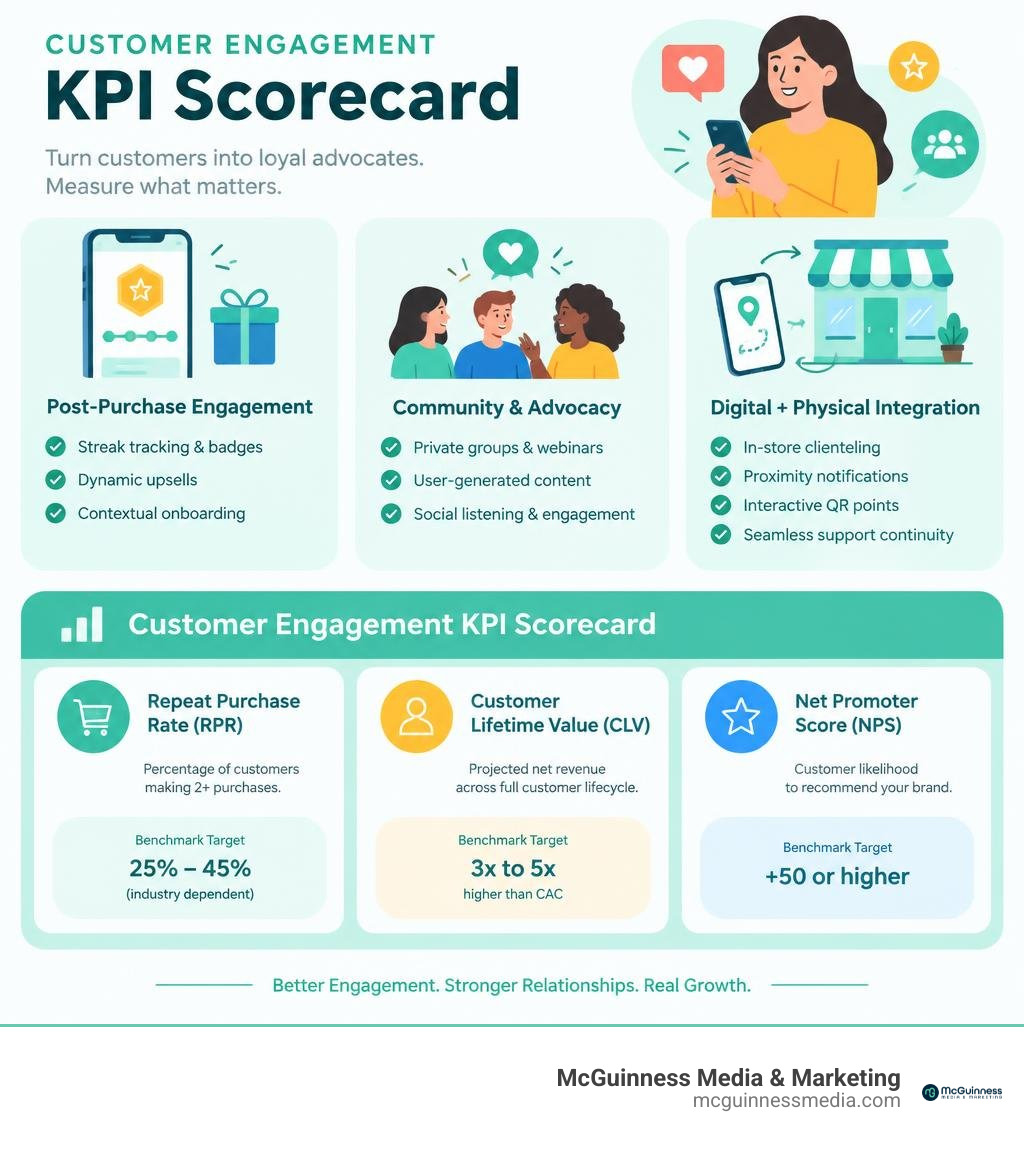
| Metric | Primary Measurement Focus | Benchmark Target |
|---|---|---|
| Repeat Purchase Rate (RPR) | Percentage of customers making 2+ purchases | 25% – 45% (industry dependent) |
| Customer Lifetime Value (CLV) | Projected net revenue across full customer lifecycle | 3x to 5x higher than CAC |
| Net Promoter Score (NPS) | Customer likelihood to recommend your brand | +50 or higher |
| First Call Resolution (FCR) | Percentage of support issues resolved on initial contact | 70% – 80% |
| Omnichannel Retention Rate | Multi-channel shopper retention over 12 months | 60%+ annual retention |
Collecting customer feedback is only half the battle; closing the feedback loop is what builds long-term trust. When a client submits a low NPS rating or negative review, trigger an automated notification to a customer experience manager. Reach out directly, resolve the issue, and inform the customer when your team updates internal processes based on their suggestions. Showing customers that their feedback sparks real change transforms skeptics into lifelong brand advocates.
Frequently Asked Questions About Customer Engagement
What is the difference between customer engagement and customer experience?
Customer experience (CX) represents the customer’s overall perception and emotional impression of your brand across all interactions. Customer engagement refers to the active, ongoing two-way interactions—such as opening emails, participating in communities, redeeming loyalty points, and leaving reviews—that a customer chooses to have with your business throughout their lifecycle.
How does customer engagement impact customer lifetime value?
Engaged customers interact with your brand more frequently, expanding their relationship beyond one-off discounts. This frequent interaction directly drives higher average order values, increases repeat transaction frequency, reduces churn, and turns buyers into organic brand advocates who lower your overall customer acquisition costs.
What are the most common mistakes that hurt customer engagement?
The most frequent missteps include:
- Sending generic, batch-and-blast marketing messages to everyone.
- Over-messaging customers until they experience communication fatigue.
- Storing customer interaction data in isolated silos across marketing, sales, and support.
- Collecting customer feedback and survey responses without ever taking action or following up.
Conclusion
Elevating your customer engagement from sporadic promotions to a unified, data-driven journey is the most reliable way to secure sustainable business growth. When you deliver personalized touchpoints, harness intelligent automation, reward loyalty, and listen to real feedback, you transform casual buyers into enthusiastic brand champions.
At McGuinness Media & Marketing, we help businesses across Rhode Island and nationwide design powerful brand narratives, build intelligent digital funnels, and craft campaigns that captivate audiences. Whether you need strategic media buying, omnichannel campaign planning, or dynamic creative production, explore our comprehensive digital marketing services to start turning everyday interactions into measurable, lasting growth.