
Navigating Programmatic Media Buying Solutions: A Practical Guide for Marketers
How to Evaluate Media Buying Solutions
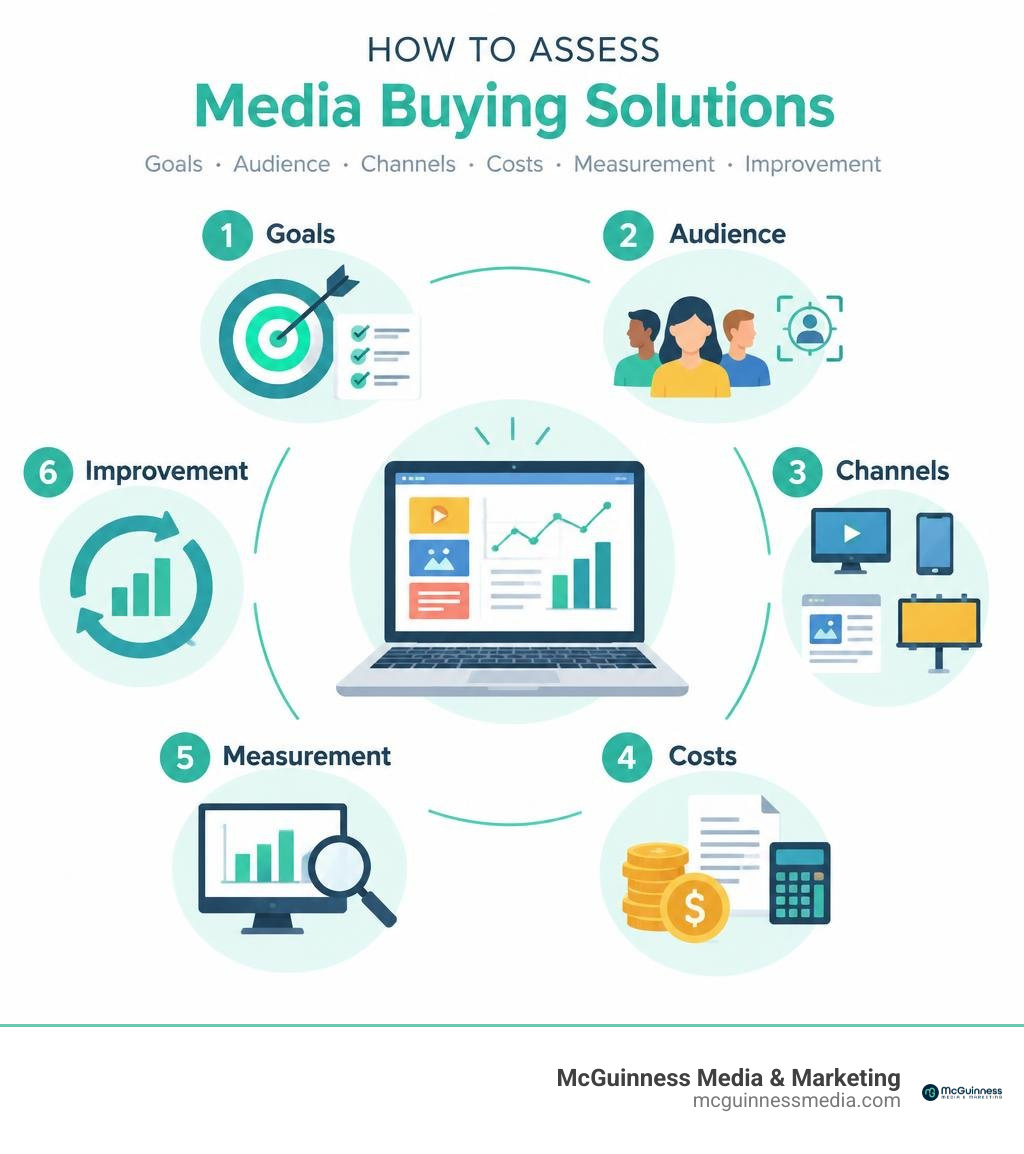
The best media buying solutions help you reach the right people without wasting your ad budget. Start with your campaign goal and target audience. Then compare each option on the channels it can buy, how it handles pricing and fees, and how it measures results. If you need both traditional and digital ads, make sure the plan works across both.
Programmatic buying can speed up digital ad purchases, but automation alone is not a strategy. Audience research, sound placement choices, and regular performance checks still matter.
I’m Megan McGuinness, owner and chief marketing officer of McGuinness Media & Marketing. I’ve spent over 20 years building marketing strategies for regional, national, and global brands, including work in media planning and buying that informs how I evaluate media buying solutions.
Media buying solutions helpful reading:
Evolution and Structure of Modern Media Buying Solutions
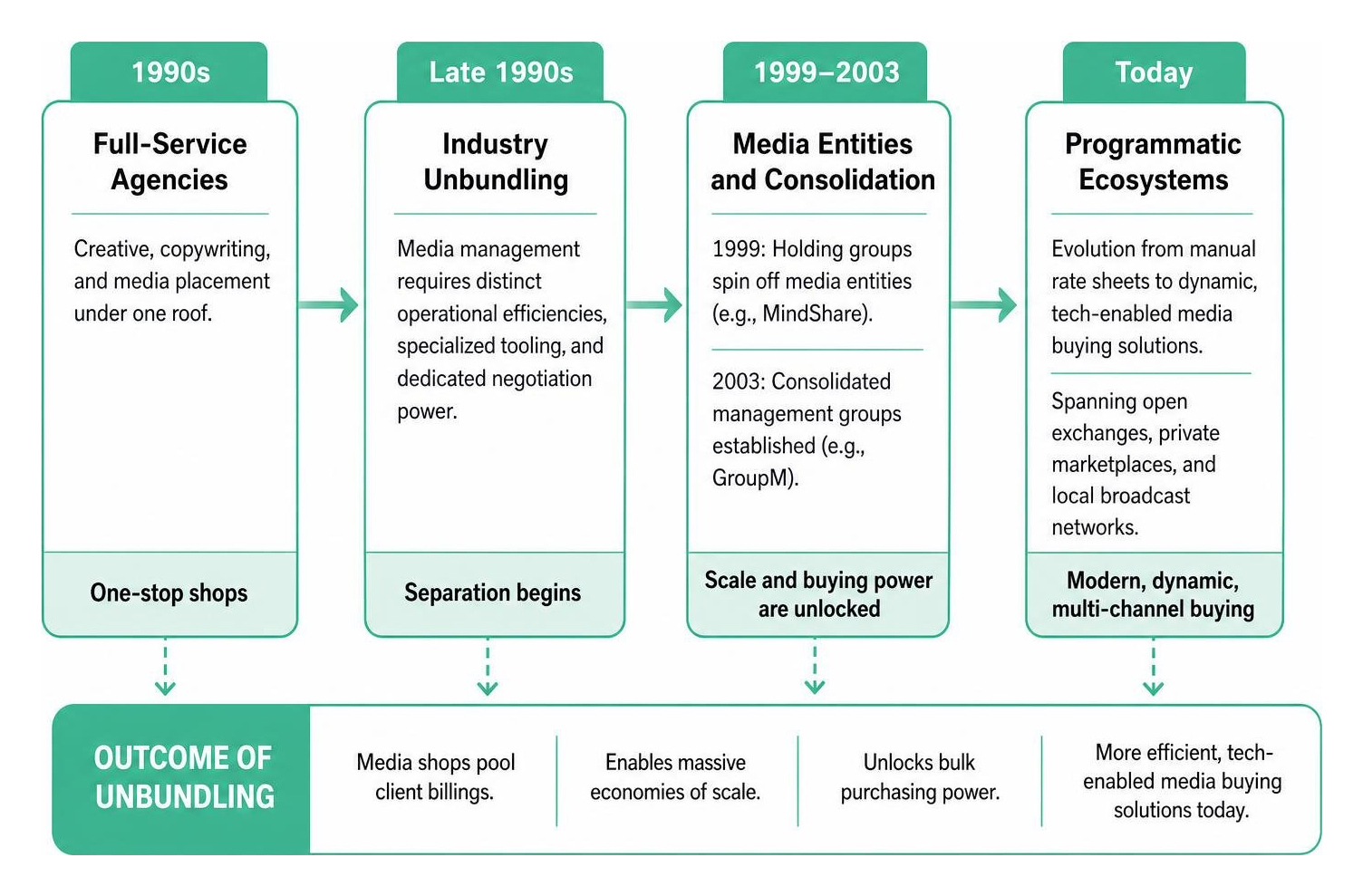
To select the right media procurement partners today, it helps to understand how the advertising landscape shifted over recent decades. Decades ago, advertising agencies operated as full-service shops where creative concepting, copywriting, and media placement lived under a single roof.
During the late 1990s, the industry underwent a seismic shift known as “unbundling.” Advertising networks realized that managing media spend required distinct operational efficiencies, specialized tooling, and dedicated negotiation power. In 1999 and the early 2000s, major global holding groups began spinning off dedicated media entities, establishing consolidated media management divisions. This separation allowed media shops to pool client billings, unlocking massive economies of scale and bulk purchasing power that traditional creative shops could not match.
Today, as outlined in our step-by-step guide to media buying services, the media buying ecosystem has evolved from manual rate sheets into dynamic, tech-enabled media buying solutions spanning open exchanges, private marketplaces, and local broadcast networks.
Media Buying Agency vs. Ad Agency vs. Digital Marketing Company
Marketers often ask how these various agency models interact during a live campaign. While some agencies offer multi-disciplinary execution, each model brings distinct core capabilities to the table:
| Agency Type | Primary Focus | Core Deliverables | Billing Models |
|---|---|---|---|
| Media Buying Agency | Strategic placement, procurement, and budget efficiency | Media plans, rate negotiations, programmatic activation, post-campaign reconciliation | Percentage of ad spend, management retainer, or fee-based |
| Creative Ad Agency | Brand identity, creative concepts, and messaging | Video production, display assets, copy decks, storyboards | Project fee, hourly billing, or creative retainers |
| Digital Marketing Company | Owned channel growth, search visibility, and organic tactics | Technical SEO, organic social, content marketing, email marketing | Monthly retainers, hourly rates, or performance incentives |
In modern omnichannel campaigns, these entities frequently collaborate. A creative shop designs high-impact CTV video assets, a digital marketing team refines conversion landing pages, and a dedicated media partner optimizes distribution across streaming networks and programmatic display channels.
Media Planning vs. Media Buying: Strategy Meets Execution
While the terms are often grouped together, media planning and media buying represent two distinct phases of the advertising lifecycle:
- Media Planning (The Strategy): Planners analyze target demographics, consume syndicated research, define audience journey touchpoints, and allocate budget across relevant channels. Discover more about our approach through our strategic media planning services.
- Media Buying (The Execution): Buyers execute the blueprint. They negotiate rates, issue insertion orders, configure Demand-Side Platforms (DSPs), monitor live pacing, and conduct post-campaign reconciliation to ensure every dollar buys verified impressions.
Technology and Tooling in Programmatic Media Procurement
Modern media buyers no longer rely on instinct; they rely on robust data pipelines and institutional market intelligence. Comprehensive media databases like SRDS aggregate verified audience data and rate profiles across more than 125,000 media properties.
At the same time, tools like Nielsen, comScore, and competitive intelligence databases allow buyers to benchmark share of voice and target specific Designated Market Areas (DMAs) or Metropolitan Statistical Areas (MSAs). For a deeper look at balancing raw analytics with live dealmaking, read our media buying analytics field guide.

To protect budget integrity, modern programmatic ecosystems use advanced operational layers:
- Private Marketplace (PMP) & Programmatic Guaranteed (PG): Premium inventory bought through invite-only auctions with direct publisher quality controls.
- Supply Path Optimization (SPO): Direct routing that strips out unnecessary programmatic middlemen and hidden tech fees.
- Log-Level Data Verification: Granular impression analysis that detects invalid traffic (IVT) and ensures brand-safe environments.
AI-Driven Media Buying Solutions and Demand-Side Platforms
Generative AI and machine learning have streamlined how advertisers package and optimize programmatic inventory. Rather than manually configuring hundreds of deal IDs, buyers can utilize natural-language discovery engines connected to enterprise supply-side platforms, accessing more than 1,900 publisher integrations and 821 billion daily ad impressions.
Real-world deployments demonstrate measurable performance gains:
- Consumer Packaged Goods: Mars Petcare utilized automated programmatic activation to exceed incremental sales lift goals by 126%, achieving a 73% Video Completion Rate (VCR) against standard industry benchmarks.
- Consolidated Deal Efficiency: A major international media agency network streamlined publisher deal structures from 50 individual paths down to 1 unified pipeline, resulting in a 20% reduction in viewable CPMs and a 15% reduction in cost per completed view (CPCV).
Cross-Channel Buying: Broadcast, OTT/CTV, and Direct Response
A high-performing media strategy avoids channel silos. Traditional linear TV buying relies on Nielsen ratings and daypart scheduling, whereas Connected TV (CTV) and Over-The-Top (OTT) video deliver precise digital audience targeting on living-room screens.
For performance-focused brands, direct-response tactics bridge traditional and digital media. By deploying custom response modeling, dedicated toll-free numbers, and vanity URLs, advertisers can track granular return on investment across both streaming and linear environments. Learn how to refine your direct broadcast approach with our infomercial and broadcast media buying strategies, or explore our framework for scaling ecommerce via DTC media buying.
Audience Targeting and Market Research Methodologies
Precision targeting requires a multi-layered approach to market research:
- Demographic & Psychographic Modeling: Aligning age, household income, lifestyle preferences, and buying habits with verified media channels.
- First-Party Data Activation: Onboarding CRM data via privacy-safe identity solutions to reach high-value customers without third-party cookie reliance.
- Contextual Relevance: Serving ads adjacent to content that matches user intent, ensuring natural alignment without intrusive tracking.
- Cross-Device Attribution: Tracking touchpoints across mobile, desktop, audio, and CTV to eliminate duplicate reach.
Executing these methodologies effectively requires testing fresh approaches; explore our favorite innovative media buying strategies to see how dynamic targeting drives scalable brand growth.
Strategic Frameworks to Maximize Media Budget and ROI
Maximizing advertising return is about eliminating waste before an ad even runs. Media buyers leverage multiple financial tactics to stretch marketing budgets:
- Volume Discounting: Leveraging agency-wide media spend to secure rates significantly below published rate cards.
- Added-Value Inventory: Securing bonus placements, sponsorship tags, or digital display banners alongside primary broadcast buys.
- Makegood Auditing: Holding media networks accountable when scheduled programming is preempted or rating points underdeliver.
For practical tactical tips on budget protection, review how media buying houses optimize ad budgets and our guide on small business media planning tips.
Specialized Media Buying Solutions vs. Full-Service Agencies
While all-in-one digital agencies offer broad convenience, specialized media buying teams deliver deeper publisher relationships, transparent tech fees, and regional market intelligence.
For regional brands, discover why working with a local media buying agency makes business sense when seeking favorable local rates and high-touch service.
Rate Negotiation and Inventory Consolidation Tactics
Savvy buyers combine upfront planning with scatter market flexibility:
- Upfront Negotiations: Locking in guaranteed inventory during early buying windows for predictable pricing.
- Scatter Buys: Capitalizing on unsold, short-notice inventory at steep discounts when demand dips.
- Auction Package Consolidation: Packaging multi-publisher inventory into unified programmatic deals to reduce supply-chain fees and drive down cost per completed view.
Frequently Asked Questions About Media Buying
How do media buyers negotiate rates across traditional and digital channels?
Media buyers evaluate historical rate benchmarks, seasonal demand shifts, and overall volume commitments. By negotiating across private marketplaces digitally and leveraging relationship-driven volume discounts in traditional broadcast, buyers routinely secure rates well below published card prices while securing added-value placements.
What is the difference between general market and direct-response media buying?
General market media buying focuses on building broad brand awareness, reach, and recall over time using standardized demographic targets. Direct-response media buying is strictly focused on driving immediate, measurable actions (such as phone calls, form fills, or ecommerce purchases) using dedicated phone numbers, specific URLs, and rapid real-time budget reallocations based on cost-per-acquisition performance.
Why did media buying unbundle from creative advertising agencies?
Media procurement unbundled in the late 1990s as the proliferation of channels, programmatic ad tech, and data analytics required deep, dedicated technical expertise. Unbundling allowed specialized media firms to pool client budgets, negotiate massive bulk discounts, and invest heavily in proprietary data tooling and audience measurement systems.
Conclusion
Navigating programmatic advertising, linear broadcast, and digital channels requires strategic clarity, transparent analytics, and disciplined negotiation. When technology and human expertise work together, your advertising spend delivers measurable business growth rather than wasted impressions.
At McGuinness Media & Marketing, based in Warwick, Rhode Island, we combine creative excellence with data-driven media buying solutions to help brands scale across New England and beyond. Discover how our comprehensive media planning and buying services can help your business secure prime inventory, optimize your ad spend, and maximize your return on investment.