How to Effectively Manage Your Ad Creatives for Maximum ROI
Why Your Ad Creative Strategy is Your Biggest Growth Lever
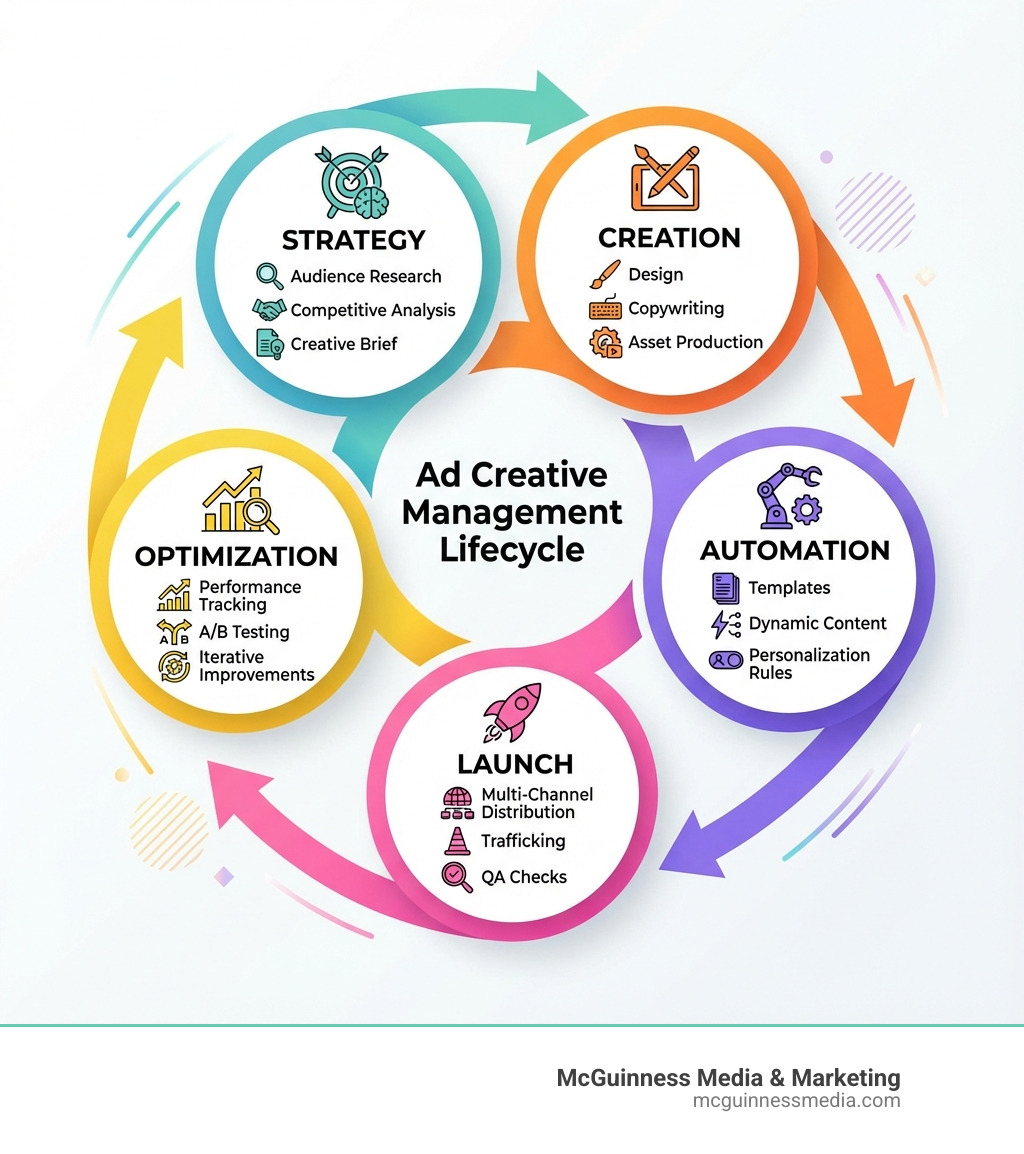
Ad creative management is the systematic process of planning, producing, organizing, distributing, and optimizing your advertising assets. It transforms chaotic campaign launches into a streamlined system for testing, personalizing, and scaling ads with confidence.
Effective ad creative management delivers:
- Centralized control over all creative assets and brand guidelines
- Faster production through templates, automation, and clear workflows
- Personalization at scale using dynamic content and audience targeting
- Better collaboration between design, marketing, and media teams
- Data-driven optimization that connects creative decisions to ROI
In today’s digital landscape, creative agility is survival. The brands winning attention aren’t just spending more; they’re testing more, iterating faster, and delivering personalized experiences. Research shows that brands that prioritize creative agility see 3x higher ROI compared to those running static campaigns.
Many businesses treat creative as an afterthought—a bottleneck slowing campaigns. Teams waste hours hunting for assets, waiting for approvals, or manually resizing ads. Meanwhile, competitors launch personalized variants in the time it takes to export one banner.
You don’t need a massive budget to transform creative management. You need a clear system and commitment to treating ad creative as the strategic growth lever it is.
I’m Megan McGuinness, owner and chief marketing officer of McGuinness Media & Marketing. For over 20 years, I’ve helped brands build comprehensive ad creative management systems that turn chaotic production into scalable growth engines.
The Anatomy of a High-Performing Ad Creative Management System
A robust ad creative management system consistently produces, manages, and optimizes ads. Think of it as the engine powering your advertising efforts.
Key components include:
- Centralized Asset Library: All images, videos, logos, and brand guidelines in one accessible place, ensuring everyone uses approved assets
- Brand Governance: Clear rules for brand representation across all ads
- Workflow Automation: Streamlines repetitive tasks like resizing and approvals
- Collaboration Tools: Real-time commenting and version control for efficient teamwork

Unifying Your Teams for Seamless Creative Production
Effective ad creative management thrives on collaboration. A unified system bridges design, marketing, and media teams through:
- Real-time Feedback: Direct commenting on assets instead of email chains
- Approval Workflows: Automated routing prevents bottlenecks
- Reduced Revisions: Clear communication can reduce errors and revisions by 50%
For more details on improving your visual assets, explore our Graphic Design services.
Core Benefits: Speed, Scale, and Smarter Decisions
The tangible benefits of robust ad creative management:
- Reduced Time-to-Launch: Creative automation can reduce ad production time by up to 80%
- Scaling Creative Production: Companies using Creative Management Platforms often achieve 2x creative output
- Data-Driven Decisions: Track performance to understand what resonates with your audience
To ensure campaigns reach the right audience, check our Media Planning services.
How to Scale and Personalize Creatives with AI and Automation
AI and automation are essential for effective ad creative management, enabling intelligent content generation and optimization at scale. According to Gartner’s research on AI in marketing, AI adoption in creative processes is accelerating rapidly.
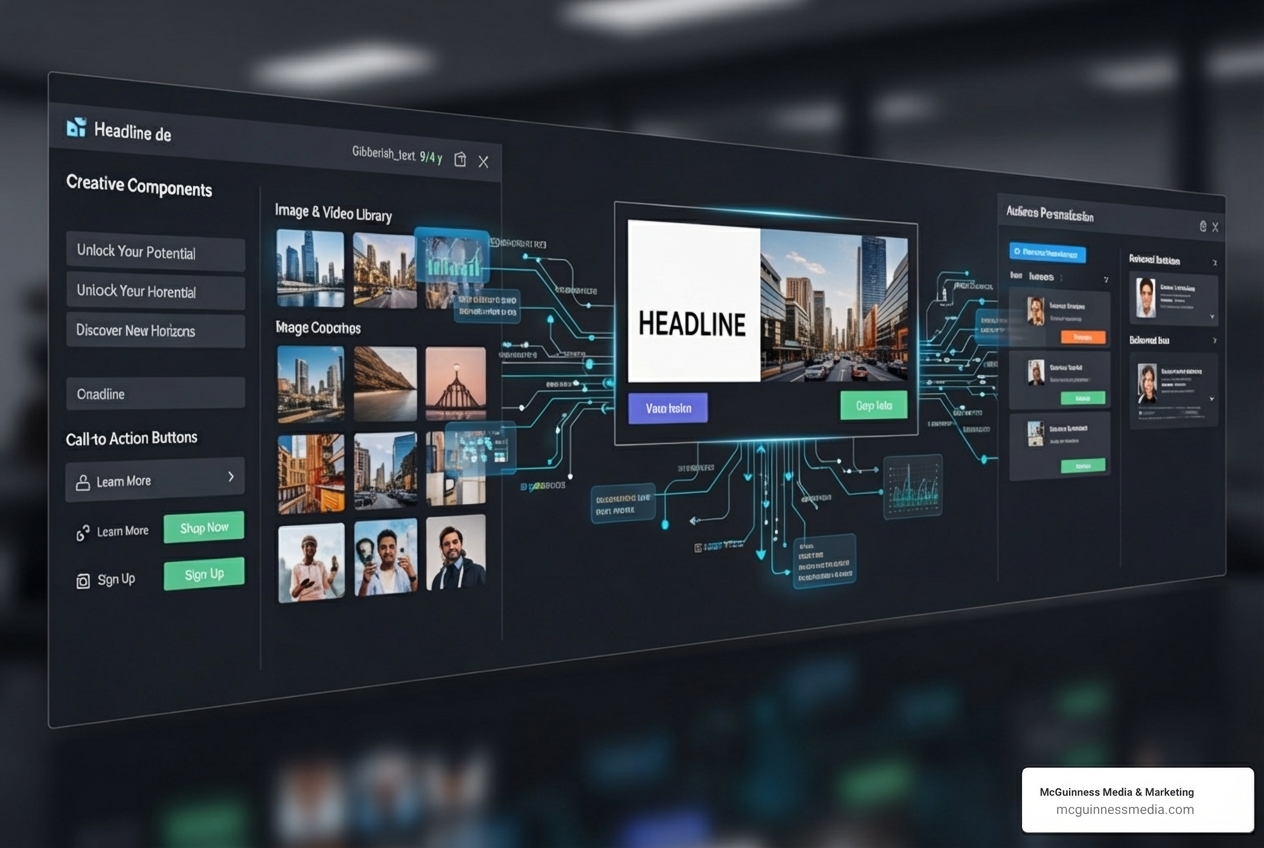
- Generative AI for Variations: Automatically generates ad variations including different headlines, images, and CTAs
- Dynamic Creative Optimization (DCO): Assembles and serves relevant ads to each user in real time
- Data Feeds: Integrates customer data and product catalogs for personalized content
A Practical Guide to Personalization
Our approach to personalization at scale:
- Audience Segmentation: Deep understanding of demographics, behaviors, and interests
- Asset Libraries & Templates: Flexible templates with swappable elements
- Localized Elements: Regional imagery and promotions for areas like Rhode Island
- AI-Driven Content Generation: Multiple variations from single concepts
Creative automation can reduce ad production time by up to 80%. Learn more in The Rise of AI in Marketing: What It Means for Small Businesses.
Maintaining Brand Consistency
Ensure brand consistency through:
- Templates: Framework for layout and brand elements
- Brand Kits: Integrated guidelines for AI-generated content
- Brand Governance: Platform settings enforce guidelines
- Dynamic but On-Brand: Pre-approved variations maintain integrity
For brand insights, see Color Trends and Typography: What Brands Should Be Using and Avoiding.
From Creative to Conversion: Measuring ROI and Omnichannel Impact
Ad creative management drives results through rigorous testing and optimization:
- A/B Testing: Compare ad versions to determine performance
- Multivariate Testing: Test element combinations for optimal mix
- Performance Dashboards: Real-time metrics for quick analysis
How Creative Management Improves Media Performance
Systematic testing and personalization improve campaign effectiveness:
- Connecting Creative to ROI: Track individual element performance
- Lowering CPA: AI-powered analysis can lead to 42% decrease in CPA
- Increasing ROAS: Brands leveraging AI see 125% uplift in ROAS
Learn more: Maximizing ROI: Media Planning Tips for Small Businesses.
Supporting Omnichannel Strategy
Ad creative management delivers cohesive experiences across channels:
- Consistent Messaging: Centralized guidelines maintain brand identity
- Cross-Channel Adaptation: Optimize for social, display, video, and CTV
- Seamless Distribution: Automated trafficking to right platforms
For channel navigation, read Adapting to the New Media Landscape: Challenges for Brands. Learn about Content as a Service technology for dynamic content distribution.
How to Choose the Right Approach and Prepare for the Future
Choosing the right ad creative management approach depends on your business needs and objectives. Key selection criteria:
- Scalability: Can it grow with your business?
- Integrations: Compatibility with existing tech stack
- User Interface: Intuitive and easy to use
- Automation: Appropriate level of automation
- Collaboration: Smooth communication features
- Analytics: Performance tracking insights
| Feature Category | Description |
|---|---|
| Automation | Automated resizing, dynamic content, template-based production |
| Collaboration | Real-time feedback, version control, approval workflows |
| Analytics | Performance dashboards, A/B testing, ROI attribution |
| Personalization | DCO, audience segmentation, localized content |
| Support | Customer service, onboarding, training, documentation |
Future Trends in Ad Creative Management
Stay ahead with emerging trends:
- Predictive Creative Analysis: AI predicting performance before launch
- Hyper-Personalization: Real-time contextual ads
- Interactive Formats: Playable ads and AR filters
- AI-Driven Strategy: Trend identification and creative direction
- Tool Evolution: More integrated and intelligent platforms
Explore broader shifts in 2025 Social Media Trends.
Why Your Ad Creative Strategy is Your Biggest Growth Lever
Ad creative management is the systematic process of planning, producing, organizing, distributing, and optimizing your advertising assets across all channels. It’s the difference between chaotic, last-minute campaign launches and a streamlined system that lets you test, personalize, and scale your ads with confidence.
Here’s what effective ad creative management delivers:
- Centralized control over all creative assets and brand guidelines
- Faster production through templates, automation, and clear workflows
- Personalization at scale using dynamic content and audience targeting
- Better collaboration between design, marketing, and media teams
- Data-driven optimization that connects creative decisions to ROI
In today’s digital landscape, where consumers are bombarded with thousands of ads daily, creative agility isn’t optional—it’s survival. The brands winning attention aren’t just spending more. They’re testing more, iterating faster, and delivering personalized experiences that feel relevant instead of intrusive. Research shows that brands that prioritize creative agility see 3x higher ROI compared to those running static, one-size-fits-all campaigns.
Many businesses still treat creative as an afterthought—a bottleneck that slows down campaigns instead of accelerating growth. Teams waste hours hunting for the right version of a logo, waiting for approval emails, or manually resizing the same ad for multiple platforms.
You don’t need a massive in-house team or enterprise budget to transform how you manage creative. You need a clear system, the right approach, and a commitment to treating your ad creative as the strategic growth lever it actually is.
I’m Megan McGuinness, owner and chief marketing officer of McGuinness Media & Marketing, and over the past 20 years I’ve helped regional, national, and global brands build comprehensive ad creative management systems that turn chaotic production into scalable growth engines. Whether you’re running campaigns across social media, display, video, or connected TV, the principles of effective creative management remain the same—and they’re simpler than you think.
The Anatomy of a High-Performing Ad Creative Management System
A robust approach to ad creative management isn’t just about having good ads; it’s about having a system that consistently produces, manages, and optimizes them. Think of it as the engine powering your advertising. Without a well-tuned engine, even the best creative ideas will struggle to reach their full potential.
At the heart of an effective system are several key components:
- Centralized Asset Library: All your images, videos, logos, and brand guidelines live in one accessible place. This ensures everyone uses the latest, approved assets, speeding up production and reducing errors.
- Brand Governance: Clear rules for how your brand is represented in every ad—from color palettes to tone of voice—ensure a consistent and recognizable presence.
- Workflow Automation: Automation streamlines repetitive tasks like resizing ads, generating variations, or routing creative for approvals, freeing your team for more strategic work.
- Collaboration Tools: Ad creative management is a team sport. Modern platforms offer real-time commenting and version control so designers, copywriters, and marketers can work together efficiently.
Unifying Your Teams for Seamless Creative Production
Effective ad creative management thrives on collaboration. A unified system acts as a bridge between design, marketing, and media teams, ensuring everyone is on the same page.
- Real-time Feedback: Instead of long email threads, teams can comment directly on creative assets in a centralized platform.
- Automated Approval Workflows: Ensure every ad gets the necessary sign-offs quickly, preventing bottlenecks.
- Reduced Revisions: Clear communication and feedback mechanisms reduce rework, saving time and resources. Streamlined creative management can reduce errors and revisions by 50%.
When your design, marketing, and media teams work in harmony, the result is powerful creative. We can help you integrate these processes effectively. For more details on how we can improve your visual assets, please explore our Graphic Design services.
Core Benefits: Speed, Scale, and Smarter Decisions
The tangible benefits of a robust ad creative management strategy are clear: speed, scale, and smarter, data-driven decisions.
- Reduced Time-to-Launch: Creative automation can dramatically cut down the time it takes to get ads live and can reduce ad production time by up to 80%, turning weeks into days.
- Scaling Creative Production: You can launch large volumes of personalized ads across multiple platforms in a fraction of the time. Many organizations using Creative Management Platforms can significantly increase creative output and get thousands of ads live in hours instead of days.
- Data-Driven Decisions: A well-managed system provides insights that help you move beyond guesswork and identify what truly resonates with your audience, allowing you to make informed decisions about your ad spend.
These benefits directly contribute to a higher return on investment. To ensure your campaigns are reaching the right audience, take a look at our Media Planning services.
How to Scale and Personalize Creatives with AI and Automation
The digital advertising landscape is constantly evolving, and at the forefront of this evolution are Artificial Intelligence (AI) and automation. These technologies are essential tools for any business looking to effectively manage and optimize their ad creative management.
AI in creative management allows you to move from manually crafting individual ads to intelligently generating and optimizing content at scale.
- Generative AI for Variations: AI can analyze your brand assets and audience data to automatically generate variations of ad creatives, including different headlines, images, and calls-to-action.
- Dynamic Creative Optimization (DCO): DCO uses data feeds such as product catalogs to automatically assemble and serve the most relevant ad creative to each user in real time.
- Data Feeds: By integrating customer data platforms (CDPs), product catalogs, and other data sources, you can give the AI the information it needs to create highly personalized and effective ads.
A Practical Guide to Ad Creative Management and Personalization
Personalization at scale is the goal of modern advertising. Consumers expect ads that are relevant to their interests and needs. Ad creative management platforms powered by AI make this not just possible, but efficient.
Here’s how we approach it:
- Audience Segmentation: We start by deeply understanding and segmenting your audience based on demographics, behaviors, and interests to tailor messages.
- Asset Libraries & Templates: We use extensive libraries of approved brand assets and flexible, dynamic templates where elements can be swapped based on audience segments or data triggers.
- Localized Elements: For businesses serving specific regions, like those in Rhode Island, personalization can include local imagery or promotions to make ads feel more personal.
- AI-Driven Content Generation: Using generative AI, we can produce many ad variations from a single concept. Companies that excel at personalization can generate substantially more revenue from these activities, and creative automation can reduce ad production time by up to 80%, freeing up valuable resources.
The rise of AI in marketing is a fundamental shift in how we create and manage advertising. For a deeper dive, explore The Rise of AI in Marketing: What It Means for Small Businesses.
Maintaining Brand Consistency Across Automated Campaigns
One common concern with automation is the potential loss of brand consistency. This is where strategic ad creative management plays a critical role.
We ensure brand consistency through:
- Templates: Well-designed templates act as a framework, dictating layout, fonts, and brand element placement, ensuring the brand aesthetic remains intact even with dynamic content.
- Brand Kits and Guidelines: A comprehensive brand kit is integrated into the creative management platform so that any AI-generated content adheres to your established brand identity.
- Enforcing Brand Governance: Platform settings can enforce brand guidelines, preventing off-brand colors or fonts from being used.
- Dynamic but On-Brand: The goal is dynamic content that is always on-brand. By pre-approving variations and setting clear rules, you allow for flexibility without sacrificing your brand’s integrity.
Maintaining a cohesive brand image is vital for recognition and trust. For more insights, check out our article on Color Trends and Typography: What Brands Should Be Using and Avoiding.
From Creative to Conversion: Measuring ROI and Omnichannel Impact
The ultimate goal of advertising is to drive results. Effective ad creative management ensures your creative efforts translate into measurable ROI by enabling rigorous testing, measurement, and optimization.
Best practices for creative testing include:
- A/B Testing: Compare two versions of an ad to see which performs better.
- Multivariate Testing: Test combinations of creative elements simultaneously to find the optimal mix for maximum impact.
- Performance Dashboards: Modern creative management platforms provide real-time dashboards to view how ads are performing across various metrics, allowing for quick analysis and informed decisions.
How Effective Ad Creative Management Improves Media Performance
The link between robust ad creative management and improved media performance is clear. By systematically testing and personalizing creatives, you can improve campaign effectiveness and maximize your return on investment.
- Connecting Creative to ROI: Track the performance of individual creative elements and attribute success to specific visuals, headlines, or calls-to-action. This enables you to double down on what works and retire what doesn’t.
- Lowering CPA (Cost Per Acquisition): Highly relevant and engaging ads perform better, leading to higher conversion rates and a lower cost to acquire a new customer. AI-powered creative analysis can contribute to a 42% decrease in CPA.
- Increasing ROAS (Return On Ad Spend): Better creative performance means more revenue for every dollar spent on advertising. By optimizing creatives to drive conversions, brands leveraging AI for their creative strategy have seen a 125% uplift in ROAS.
To learn more about optimizing your media spend, check out our insights on Maximizing ROI: Media Planning Tips for Small Businesses.
Supporting an Omnichannel Advertising Strategy
An effective ad creative management strategy is crucial for delivering a cohesive experience across all channels, from social media and display ads to video and Connected TV (CTV).
- Consistent Messaging: A centralized system ensures your core message and brand identity remain consistent, no matter where your audience sees your ad.
- Cross-Channel Creative Adaptation: Different channels require different creative formats. A robust system allows for efficient adaptation of assets for social media, display, video, and CTV so each ad is optimized for its specific platform.
- Seamless Distribution: The system should also support distribution to diverse channels, automating trafficking and ensuring the right creative reaches the right platform at the right time.
Navigating multiple media channels is essential for reaching your audience effectively. For more on this, read our article on Adapting to the New Media Landscape: Challenges for Brands. We also encourage you to Learn more about Content as a Service technology to see how your content can be dynamically managed and distributed across all your marketing channels.
How to Choose the Right Approach and Prepare for the Future
Choosing the right approach to ad creative management is a strategic decision that depends on your specific business needs, team size, and marketing objectives. For businesses in Rhode Island and beyond, evaluating your current pain points and future ambitions is the first step.
When considering a creative management solution, focus on several key selection criteria:
- Scalability: Can the platform grow with your business?
- Integrations: How well does it integrate with your existing marketing tech stack?
- User Interface (UI): Is it intuitive and easy for your team to use?
- Automation Capabilities: Does it offer the level of automation you need?
- Collaboration Features: Does it facilitate smooth communication and feedback loops?
- Analytics and Reporting: Does it provide the insights you need to track creative performance?
Here’s a simplified comparison of key feature categories to help guide your choice:
| Feature Category | Description |
|---|---|
| Automation | Automated ad resizing, dynamic content generation, template-based creative production. |
| Collaboration | Real-time feedback, version control, shared workspaces, approval workflows. |
| Analytics | Performance dashboards, A/B testing insights, creative element tracking, ROI attribution. |
| Personalization | Dynamic Creative Optimization (DCO), audience segmentation, localized content. |
| Support | Customer service, onboarding, training, documentation, community resources. |
Future Trends in Ad Creative Management
The world of digital advertising is always moving forward, and ad creative management is at the cutting edge of that evolution. To stay ahead, we must anticipate the future trends that will shape how we create and deliver ads.
- Predictive Creative Analysis: AI is advancing towards predicting ad performance before a campaign launches, helping optimize creatives from the start.
- Hyper-Personalization: Advertising is moving toward delivering ads custom to an individual’s real-time context.
- Interactive Ad Formats: Expect more immersive experiences like playable ads and augmented reality (AR) filters, all managed through advanced creative platforms.
- AI-Driven Strategy: AI will increasingly inform creative strategy, helping identify trends and suggest new creative directions.
- The Evolution of Creative Management Tools: Tools will become more integrated, intelligent, and user-friendly, breaking down silos between creative, media, and data.
Preparing for these trends means embracing AI, fostering a culture of continuous testing, and investing in flexible systems. For a glimpse into broader industry shifts, explore our 2025 Social Media Trends.
Frequently Asked Questions
What’s the difference between creative management and DAM?
DAM stores and organizes assets. Ad creative management covers the entire lifecycle: creation, automation, personalization, delivery, and optimization. DAM is foundational; creative management is the active engine driving campaign success.
How can small businesses start without a large budget?
- Standardize Workflows: Document and streamline processes
- Centralize Assets: Use cloud storage for approved assets
- Collaborative Tools: Leverage existing platforms
- Test and Learn: Prioritize A/B testing
- Affordable Platforms: Explore free trials and starter tiers
How long to see results?
Efficiency gains are immediate. Performance metrics like ROAS and CPA improve within one to two campaign cycles as you gather data and optimize. Expect up to 42% decrease in CPA and 125% uplift in ROAS with consistent optimization.
Conclusion: Take Control of Your Creative and Drive Real Growth
Effective ad creative management is a strategic imperative in today’s competitive digital landscape. By centralizing assets, fostering collaboration, leveraging AI, and rigorously testing creatives, you transform advertising from a cost center into a powerful growth engine.
Your creative assets are among your most valuable strategic assets. How you manage them directly impacts your ability to connect with audiences and drive conversions. A unified strategy ensures every ad—whether seen in Rhode Island or globally—is consistent, compelling, and optimized for performance.
At McGuinness Media & Marketing, we’re passionate about helping businesses take control of their creative process, ensuring your ads stand out and deliver exceptional results.
Ready to open up your advertising’s full potential? Let our team build your comprehensive creative strategy.