Your Blueprint for Success: Crafting a Winning Media Buying Strategy
What a Media Buying Strategy Actually Is (And Why It Matters Right Now)
A solid media buying strategy is the difference between ad spend that drives real business growth and money that quietly disappears into the wrong channels at the wrong time.
Here’s what a media buying strategy covers at a glance:
- What it is: The plan for purchasing ad space across TV, radio, digital, social, and other channels to reach your target audience efficiently
- Why it matters: Without one, you’re guessing — overpaying for placements, missing your audience, and leaving ROI on the table
- Core components: Target audience, budget, channel mix, scheduling, placement, creative, and performance tracking
- Key goal: Deliver the right message, to the right person, at the right time — for the lowest effective cost
- Who needs it: Any brand investing in paid advertising, from local businesses to national campaigns
There’s an old principle in real estate: location, location, location. Media buying has a similar one — the right message, in the wrong place, at the wrong time, is just wasted money.
That waste is more common than most brands realize. A study by the Association of National Advertisers analyzed $88 billion in programmatic ad spend and found 25% of it was waste — lost to invalid traffic, low-quality inventory, and poor placement decisions. And that’s just one channel.
The good news? A clear, deliberate strategy fixes most of this. It aligns your budget with your goals, puts your ads in front of people who actually buy, and gives you a framework to improve with every campaign.
I’m Megan McGuinness, owner and CMO of McGuinness Media & Marketing, and with over 20 years of experience building media buying strategies for regional, national, and global brands across retail, finance, hospitality, and more, I’ve seen what separates campaigns that convert from ones that just cost money. In this guide, I’ll walk you through everything you need to build a strategy that works.
What is a Media Buying Strategy and Why Does Your Brand Need One?
At its core, a media buying strategy is the operational system that dictates how, where, and when your advertising dollars are spent. It is not just about writing a check to an ad network or clicking “boost post” on social media. It is a highly strategic, data-driven discipline that ensures your message is paired with the perfect context to drive action.
For brands navigating today’s complex marketplace, having a documented strategy is essential for several reasons:
- Ad Spend Optimization: With media costs rising—for instance, Meta’s average price per ad increased by about 10% in recent years—you cannot afford to let your budget leak. A proper strategy prevents budget spreading, where money is distributed too thinly across too many channels to make an impact.
- Brand Control and Safety: A proactive strategy establishes clear boundaries for where your ads can and cannot appear. This protects your brand reputation from being associated with low-quality, offensive, or fraudulent sites.
- Cost Efficiency: By negotiating bulk rates, value-add impressions, and securing inventory ahead of peak buying seasons (like holidays or election cycles), a structured buying approach stretches your dollar further.
- Targeted Reach: Instead of chasing cheap impressions, a media buying strategy focuses on relevance. It ensures you are appearing where your specific audience actually spends time, whether that is streaming local news in Warwick, RI, or scrolling through niche B2B trade publications.
Without this blueprint, businesses often fall victim to common pitfalls like relying on outdated channel mixes or letting platforms auto-spend budgets without proper oversight. To understand why this shift is happening, read more about how companies are Adapting to the New Media Landscape: Challenges for Brands.
Media Planning vs. Media Buying Strategy: Understanding the Difference
While they are two halves of the same coin, media planning and media buying are fundamentally different disciplines. Confusing the two is a primary reason why many marketing campaigns fail to hit their targets.
Media planning is the strategic, research-driven phase that occurs before any money is committed. It is the “blueprint” phase. Planners analyze market trends, define target audience profiles, set campaign objectives, determine the ideal media mix, and establish the overall budget.
Media buying, on the other hand, is the transactional and operational execution of that plan. It is the “construction” phase. Buyers take the media plan and turn it into live campaigns by negotiating rates, purchasing the physical or digital ad space, trafficking creative assets, and continuously optimizing the placements to maximize ROI.
| Feature | Media Planning | Media Buying |
|---|---|---|
| Primary Focus | Strategy, audience research, and budget allocation | Execution, negotiation, and campaign management |
| Key Deliverable | Detailed media plan and strategic roadmap | Active placements, signed insertion orders, and optimized campaigns |
| Core Question | “Where, when, and to whom should we advertise?” | “How do we secure the best placements at the lowest cost?” |
| Key Skills | Market research, consumer psychology, data analysis | Negotiation, vendor relations, platform technical expertise |
To achieve maximum efficiency, these two disciplines must work in lockstep. The buyer’s real-time performance data should constantly feed back into the planner’s strategic assumptions, creating a continuous loop of improvement. For an in-depth look at how these roles connect, check out Media Planning and Buying: The Ultimate 2026 Guide for Marketers | Measured® .
The Core Elements of an Effective Media Buying Strategy
To build a media buying strategy that consistently delivers results, you must establish several foundational pillars:
- Strategic Budget Allocation: This involves more than just setting an overall spend limit. We recommend using the 70/20/10 budget framework. Allocate 70% of your budget to proven, high-performing core channels. Dedicate 20% to scaling emerging channels or tactics that show promise. Reserve the final 10% for pure experimentation and testing new ad formats or platforms.
- Smarter Flighting and Scheduling: Timing is everything. Your strategy should dictate whether you use continuity scheduling (running ads steadily throughout the year), flighting (heavy advertising during peak seasons, followed by periods of no ads), or pulsing (a baseline of continuous advertising augmented by heavy bursts during key promotional windows).
- Rigorous Placement Tracking: You must assign unique tracking IDs, UTM parameters, and robust conversion pixels to every single placement. If you cannot track exactly which ad slot generated a conversion, you cannot optimize your spend.
- Uncompromising Brand Safety: Protect your brand by utilizing explicit inclusion and exclusion lists. Work with verified publishers and demand-side platforms (DSPs) that offer built-in fraud detection and brand safety controls to ensure your ads only appear in trusted environments.
Traditional vs. Digital Channels in a Modern Media Buying Strategy
A successful modern campaign rarely relies on a single medium. Instead, it leverages a balanced mix of traditional and digital channels tailored to the target audience’s daily habits.
Even in our highly digital world, traditional channels remain incredibly powerful. For example, over 54% of B2B advertising spend recently went to traditional outlets like trade publications, direct mail, and in-person events. For local and regional brands in Rhode Island, traditional media like broadcast TV, local cable, and radio provide unmatched local credibility and broad reach.
To build the perfect mix, we look at a diverse list of channels:
- Traditional Channels:
- Broadcast TV & Cable: Ideal for high-impact visual storytelling and building massive local awareness.
- Terrestrial Radio: Highly effective for reaching commuters in their cars, especially during morning and evening drive times.
- Out-of-Home (OOH): Billboards and transit ads that capture attention in physical spaces.
- Digital Channels:
- Programmatic Display & Video: Automated, data-driven placements across millions of websites and apps.
- Connected TV (CTV) & OTT Streaming: Delivering TV-style ads to viewers streaming content on platforms like Hulu, Peacock, or Roku.
- Paid Social Media: Highly visual, interactive ads on platforms like Meta, TikTok, and LinkedIn.
- Paid Search (SEM): Capturing high-intent users at the exact moment they search for your products or services.
Understanding the nuances between these channels is critical. To learn how to navigate the evolving television landscape, read our breakdown on Broadcast TV vs Cable vs OTT Streaming. Additionally, don’t overlook the enduring connection of audio; discover why local audio remains a cornerstone of regional marketing in The Power of Radio in 2025.
The Shift to Programmatic and AI-Driven Media Buying
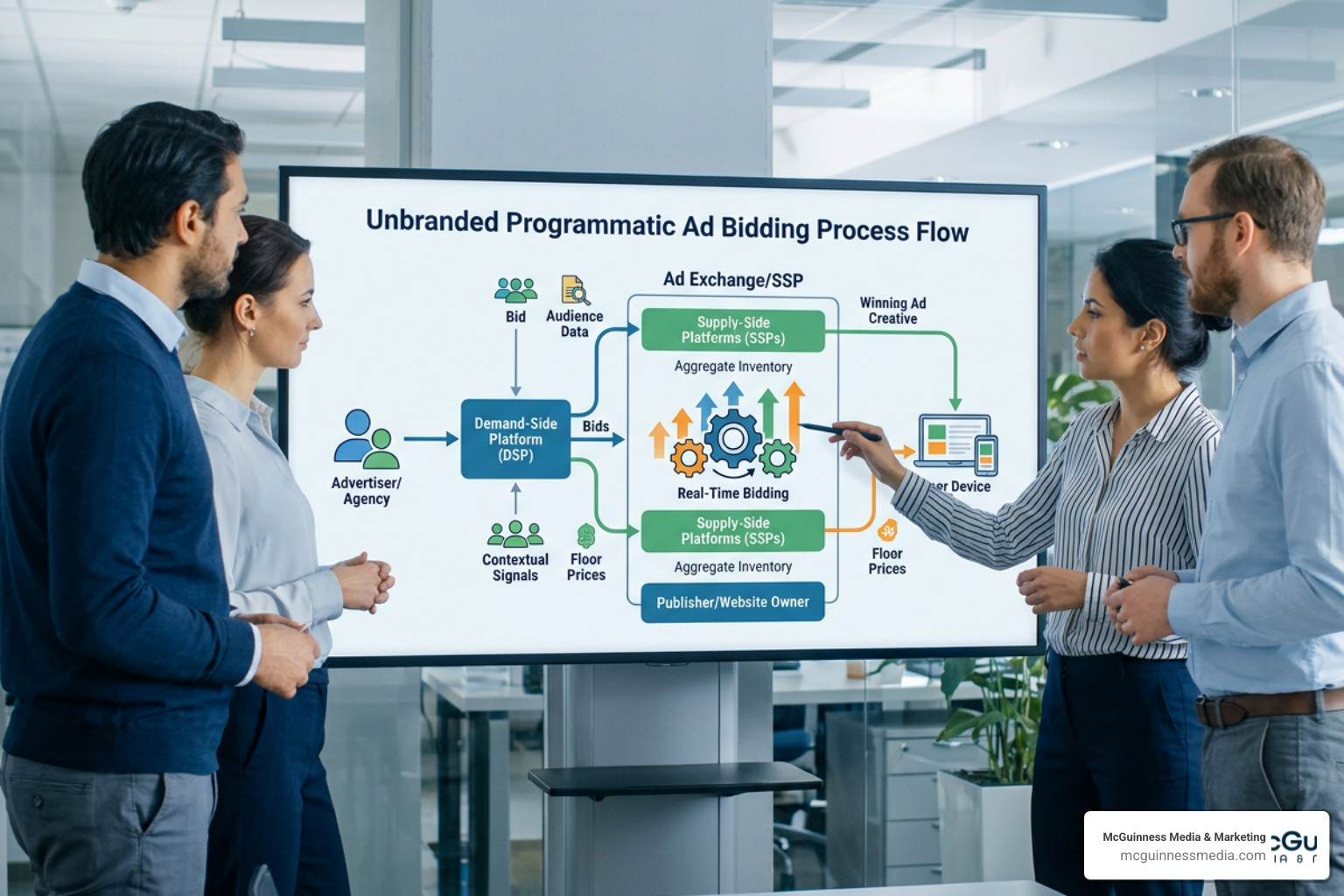
The mechanics of how we buy media have changed dramatically. Programmatic advertising—the automated buying and selling of digital ad inventory in real-time—has become the industry standard. Programmatic channels make up 90% of total global digital display ad spending.
This shift is driven by sophisticated machine learning and automated bidding systems. Modern ad networks use advanced algorithms, such as Meta’s Andromeda retrieval engine and Google’s Performance Max, to match ads to the users most likely to convert. These systems analyze thousands of signals in milliseconds, pricing auctions dynamically and allocating budgets far more efficiently than any human could manually.
However, this automation has completely changed the role of the media buyer. Manual bid adjustments and hyper-specific audience targeting are largely a thing of the past. Today, creative volume is the primary lever for performance. Because the algorithms handle the targeting, your creative assets do the heavy lifting of finding and qualifying your audience.
To win in this environment, brands must shift from being account operators to system designers, focusing heavily on creative strategy and signal quality. For a deeper look into this transition, read Media buying strategy in 2026: a framework for the agentic era .
Step-by-Step Guide to Executing Your Media Buying Strategy
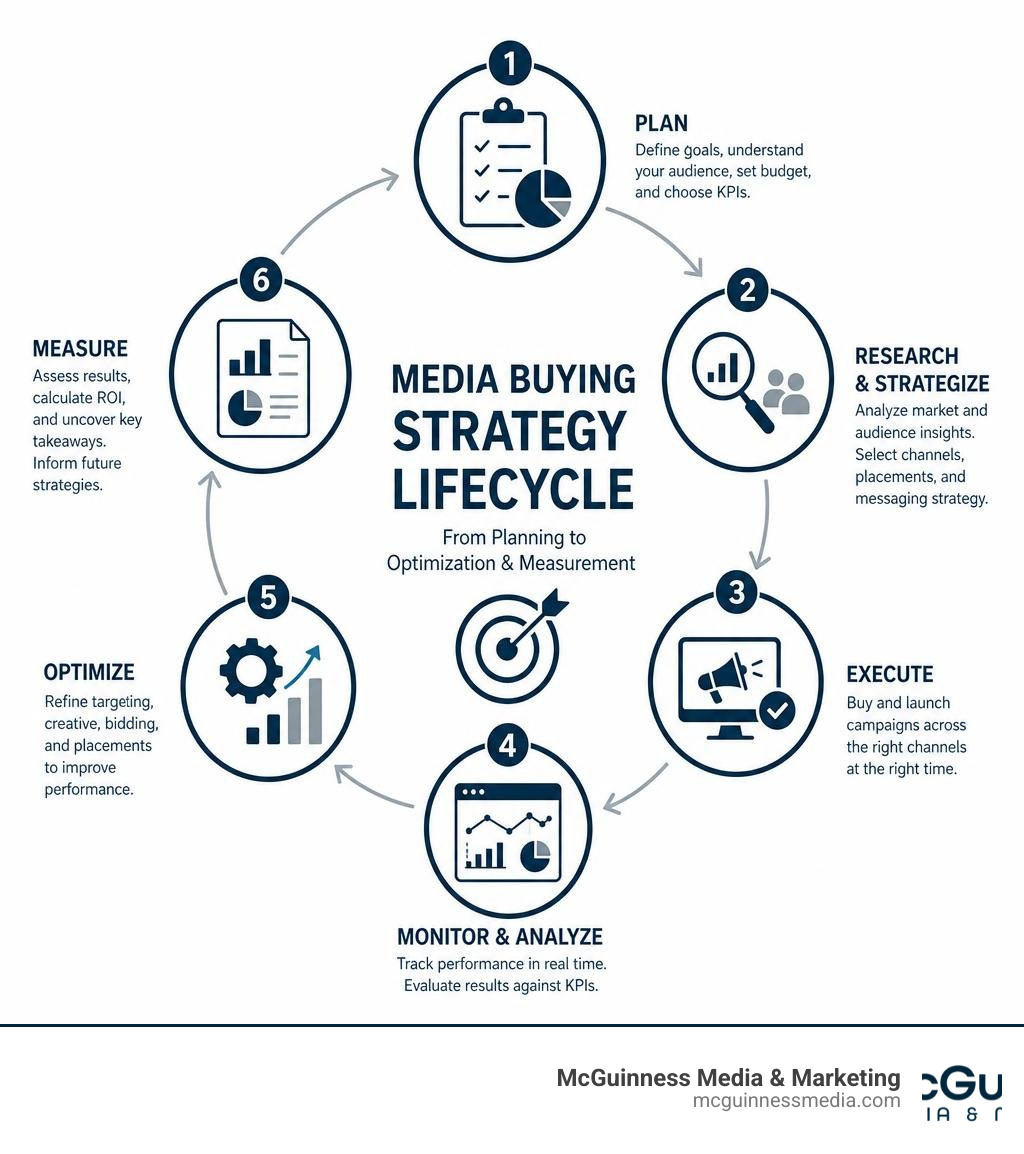
Executing a flawless media buying strategy requires operational discipline. Here is our proven step-by-step framework to take a campaign from concept to launch:
Step 1: Align on Clear Campaign Objectives
Every successful campaign starts with a single, measurable primary goal. Are you looking to build brand awareness, generate qualified leads, or drive direct e-commerce sales? Your objective dictates your channel selection, bidding strategies, and creative formats.
Step 2: Conduct Deep Audience and Media Research
Before spending a dollar, research where your target audience actually consumes media. Combine your first-party CRM data with platform insights and third-party research to build detailed buyer personas.
Step 3: Issue Requests for Proposals (RFPs)
For direct and traditional buys, reach out to media vendors with detailed RFPs. Ask for audience demographic data, historical performance metrics, available inventory, and bulk pricing.
Step 4: Negotiate and Secure Placements
Do not simply accept rate card prices. Negotiate for added value—such as bonus digital impressions, premium ad positioning, or sponsorship opportunities. Once terms are finalized, lock them in with formal insertion orders (IOs).
Step 5: Traffic Creative and Launch Campaigns
Prepare your creative assets according to each channel’s exact technical specifications. Set up your tracking infrastructure, double-check your budget caps, and launch your campaigns.
For a more detailed walkthrough of how we manage this entire process for our clients, explore our Step-by-Step Guide to Media Buying Services. If you are looking to streamline your digital execution specifically on Google’s networks, see how to Unlock Growth: How Google Ads Manager Streamlines Your Business.
Measuring and Optimizing Campaign Performance
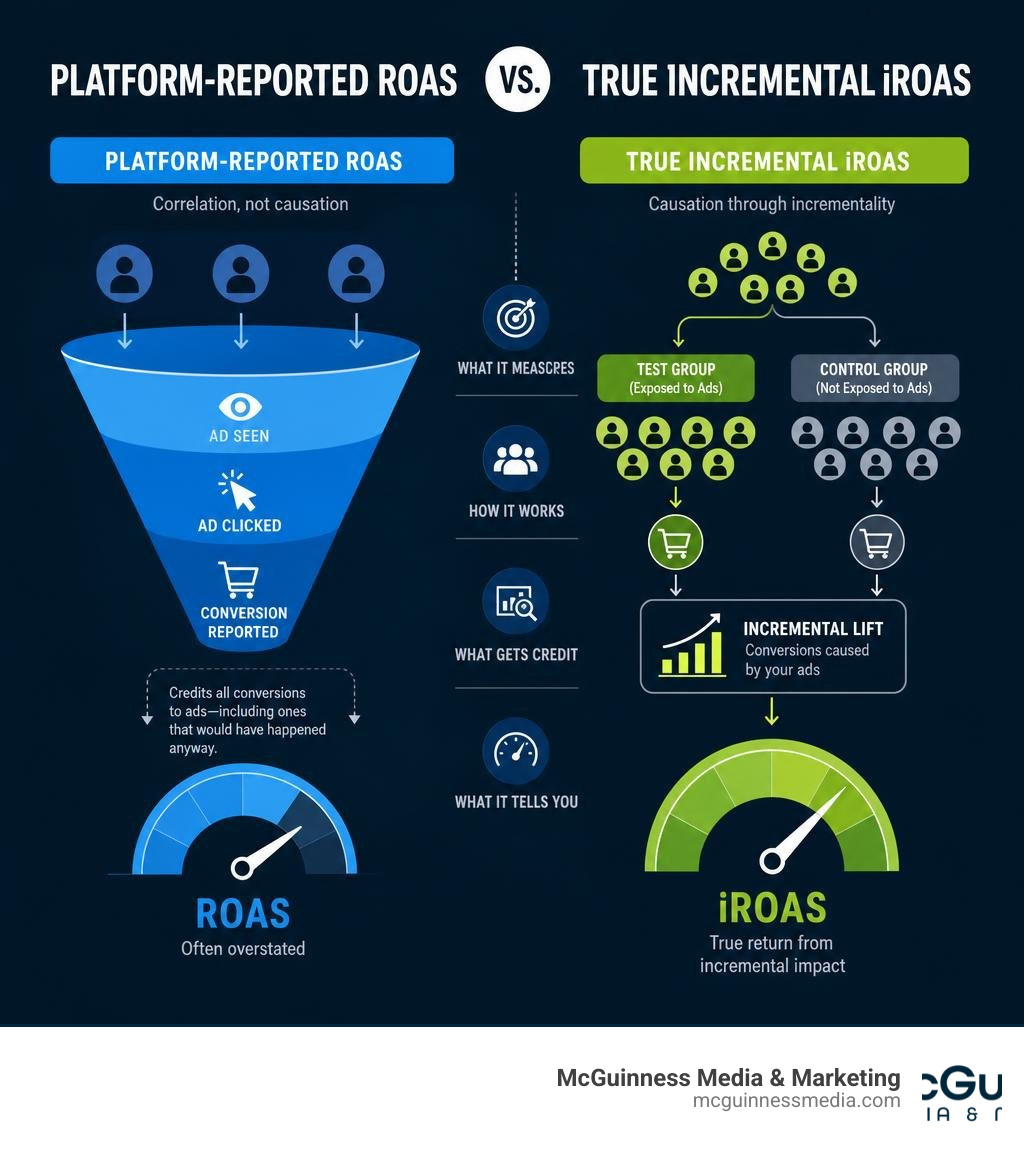
To maximize your ROI, you must look beyond the vanity metrics reported by ad platforms. Platform-native ROAS (Return on Ad Spend) often overstates performance because it relies on correlation rather than causation, claiming credit for conversions that would have happened anyway.
The gold standard for modern measurement is triangulated measurement, which combines three critical data signals:
- Causal Incrementality Testing: Running controlled experiments (such as geographical market holdouts) to measure the true incremental lift of your advertising. This calculates your iROAS (incremental Return on Ad Spend)—the revenue that was directly caused by your ads.
- Media Mix Modeling (MMM): Using historical data and statistical models to analyze the high-level relationship between your multi-channel media spend and overall business outcomes.
- Platform-Native Data: Using real-time platform metrics (like CTR, CPC, and frequency) for day-to-day tactical optimizations.
By mapping these signals, you can identify the exact point of diminishing returns for each channel, allowing you to reallocate budget away from saturated platforms and into untapped opportunities. To learn how to apply these measurement principles to smaller budgets, read our Maximizing ROI: Media Planning Tips for Small Businesses.
Overcoming Key Challenges in Digital Media Buying
While digital media buying offers incredible scale and targeting capabilities, it also presents significant hurdles that can quickly drain your budget if left unmanaged:
- Ad Fraud and Invalid Traffic: As highlighted by the ANA, billions of dollars are wasted on invalid bot traffic and sites built purely to monetize ads (MFA sites). To combat this, we use strict publisher vetting and third-party verification tools to ensure your ads are viewed by real human eyes.
- Data Deprecation and Privacy Pressures: With the ongoing loss of third-party cookies and privacy updates like Apple’s App Tracking Transparency (ATT), tracking users across the web has become highly unreliable. Brands must invest heavily in their first-party data collection and implement robust server-side tracking, such as Meta’s Conversions API (CAPI), to maintain high signal quality.
- Ad Fatigue and Frequency Capping: Showing the same ad to the same user too many times leads to ad fatigue, which drives up your acquisition costs. Implement strict frequency caps across all channels and continuously refresh your creative assets to keep your campaigns engaging.

Frequently Asked Questions about Media Buying
What is the difference between direct and programmatic media buying?
Direct media buying involves negotiating rates and purchasing ad space directly from a specific publisher or media vendor (such as buying a specific ad slot on a local news website or a local radio station). This is ideal for securing guaranteed, premium inventory. Programmatic media buying uses automated systems and real-time bidding (RTB) to purchase individual ad impressions across millions of sites simultaneously based on user data. This is ideal for scale, efficiency, and precise audience targeting.
How do you calculate and prove the true ROI of media buying?
To prove true ROI, you must run incrementality tests. This involves splitting your target markets or audiences into a test group (exposed to ads) and a holdout group (completely unexposed). By comparing the actual revenue generated by both groups, you can isolate the exact sales causally driven by your media buy, giving you an accurate incremental ROAS (iROAS) that you can present to your leadership team.
Why is creative volume considered the new targeting in 2026?
With modern ad platforms using automated, broad targeting algorithms, hyper-specific demographic targeting has become less effective. The algorithm finds your customers by analyzing who interacts with your ad creative. Therefore, the creative asset itself acts as your targeting filter. To succeed, brands must produce a high volume of diverse creative angles, testing different hooks and visual formats weekly to feed the algorithm’s need for fresh data.
Conclusion
Building and executing a successful media buying strategy is a continuous, data-driven cycle. It requires deep audience research, strategic planning, skilled negotiation, and constant, rigorous optimization. In an era dominated by automated ad platforms and complex privacy landscapes, having an experienced partner to guide your media spend is the ultimate competitive advantage.
At McGuinness Media & Marketing, we pride ourselves on being Rhode Island’s premier creative and media buying agency. Based in Warwick, RI, we combine strategic media planning with award-winning creative services to ensure your brand stands out and achieves real, measurable growth. We don’t just buy ad space—we design highly efficient, optimized media systems that turn your advertising budget into a powerful engine for business growth.
Ready to stop guessing and start scaling your campaigns with confidence? Let’s talk about how we can elevate your marketing. Explore our comprehensive Media Planning Services and let us help you craft your blueprint for advertising success.